
Canton
Solar PV — one-off payment (Fribourg)
Calculated on capacity (kWp).
Federal one-off payment for PV installations in the canton of Fribourg.
www.pronovo.chSolar panels · Bulle
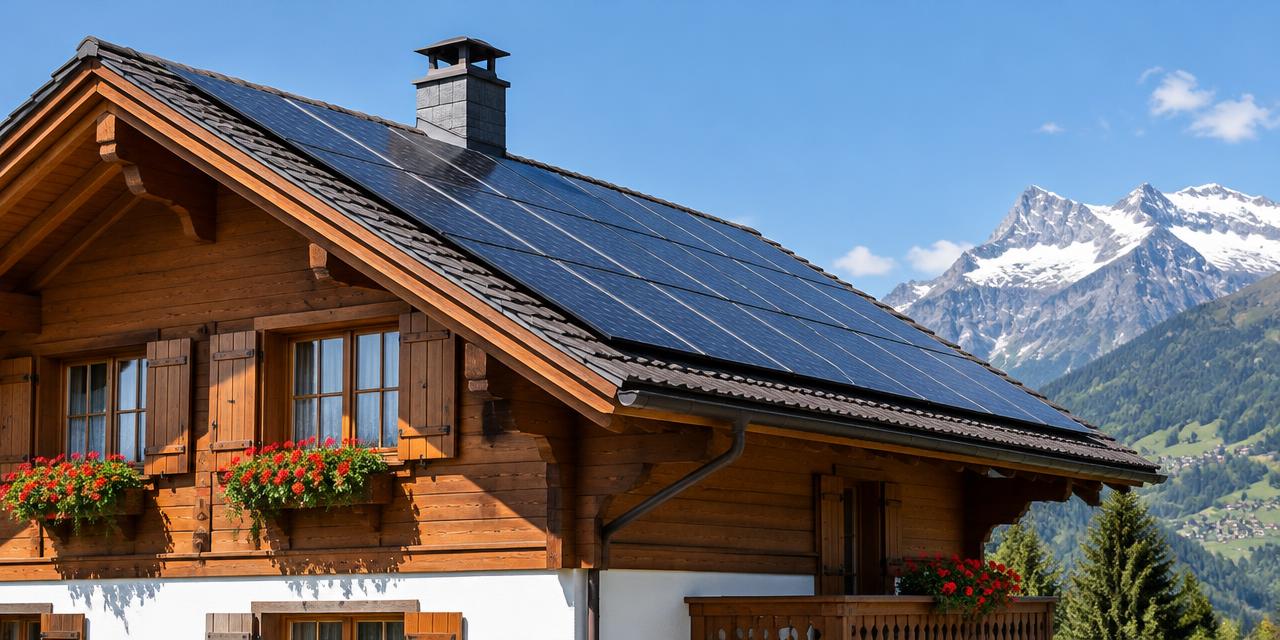
Small project
CHF 9'800 – CHF 18'500
Typical project
CHF 18'100 – CHF 32'900
Large project
CHF 31'400 – CHF 55'800
Computed with our estimator for Bulle (regional factor included), standard finish. Only the project size changes.
With an altitude of 767 meters and attractive global solar irradiation, Bulle offers significant exploitable solar potential for property owners. The decision to switch to photovoltaics is fully in line with the municipality's energy policy, which was awarded the Energy City Gold label in 2024.
Choosing a solar installation reduces reliance on the electricity grid while enhancing the value of your property in a region where heating needs are marked by cold climate conditions, with an average of 108 frost days per year.
The best time to launch such a project is often during a planned roof renovation. By coordinating the panel installation with the replacement of roof tiles or attic insulation, you optimize structural costs and ensure the long-term watertightness of your roofing.
Planning these works also allows you to calmly take advantage of federal grants and prepare your home for tomorrow's requirements, while benefiting from a promising estimated solar yield of approximately 1199 kWh/kWp per year for a south-facing roof.
The design of your photovoltaic installation in Bulle depends on several technical factors. Monocrystalline panels are now the standard due to their high efficiency, especially when available surface area is limited.
The choice of inverters, the heart of the system, is also crucial: central inverters or micro-inverters depending on your roof configuration and potential shaded areas.
Aesthetic integration is another factor : "Full Black" panels offer a uniform and discreet finish, particularly appreciated in well-maintained residential areas.
Furthermore, the choice of mounting structure must meet local specificities, particularly to withstand the snow loads characteristic of the Fribourg Prealps. It is essential to discuss the target self-consumption rate with your installer.
The more you use your electricity directly on-site (heating, heat pump, vehicle charging), the higher the profitability of your investment increases.
Options like battery storage can complement your system, allowing you to save excess production for nighttime use, although this directly influences the initial cost and technical complexity of the project.
Bulle's building stock shows great diversity, ranging from historic buildings to contemporary constructions. For houses built before the 1990s, special attention must be paid to the condition of the roof before any installation.
If your roof requires renovation, this is the ideal time to integrate panels, thus avoiding repeated interventions. A preliminary audit allows for checking the strength of the framework, which will have to support the additional weight of the collectors and winter climatic loads.
In older buildings, thermal insulation is often the first priority before photovoltaics to limit energy waste.
The compliance of internal electrical networks is also a critical point. A qualified electrician must check if your electrical panel is up to standard to accommodate a solar installation.
Finally, houses built before the 1990s may present risks related to building materials, such as asbestos in old facade elements or insulation. A visual inspection and, if necessary, sampling must be carried out by professionals before starting the work to ensure the safety of the site and future workers on your roof.
In Bulle, as everywhere in Switzerland, installing photovoltaic panels on a roof is largely facilitated by a simplified procedure. If your installation is sufficiently adapted to the roof, it is often subject to a simple notification to the municipality. However, caution remains necessary.
It is recommended to contact the Bulle urban planning department before signing a quote to confirm whether your building is not in a protected or heritage zone. These zones impose specific aesthetic or heritage constraints that may limit the choice of materials or the location of the collectors.
For any procedure, prepare a simple file including roof plans, the type of panels, and their color. If your building is part of historical heritage or is located in a sensitive perimeter, specific requirements may be formulated by local authorities.
Remember that compliance with urban planning rules is essential to guarantee the validity of your insurance and to facilitate any future administrative steps. A properly notified installation is a legally secured installation for the owner, thus avoiding any unpleasant surprises after commissioning.
The financing of your photovoltaic project benefits from significant incentive measures. At the federal level, the one-off remuneration for small installations is a key support factor managed via Pronovo, which directly reduces your initial investment.
It is imperative to submit your application before starting the work to be eligible for these grants. In Bulle, the municipal energy fund, dynamic since 2019, can complement these national aids.
It is strongly advised to check the official website of the municipality or Pronovo to find out the exact amounts based on the installed power (kWp).
In terms of taxation, the canton of Fribourg offers deduction opportunities. Investments in energy efficiency, including photovoltaics, are deductible from your taxable income. If your expenses exceed the income of the property, the balance can be carried forward to the two following fiscal periods.
For buildings older than 10 years, you can choose between deducting actual costs or a flat rate of 20% of the rental value. For buildings less than 10 years old, this flat rate is 10%. These tax tools significantly lighten the overall cost of your energy transition in the long term.
The implementation of a solar project follows a logical sequence that should be respected. Everything begins with a feasibility study and requesting quotes from local professionals. Once funding is confirmed and permits are obtained from the municipality of Bulle, materials are ordered.
The construction phase itself begins with securing the roof, followed by the installation of anchors, supporting structures, and finally the solar panels. The cabling to the inverter and connection to the electrical grid constitute the final step before commissioning.
It is wise to schedule work outside periods of intense cold, given the 108 frost days per year in Bulle. Working on a frozen or snow-covered roof is dangerous for workers and makes installation more complex. Therefore, favor the period from spring to autumn for smooth execution.
Once the installation is operational, a project acceptance allows you to verify compliance with the initial quote and test the proper functioning of energy production. This methodical schedule guarantees the durability of your installation and your peace of mind.
To avoid classic pitfalls, follow this rigorous checklist before committing. Always check the condition of your roof, as installing panels on an aging covering is a costly mistake. Ensure your installer takes into account local sunlight and shading specificities, as poor design reduces profitability.
Never sign a quote without having verified the possibilities for federal and municipal subsidies, as failure to comply with administrative procedures can deprive you of these grants. It is crucial to favor local companies with demonstrated experience with Bulle's building stock.
Never neglect the aspect of self-consumption, which is the main driver of your financial return. A frequent mistake is undersizing your system without providing for a possible evolution for a heat pump or an electric vehicle charging station. Also check that the proposed inverter matches your actual need.
Finally, demand a complete technical file post-installation, including electrical diagrams and component warranties, to ensure flawless monitoring of your energy production for the decades to come.
Calculated on capacity (kWp).
Federal one-off payment for PV installations in the canton of Fribourg.
www.pronovo.chCheck amounts and conditions with the provider before signing: apply before work starts in most cases.
1630 Bulle · about 0 km
Specialist in electrical installations, telematics, building automation, and photovoltaic solutions for residential buildings.
bul-elec.ch1630 Bulle · about 0 km
Specialist in scaffolding for facades, roofs, and photovoltaics, including painting and building renovation services based in Bulle.
dms-echafaudage.com1630 Bulle · about 0 km
Acertiel is a company specializing in the inspection, expertise, and certification of electrical and photovoltaic installations.
acertiel.ch1630 Bulle · about 0 km
Fribourg specialist in the assembly, dismantling, and rental of scaffolding for construction, facade renovation, and roofing projects.
pyramide11.chSuggestions from the commercial register by distance and activity. Not an endorsement or partnership.
In general, a simple notification is sufficient for an installation well integrated into the roof. It is however advised to contact the Bulle urban planning department to confirm according to your zone.
You benefit from the federal one-off remuneration via Pronovo. The municipality also has an energy fund to support local projects.
Yes, the solar potential is very satisfactory. Profitability relies primarily on high self-consumption of your production.
Modern panels often have a lifespan exceeding 25 years. Regular maintenance helps maintain this output.
Yes, mounting structures are calculated for local snow loads. An adequate inclination also promotes the natural sliding of snow.
Yes, investments in energy efficiency are deductible in the canton of Fribourg. The balance can be carried forward for two years.
The application must strictly be submitted before starting the work. Consult Pronovo for specific procedures.
Source : Open-Meteo Historical Weather API (réanalyse ERA5, moyenne 2015-2024) · estimate
Source : swisstopo – service d'altitude (MNT)
Source : Open-Meteo Historical Weather API (réanalyse ERA5, moyenne 2015-2024)
Source : Open-Meteo Historical Weather API (réanalyse ERA5, moyenne 2015-2024)
Source : Open-Meteo Historical Weather API (réanalyse ERA5, moyenne 2015-2024)
Source : Open-Meteo Historical Weather API (réanalyse ERA5, moyenne 2015-2024)
Source : Open-Meteo Historical Weather API (réanalyse ERA5, moyenne 2015-2024)
Source : Ville de Bulle
Source : Administration Cantonale des Impôts du Canton de Fribourg