
Canton
Heat pump grant — Geneva
Flat rates and percentages depend on the replaced system; check with the cantonal energy office.
Geneva cantonal support for replacing oil or gas heating with renewable systems (heat pumps).
www.ge.chHeat pump installation · Lancy
Small project
CHF 32'900 – CHF 60'300
Typical project
CHF 41'600 – CHF 77'500
Large project
CHF 54'600 – CHF 103'300
Computed with our estimator for Lancy (regional factor included), standard finish. Only the project size changes.
The municipality of Lancy, holding the Energy City Gold label, aims for a drastic reduction in greenhouse gas emissions. With a rapidly growing building stock, replacing fossil fuel boilers has become an environmental necessity. Building heating currently accounts for 20% of local emissions.
Undertaking this work not only aligns with the goals of the Lancy Climate Plan but also enhances your property value while anticipating stricter future cantonal regulations.
The ideal time to act often comes at the end of your current boiler's service life or during a global renovation of the thermal envelope.5 °C and about 66 days of frost per year, a high-performance system ensures optimal thermal comfort throughout the winter.
The energy transition in Lancy is supported by tools such as the interactive energy map, essential for assessing connection opportunities before committing to your investments.
The choice of heat pump system mainly depends on your building's configuration and heat demand. Air-to-water models are the most common, capturing outside heat to warm the existing water network.5 °C. Incorrect sizing leads to either excessive electricity consumption or discomfort during very cold days.
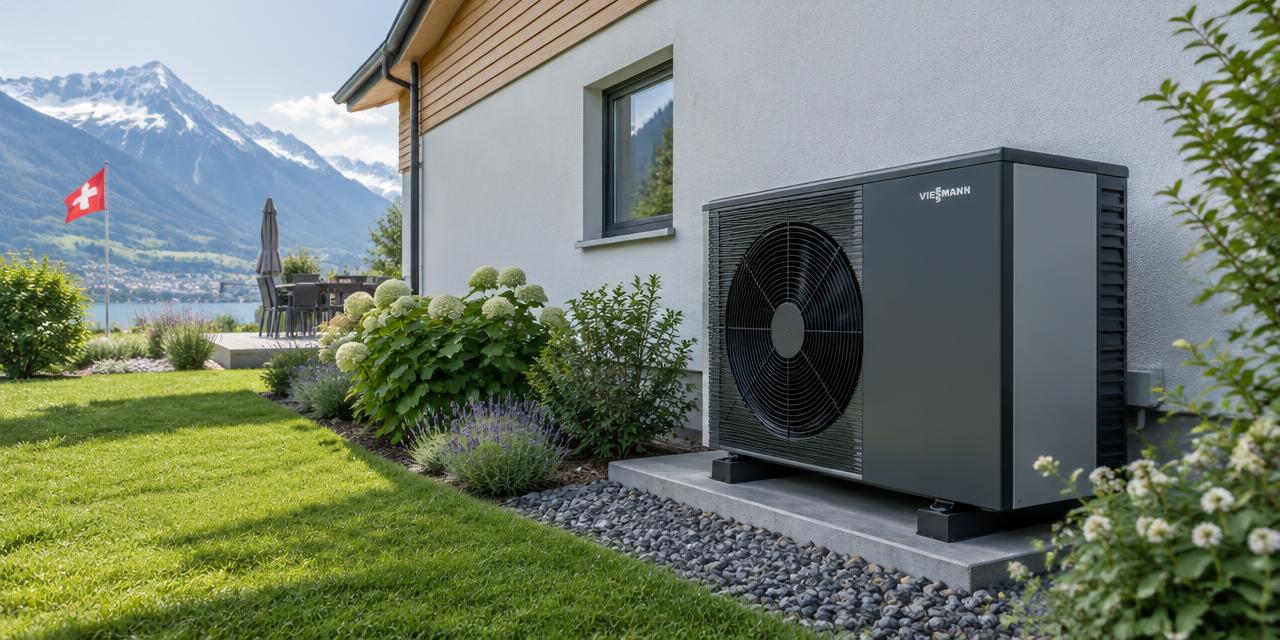
Range options include models with Inverter technology, allowing for precise power modulation for better efficiency. Furthermore, acoustic integration is a major element: outdoor units must comply with the limit values of the Noise Abatement Ordinance.
Accessories such as soundproof enclosures or choosing a strategic location help avoid nuisance for your neighbors, a requirement often checked when obtaining the building permit.
Lancy has a diverse housing stock with over 16,000 units, whose needs vary radically depending on their year of construction. Houses built before the 1990s often require special attention regarding thermal insulation before considering a heat pump.
Installing a heat pump in an poorly insulated building is counterproductive: the heat pump will have to provide excessive energy, increasing your bills. Additionally, it is essential to check the condition of internal distribution networks (radiators or floor heating).
The older real estate stock may also present risks of undesirable materials like asbestos, requiring a prior diagnosis before any modification to technical systems. For recent or renovated buildings, installation is simplified by high-performance insulation.
It is highly recommended to consult the city's interactive energy map to identify if your neighborhood is prioritized for district heating. An independent thermal study is often the best way to determine if your building is ready for a heat pump or if building envelope work is an essential prerequisite.
Genevan regulations impose clear procedures for installing a heat pump. If your device exceeds a power of 10 kW, a building permit from the Office of Urban Planning is mandatory. For powers of 10 kW or less, a prior declaration is sufficient, but it must be accompanied by an acoustic compliance certificate.
This document is essential to validate compliance with the noise immission limits of the Noise Abatement Ordinance.
The built heritage, particularly listed buildings or those located in specific protected areas, imposes additional constraints for the visual integration of outdoor units. It is imperative to check with the municipal authority regarding heritage protection zones.
If your project is complex or located in a sensitive zone, hiring an acoustics specialist is highly recommended to compile a robust file. Keep in mind that complying with these procedures guarantees the longevity of your installation and avoids any risk of appeals or forced compliance later on.
The energy transition benefits from financial support, particularly through Genevan cantonal grants for replacing oil or gas heating. It is crucial to note that any grant application must be submitted BEFORE work begins. Failure to follow this chronological order makes your project ineligible for any financial aid.
The amounts are awarded as flat rates or percentages depending on the replaced system. For precise details on the criteria and current amounts, you should contact the Cantonal Energy Office (OCEN) directly.
In addition to these grants, replacing a fossil fuel heating system with a renewable one can have interesting tax implications, often deductible from taxable income as energy-saving work.
Be sure to keep all invoices and the complete building permit file, as they will be required to justify your aid applications and tax returns. Financial planning should be integrated from the initial phase, considering total costs and long-term energy savings.
The heat pump installation project follows several structured stages, from design to commissioning. Everything starts with the thermal diagnosis of your building and the acoustic study, followed by the building permit application to the Office of Urban Planning.
Once the permit is obtained, the schedule should be set outside the intense heating season if possible, although replacing a heating system can be done outside the deep winter cold to minimize discomfort.
Installing components, connecting to the hydraulic network, and electronic parameterization constitute the core of the work.
Commissioning includes a phase of rigorous testing to ensure the efficiency of the heat pump. It is advisable to anticipate the administrative deadlines for obtaining permits, which may vary depending on the complexity of the file.
Effective coordination between installers and, if necessary, acoustic experts helps reduce the total duration of the work. Post-installation follow-up is also recommended to verify that actual consumption matches the initial projections established during the feasibility study.
To ensure the success of your project, avoid neglecting the sizing study, as a poorly matched heat pump will consume too much energy. Never start work before receiving confirmation for your grants. Ensure the location of the outdoor unit complies with noise standards to avoid neighborhood conflicts.
Do not forget to check if a district heating connection is possible in your neighborhood via the municipal energy map.
Here is your checklist : 1. Consult the interactive energy map to check priority district heating zones. 2.5 °C temperature. 3. Contact the OCEN to validate grant conditions before any commitment. 4. Check if you are in a heritage zone requiring specific authorization. 5.
Obtain an acoustic compliance certificate for any project, especially if the power exceeds 10 kW. 6. Request several comparative quotes, insisting on the quality of sound insulation. 7. Submit your building permit application on time to the Office of Urban Planning.
Flat rates and percentages depend on the replaced system; check with the cantonal energy office.
Geneva cantonal support for replacing oil or gas heating with renewable systems (heat pumps).
www.ge.chCheck amounts and conditions with the provider before signing: apply before work starts in most cases.
1212 Grand-Lancy · about 0 km
Home automation specialist in Grand-Lancy, offering solutions for lighting, heating, security, and solar control management.
batiacces.ch1212 Grand-Lancy · about 0 km
Maffiolo SA in Grand-Lancy designs, installs, maintains and repairs heating, heat pump, air conditioning and ventilation systems for residential and industrial buildings.
maffiolo.ch1212 Grand-Lancy · about 0 km
Geneva-based specialist since 2003 in the distribution, commissioning, and maintenance of heat pumps, air conditioning, and ventilation systems.
clim-diffusion.com1212 Grand-Lancy · about 0 km
Devinaz SA, based in Grand-Lancy, designs, installs and maintains heating systems and photovoltaic installations, and services and replaces water heaters.
devinaz.chSuggestions from the commercial register by distance and activity. Not an endorsement or partnership.
You must submit a building permit application or a prior declaration to the Office of Urban Planning. Don't forget to include an acoustic compliance certificate.
Simply consult the interactive energy map provided by the City of Lancy. It indicates connectable areas or those with planned connections.
Installations must comply with the limits of the Noise Abatement Ordinance. An acoustic study is often required to ensure this compliance.
It is not a strict legal requirement, but it is highly recommended to ensure the heat pump's efficiency and limit your bills. A heat pump performs better in an insulated building.
No, cantonal grants must imperatively be requested before any financial commitment or start of work. Respecting this order is a prerequisite.
Lancy obtained the Energy City Gold label in 2025, which remains valid until 2028. This demonstrates the municipality's long-term commitment.
With a design temperature of -5.5 °C, your installer must calculate the necessary power to maintain comfort during these winter cold peaks.
Source : swisstopo – service d'altitude (MNT)
Source : Open-Meteo Historical Weather API (réanalyse ERA5, moyenne 2015-2024)
Source : Open-Meteo Historical Weather API (réanalyse ERA5, moyenne 2015-2024)
Source : Open-Meteo Historical Weather API (réanalyse ERA5, moyenne 2015-2024)
Source : Open-Meteo Historical Weather API (réanalyse ERA5, moyenne 2015-2024)
Source : Open-Meteo Historical Weather API (réanalyse ERA5, moyenne 2015-2024)
Source : Open-Meteo Historical Weather API (réanalyse ERA5, moyenne 2015-2024) · estimate
Source : lancy.ch
Source : lancy.ch
Source : Guide Installations Solaires et Thermopompes - Canton de Genève