
Germa Distribution SA
1870 Monthey · about 0 km
Germa Showroom specializes in outdoor landscaping, offering bioclimatic pergolas, carports, and fencing services in French-speaking Switzerland.
solstice-sa.chTerrace construction · Monthey
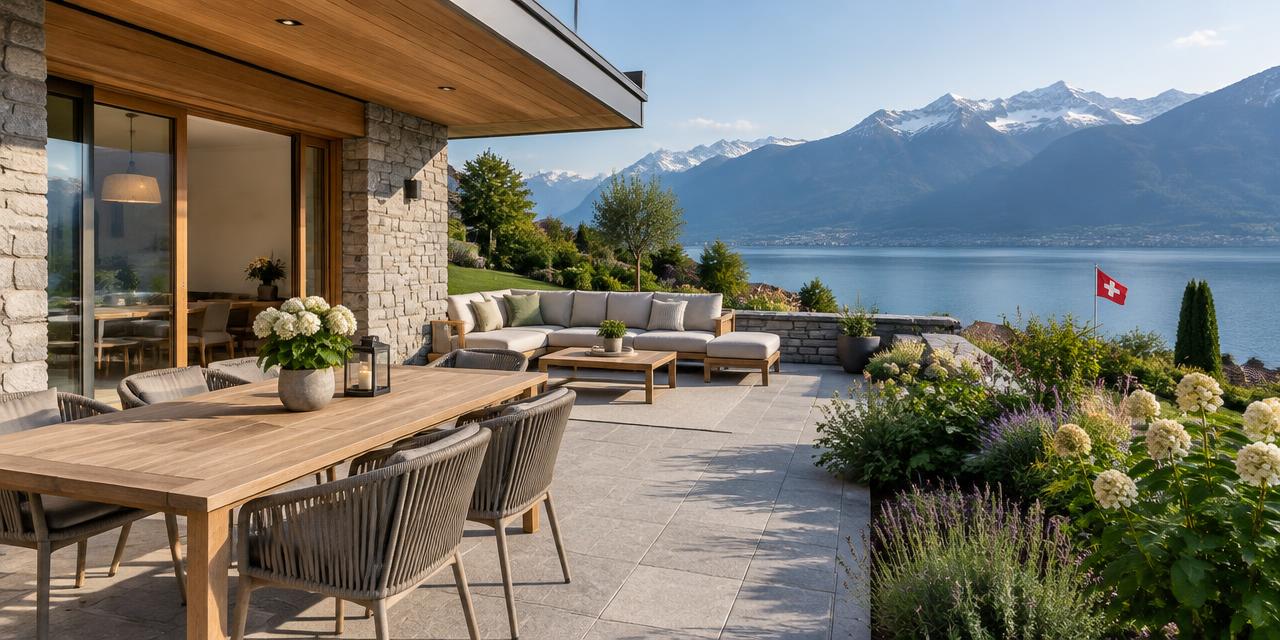
Small project
CHF 4'100 – CHF 13'900
Typical project
CHF 7'000 – CHF 22'700
Large project
CHF 11'500 – CHF 36'700
Computed with our estimator for Monthey (regional factor included), standard finish. Only the project size changes.
6 °C.7 °C, the planning of your terrace must necessarily anticipate these rigorous climatic conditions. A well-thought-out project not only improves your living environment but also protects adjacent structures from thermal variations.
The ideal period to start work is after the end of persistent frost, generally in spring, to ensure the stability of the support structures.
Taking into account the 2711 Kj/year heating degree days, a well-oriented terrace, benefiting from the 1385 kWh/m²/year of global irradiation, can contribute to better thermal management of your home.
It is therefore recommended to evaluate the bearing capacity of the soil and the resistance of the chosen materials to ensure the durability of your investment in the face of Valais winters.
The success of a terrace depends above all on the quality of its support. Whether it is a concrete slab, adjustable pedestals, or a compacted gravel bed, the choice must be adapted to the nature of the soil and the anticipated loads.
The support is as important as the covering, as it ensures the durability of the structure and prevents premature subsidence.
Next, the choice of surface material is crucial. For frost-prone regions like Monthey, it is imperative to select pavers, tiles, or wood that are resistant to freeze-thaw cycles. Porous materials can crack if they are not specifically certified for outdoor use in alpine environments.
Options also include integrated drainage systems that facilitate rainwater runoff and prevent damaging accumulations. Do not forget to integrate comfort options such as low-energy lighting, safety kerbs, or a pergola if you want a shaded area protected from direct rays.
The building stock in Monthey presents varied characteristics depending on the era of construction. For buildings constructed before 1990, it is imperative to remain vigilant regarding the potential presence of pollutants, such as asbestos, during excavation or fixing structures to facades.
Before any intervention, check the condition of the perimeter insulation of your dwelling. A new terrace must under no circumstances compromise the integrity of the insulating barrier or create thermal bridges that are harmful to the energy performance of your building.
In addition, be attentive to the path of underground networks (sewerage, electrical cables, gas pipes) during excavations necessary for the foundation. Older buildings may have networks that are not precisely documented. It is highly recommended to consult available site plans and conduct cautious surveys.
If you are planning a raised or attached terrace, ensure that the anchors do not weaken the load-bearing structure, especially in older buildings whose masonry may require special precautions during mechanical fixings.
Regulations for terrace construction depend mainly on the nature and scope of your project. Although there is no specific inventory available for Monthey regarding protected areas, a covered or raised terrace may require prior municipal authorization.
It is essential not to assume you are exempt from a permit, especially if the structure significantly alters the exterior appearance of your property or impacts direct neighbors. We advise you to contact the urban planning department of the municipality of Monthey directly before ordering any materials.
The local authorities are the only ones authorized to confirm whether your land is subject to specific regulations related to heritage or zone plans. When making your inquiries, have your site plans and photos of the current location ready.
If your project is located near a protected area, additional requirements regarding material choices or colors may apply. By following these verification tips, you will secure your project and avoid any risk of restoration ordered by the authorities for administrative non-compliance.
The construction of a simple terrace is generally not eligible for cantonal energy subsidies, unless it is part of a larger project of external thermal insulation or improvement of the overall energy performance of your dwelling.
It is crucial to note that no financial aid is provided for the creation of a standard terrace as an isolated work. Therefore, it is essential to plan your budget taking these elements into account before the start of the project.
Regarding taxation, renovation and development works can be tax-deductible depending on their nature: maintenance works are deductible, whereas capital improvement works are considered investments. It is highly recommended to keep all detailed invoices and request clear quotes.
If you are considering an aid application within the framework of a global renovation (for example, if the terrace supports high-performance insulation), the golden rule is to submit any aid or subsidy application before the actual start of the works.
A complete and validated file beforehand is the only guarantee for hoping to obtain any financial support if the project meets strict energy efficiency criteria.
The progression of a terrace construction site in Monthey follows a rigorous logic to guarantee the durability of the work in the face of local climate constraints. The first step always consists of a preparation phase including cleaning, marking out the ground, and disposing of excavated earth.
Next comes the implementation of the foundation : this step is critical, as the support must be perfectly compacted to avoid future subsidence. Due to the 64 annual frost days, runoff water management and drainage are integrated from this phase to prevent moisture accumulation under the covering.
After preparing the support, the installation of the final covering takes place once the structure is stable and clean. This phase requires precision, especially to ensure the slopes necessary for natural water drainage. Once the laying is finished, the finishes (kerbs, lighting, joints) complete the development.
The best period to carry out this work remains the spring and summer months, thus avoiding negative temperatures that would impair the proper setting of binding materials (mortars, glues). By respecting this sequence, you limit the risks of premature degradation due to the temperature variations typical of the region.
One of the most frequent errors is neglecting the preparation of the support. A terrace laid on poorly compacted ground will inevitably suffer from deformations. Also, avoid choosing materials that are not frost-resistant, as this would lead to rapid degradation of your covering.
Another classic mistake is forgetting the drainage slope, which causes harmful water stagnation. Finally, never start work without having verified the presence of underground networks.
Before requesting your quotes, follow this checklist : verify that your intentions comply with municipal regulations, ask for a soil study if necessary, list precisely the desired options (lighting, access, pergolas), and demand detailed quotes mentioning the installation materials.
Ensure that the selected company offers frost-resistant solutions adapted to Monthey and that it provides appropriate water drainage. By writing your requests precisely, you will facilitate comparison between the different offers. Remember that the quality of the support counts as much as that of the final covering.
Also prepare a realistic schedule, avoiding periods of intense frost to ensure implementation according to technical standards.
No specific grant listed for this work. Maintenance tax deductions may still apply.
1870 Monthey · about 0 km
Germa Showroom specializes in outdoor landscaping, offering bioclimatic pergolas, carports, and fencing services in French-speaking Switzerland.
solstice-sa.ch1870 Monthey · about 0 km
Lejan EG Sàrl is a company specializing in the installation of windows, doors, pergolas, verandas, and closure systems.
lejaneg.ch1870 Monthey · about 0 km
ND Carrelage Sàrl is a Valais-based company specializing in the installation of tiles, earthenware, and the renovation of walk-in showers.
nd-carrelage.ch1870 Monthey · about 0 km
Specialist in waterproofing, insulation, resin, and roof safety based in Monthey, serving Valais and the Chablais region.
jks-tech.chSuggestions from the commercial register by distance and activity. Not an endorsement or partnership.
Yes, it is highly recommended to contact the municipal urban planning department. An authorization may be required depending on the height and nature of your structure.
Prioritize tiles and pavers certified for outdoor use and frost. A perfectly drained support is also essential.
Spring and summer are ideal. Periods of frost must be avoided to ensure the proper setting of mortars and glues.
Check the existing insulation and be vigilant during foundation digging. Fixings must not create thermal bridges.
No, no aid is provided for a terrace alone. It can only be subsidized as part of a global energy renovation project.
The support ensures the stability of the terrace. A poor support leads to cracks and subsidence, regardless of the quality of the covering.
You can consult site plans at the municipal administration. Caution remains necessary when digging.
Source : swisstopo – service d'altitude (MNT)
Source : Open-Meteo Historical Weather API (réanalyse ERA5, moyenne 2015-2024)
Source : Open-Meteo Historical Weather API (réanalyse ERA5, moyenne 2015-2024)
Source : Open-Meteo Historical Weather API (réanalyse ERA5, moyenne 2015-2024)
Source : Open-Meteo Historical Weather API (réanalyse ERA5, moyenne 2015-2024)
Source : Open-Meteo Historical Weather API (réanalyse ERA5, moyenne 2015-2024)