
Canton
Solar PV — one-off payment (Valais)
Based on installed capacity; municipal premiums possible.
Federal one-off payment for PV; some Valais municipalities add premiums.
www.pronovo.chSolar panels · Monthey
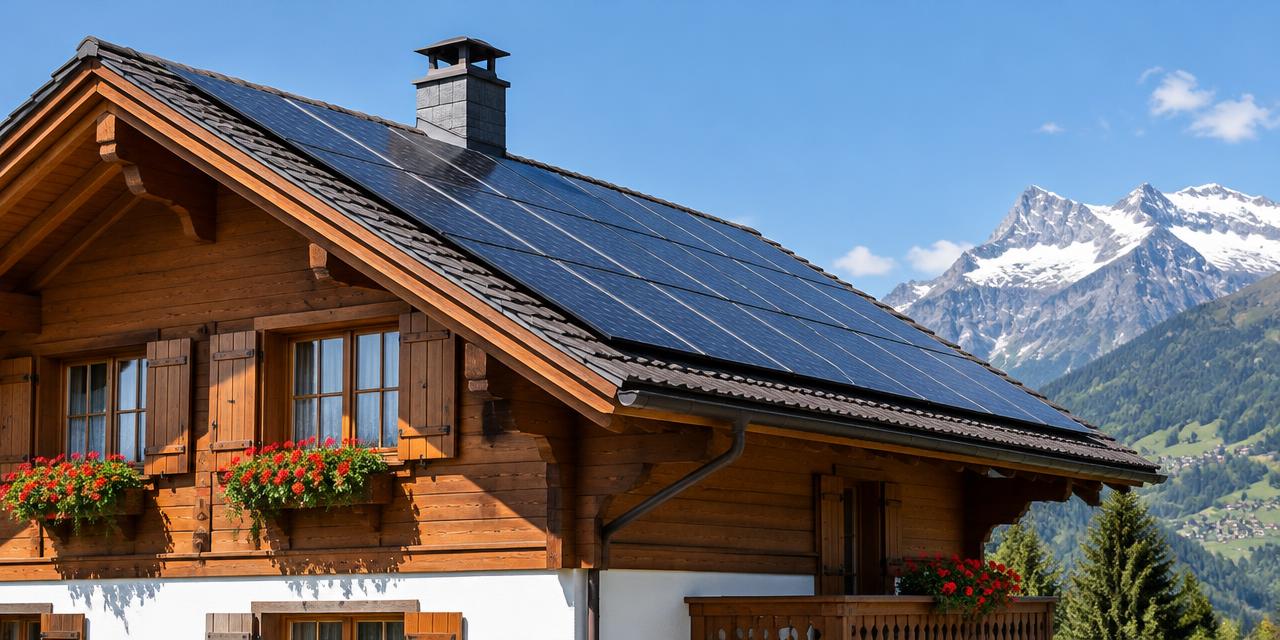
Small project
CHF 9'800 – CHF 18'500
Typical project
CHF 18'100 – CHF 32'900
Large project
CHF 31'400 – CHF 55'800
Computed with our estimator for Monthey (regional factor included), standard finish. Only the project size changes.
Monthey benefits from a favorable annual global irradiation of approximately 1385 kWh/m². With an estimated yield of 1219 kWh/kWc/year for a south-facing installation, the local production potential is particularly attractive.
Undertaking work today aligns directly with the 2023-2027 Energy Policy Program, which seeks to increase the production of indigenous renewable electricity.
6°C and significant heating needs, reinforces the benefit of controlled self-consumption. As a Gold Energy City, Monthey actively encourages homeowners to reduce their reliance on fossil fuels.
Choosing to install photovoltaic panels now not only allows for capitalizing on current support programs but also contributes to the industrial city's vision of becoming an ecological hub, while anticipating future energy market trends.
The success of a photovoltaic project in Monthey relies on rigorous technical choices tailored to your roof. The range of panels influences not only aesthetics but, above all, efficiency and durability.
It is crucial to evaluate the peak power needed based on your actual consumption, as profitability primarily depends on the share of electricity consumed on-site. Options include monocrystalline or polycrystalline panels, each technology having specific features based on sunlight exposure and available surface areas.
Furthermore, architectural integration is a determining factor. The choice between a more economical rooftop mounting and building-integrated photovoltaics will depend on your building's configuration and aesthetic aspirations. Optimization also involves choosing inverters and possibly storage systems.
A sufficiently adapted rooftop installation is often subject to a simple notification, but it remains essential to ensure that the selected equipment meets electrical safety standards and the climatic resistance specific to the Valais region, particularly to support potential snow loads.
Monthey possesses a diverse building heritage, a legacy of its industrial and urban development. For houses built before 1990, it is imperative to perform a preliminary check regarding the possible presence of pollutants, such as asbestos, before any intervention on the framework or roofing.
An old roof often requires restoration or structural reinforcement to support the weight of solar panels. The building's overall thermal performance must also be analyzed, as photovoltaic production is more effective when combined with a well-insulated home.
The internal electrical network of older buildings is not always designed to handle the new power levels generated by a solar installation. Therefore, it is necessary to have the electrical panel audited by a qualified professional.
In Monthey, energy challenges include improving the efficiency of existing installations. Thus, inspecting roof waterproofing and technical compliance before installing panels helps avoid unforeseen maintenance costs.
Consider this phase as an opportunity to modernize your entire home energy system, ensuring synergy between renewable production and the efficiency of your heating or ventilation equipment.
Compliance for your project is a key step. Although sufficiently adapted rooftop photovoltaic installations often benefit from a simplified notification procedure, it is essential to check with the local urban planning department whether your building is in a protected area or part of a specific inventory.
Local regulations may impose specific aesthetic or technical constraints, especially if your property has historical or architectural value.
Before starting work, systematically contact the municipal authorities to obtain written confirmation. This ensures that your project complies with current regulations and avoids any risk of post-hoc removal orders.
Monthey's vision, geared toward becoming an ecological city, encourages the development of renewable energy, but this must be done while respecting the overall urban framework. Also, inquire about any specific details related to the municipality's energy master plan.
By following these steps, you secure your investment and facilitate the administrative authorization process required for commissioning your installation.
Financing your solar project in Monthey can be optimized through several levers. The federal one-off remuneration via Pronovo is the primary basis for reducing the investment for small installations. It is crucial to submit your application before work begins to ensure your eligibility.
The amount of this aid depends directly on your system's installed capacity. Additionally, check if specific municipal premiums are available in Monthey, as some Valais municipalities add local subsidies to the federal scheme.
Regarding taxation, investments made to save energy and protect the environment are often deductible from your income tax. Keep all your invoices and payment receipts carefully.
The order of steps is crucial : first obtain administrative authorizations, then submit your subsidy applications before signing the final quotes with your providers.
This administrative rigor ensures you benefit from all the aid to which you are entitled and optimizes your solar installation's long-term profitability while supporting the local energy transition.
The timeline for a solar installation is divided into several distinct phases. It all begins with a feasibility study and the application for necessary authorizations from municipal authorities. Once the file is validated, you proceed with ordering equipment and signing installation contracts.
The work itself begins by securing the roof, followed by installing the mounting system, the panels, and finally, the electrical connection to the distribution board.
It is wise to plan the work outside of freezing periods, which include approximately 64 days per year in Monthey, to ensure the safety of those working on the roof and the proper execution of waterproofing.
Spring and summer are often preferred to facilitate high-altitude work and reduce the risk of delays related to winter weather conditions.
Following this seasonal logic allows for quick and efficient installation, minimizing inconvenience for occupants and enabling optimal commissioning before the following winter's peak consumption.
To ensure the longevity of your installation, avoid neglecting the analysis of your roof's condition before mounting. Never start work without having received financial aid confirmations and the necessary municipal authorizations.
It is also risky to overestimate theoretical production without accounting for shading or actual pitch. Before requesting quotes, ensure your interior electrical installation meets current standards. Always ask for at least three comparative offers including comprehensive services, from design to connection.
Here is your checklist : Check if your roof requires structural renovation before installing panels. Get an audit of your electrical panel to ensure it can support the new load. Contact the municipality to confirm the absence of heritage constraints on your building.
Submit your subsidy applications, particularly to Pronovo, before signing anything. Plan for minimal annual maintenance to clean the panels. Ensure the chosen company has the necessary certifications for roof work and electrical connection.
Finally, prioritize an installation sized to maximize your direct self-consumption to improve your project's overall profitability.
Based on installed capacity; municipal premiums possible.
Federal one-off payment for PV; some Valais municipalities add premiums.
www.pronovo.chCheck amounts and conditions with the provider before signing: apply before work starts in most cases.
1870 Monthey · about 0 km
Specialist in civil defense shelters, cellar carpentry, and drone maintenance for facades, roofs, and solar panels.
abriprotect.ch1870 Monthey · about 0 km
Guérin-Guinnard SA is an electrical company based in the Chablais region offering comprehensive installation, maintenance, and solar energy services.
guerin-guinnard.ch1870 Monthey · about 0 km
Grau Electricité SA is a Swiss company specializing in electrical installations, home automation, and photovoltaic solutions.
grau-electricite.ch1870 Monthey · about 0 km
Groupe E Valais SA specializes in electrical installations, district heating, solar PV solutions, and energy management in Monthey.
groupe-e.chSuggestions from the commercial register by distance and activity. Not an endorsement or partnership.
Photovoltaic panels generally have a lifespan of 25 to 30 years. Inverters often need to be replaced after 10 to 15 years.
A sufficiently adapted rooftop installation often benefits from a simple notification procedure. However, check with the urban planning department in case of a protected zone.
Yes, installing batteries allows you to store excess production for use in the evening. This increases your self-consumption rate.
Maintenance is minimal, consisting mainly of periodic cleaning and a technical check. This ensures optimal production over time.
Yes, the panels produce electricity even in winter, although the yield is lower due to reduced sunlight. Diffuse light is sufficient to generate power.
The key is self-consumption: use your energy-intensive appliances during the day. The federal one-off remuneration also helps reduce the initial investment.
Check the strength of your roof, request municipal authorizations, and submit your subsidy applications before signing any contract.
Source : Open-Meteo Historical Weather API (réanalyse ERA5, moyenne 2015-2024) · estimate
Source : swisstopo – service d'altitude (MNT)
Source : Open-Meteo Historical Weather API (réanalyse ERA5, moyenne 2015-2024)
Source : Open-Meteo Historical Weather API (réanalyse ERA5, moyenne 2015-2024)
Source : Open-Meteo Historical Weather API (réanalyse ERA5, moyenne 2015-2024)
Source : Open-Meteo Historical Weather API (réanalyse ERA5, moyenne 2015-2024)
Source : Open-Meteo Historical Weather API (réanalyse ERA5, moyenne 2015-2024)
Source : monthey.ch