
Canton
Facade insulation — Buildings Programme (VD)
Contribution per insulated m², depending on energy requirements met.
Grants for thermal insulation of the building envelope (walls, roof) via the Buildings Programme.
www.leprogrammebatiments.chRoof renovation · Pully
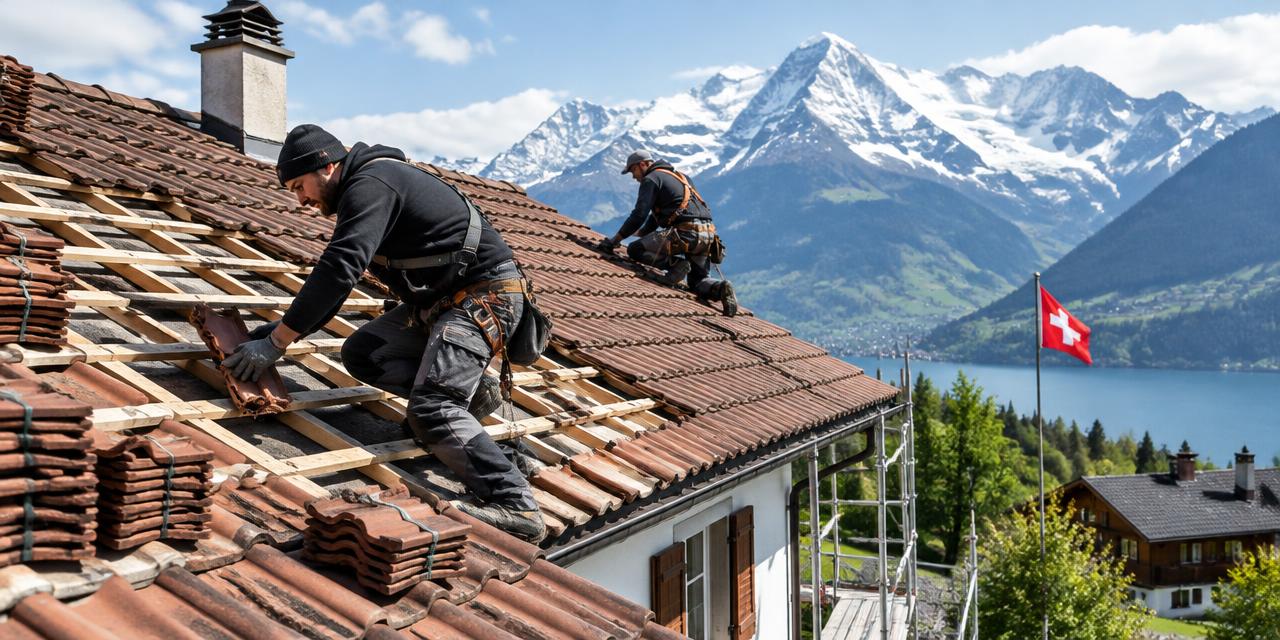
Small project
CHF 16'400 – CHF 37'600
Typical project
CHF 29'700 – CHF 65'400
Large project
CHF 49'600 – CHF 107'200
Computed with our estimator for Pully (regional factor included), standard finish. Only the project size changes.
The roof is the main barrier against bad weather in a municipality like Pully, located at an altitude of 426 meters.2 °C, your roof is subject to significant thermal and mechanical stress.
Deficient insulation or weakened waterproofing leads to major energy overconsumption, exacerbated by heating requirements linked to 2776 heating degree days. Undertaking work allows you to sustainably reduce your energy bills while protecting the building's structure from moisture.
It is wise to act before damage becomes irreversible. An aging roof carries the risk of leaks that can damage the frame, attic, and internal insulation. Beyond thermal performance, preventive renovation avoids costly emergency repairs.
Taking advantage of a roof covering replacement to install solar panels is an ideal opportunity, as the municipality of Pully actively encourages energy transition through its local concept and the Ecowatt program.
The choice of materials is decisive for durability and energy efficiency. Depending on the exposure of your roof and local climatic constraints, different options are available.
Roof insulation, carried out in parallel with the covering, is a critical step often eligible for the Building Program, allowing you to maximize your return on investment. The ranges of tiles, slates, or steel pans vary not only in aesthetics but also in weather resistance and the maintenance required over the years.
A major consideration is the integration of renewable energy. If you plan to install solar panels, their removal and reinstallation must be budgeted from the start if the roof is reaching the end of its life. The solar potential of Pully, estimated at 1199 kWh/kWc/year, makes it a very profitable option.
Finally, the complexity of the roof frame, the presence of dormers or roof windows influence the cost and duration of the work. It is recommended to choose durable materials capable of supporting potential snow loads and temperature variations.
Pully's housing stock is diverse and requires careful analysis before any project. Old buildings may contain obsolete or even dangerous materials, the management of which must be integrated into the quote. It is imperative to check for the presence of asbestos in insulation or old roof elements dating from before 1990.
A preliminary diagnosis helps secure the site and avoid additional costs related to unexpected asbestos removal. Electrical and ventilation networks, often intertwined in the roof frames of constructions from the 60s-80s, also deserve special attention so as not to disrupt existing installations.
For more recent homes, the challenges are more about bringing insulation up to standard to meet current requirements. Adding high-performance insulation materials to an existing structure often requires adapting roof overhangs and metalwork.
Finally, if your building is located in a protected area, aesthetic constraints apply, particularly on the choice of colors and the installation of solar panels.
In these sectors, specific requirements for architectural integration may limit technical options, requiring careful consideration of respecting local heritage before submitting any building permit application.
In Pully, as in the rest of the canton of Vaud, the roof renovation procedure follows precise frameworks. For most projects, the work is subject to the simplified procedure or exemption from building permits.
However, this exemption does not apply automatically if the building is protected, located in a protected area, or if the work results in a change of external appearance or significant volume.
It is therefore essential to contact the municipal technical services before incurring any expenses to confirm the regime applicable to your plot.
Regarding solar installations, a simplified procedure is also provided, facilitating energy transition. However, if your residence has high heritage value, such as being registered in an inventory or located in a historical sector, strict rules on the placement of panels may be imposed.
In these cases, the panels must be laid flat on roofs, flat roofs, or annexes. Compliance with these guidelines is crucial to obtain the necessary authorizations within the expected deadlines.
In case of doubt, a preliminary review by the municipality helps to clear up ambiguities about the aesthetic feasibility of your roof project.
Energy renovation is supported by clear incentive schemes. The Building Program (VD) offers subsidies for thermal insulation of the envelope, including the roof. The amount depends on the energy requirements met after the work.
The order of steps is imperative : you must absolutely submit your subsidy application before the start of the work. Any advance implementation cancels your right to aid. These contributions are designed to alleviate the financial weight of investments aimed at rationalizing energy consumption.
On the fiscal front, you have a significant advantage for investments intended to save energy. The deduction rate for these works is 100%. It is possible to choose between deducting actual costs or a flat-rate deduction for each property.
If your investment costs exceed your net income for the year, you have the possibility to carry forward the balance over the two following tax periods. Note that if you receive public subsidies, you can only deduct the part of the costs that you assume personally.
This tax management helps to optimize the overall financing of your renovation project.
The planning of a roof construction site must anticipate seasonal constraints, particularly due to the 44 annual frost days in Pully. It is preferable to avoid the coldest months to ensure the correct installation of insulation and waterproofing, which require mild temperatures for optimal adhesion.
A typical project begins with a technical diagnosis, followed by a phase of permit applications if necessary. Once permits are obtained and subsidies validated, work can begin.
The construction site generally unfolds in three major phases: removal of the old covering, repair of the roof frame or metalwork, then installation of the new covering and insulation. During the entire period, temporary protection is put in place to shelter the building from precipitation.
The schedule depends on the weather and the accessibility of the roof. It is advisable to allow for flexibility, as weather hazards can slow down the roofing stages.
Once the installation is complete, a final inspection of the finishes and connections ensures the project's compliance before the final acceptance of the work.
To avoid pitfalls, make sure you always get several comparable quotes based on identical technical specifications. Never neglect to check the health of your roof frame before installing new covering, especially on older buildings.
It is crucial not to forget to include in your budget the removal and reinstallation of any solar equipment or antennas. Before signing, confirm with the municipality if an authorization is required and ensure you have received approval for your subsidies.
Checklist before quoting : - Have you had an asbestos diagnosis carried out for structures dating from before 1990? - Have you checked if your building is located in a protected area? - Have you included a clause on construction waste management in the quote?
- Have you clarified the warranty periods on materials and labor? - Have you correctly identified the thermal bridges requiring priority correction during insulation? - Have you verified that the companies consulted have the necessary certifications?
- Have you properly budgeted all auxiliary elements such as gutters and roof windows?
Contribution per insulated m², depending on energy requirements met.
Grants for thermal insulation of the building envelope (walls, roof) via the Buildings Programme.
www.leprogrammebatiments.chCheck amounts and conditions with the provider before signing: apply before work starts in most cases.
1009 Pully · about 0 km
General contractor based in Pully specializing in development, construction, and full renovation of residential buildings in French-speaking Switzerland.
ineom.ch1009 Pully · about 0 km
Specialist in waterproofing and insulation for flat roofs, terraces, balconies, and parking slabs for residential and commercial clients in French-speaking Switzerland.
lartisanetancheite.ch1009 Pully · about 0 km
Belet Toiture Sàrl is a company based in Pully specializing in roofing, tinsmithing, ventilated facades, and solar installations.
belet-ferblanterie-sanitaire.ch1009 Pully · about 0 km
Mayor & Cie SA, established in Pully since 1964, specializes in sanitary installations, tinware, and roofing services.
mayorsanitaire.chSuggestions from the commercial register by distance and activity. Not an endorsement or partnership.
You can apply for subsidies via the Building Program (VD) for thermal insulation of the roof. It is imperative to submit the application file before starting the work.
Installation is subject to a simplified procedure or exemption. However, restrictions apply if your building is protected or located in a sensitive heritage zone.
Yes, investments intended to save energy are 100% deductible from your taxable income. Unused amounts can be carried forward over the following two years.
With 44 frost days per year and an altitude of 426 m, materials must be resistant. Good insulation is necessary given the 2776 heating degree days.
You must check for the presence of asbestos in buildings constructed before 1990. A preliminary diagnosis is essential before any intervention to ensure the safety of the site.
Yes, this approach is recommended and often eligible for subsidies from the Building Program. It optimizes labor costs and improves overall thermal performance.
The removal and reinstallation of panels must be budgeted during renovation. Ensure that the roofing company coordinates these interventions with qualified technicians.
Source : swisstopo – service d'altitude (MNT)
Source : Open-Meteo Historical Weather API (réanalyse ERA5, moyenne 2015-2024)
Source : Open-Meteo Historical Weather API (réanalyse ERA5, moyenne 2015-2024)
Source : Open-Meteo Historical Weather API (réanalyse ERA5, moyenne 2015-2024)
Source : Open-Meteo Historical Weather API (réanalyse ERA5, moyenne 2015-2024)
Source : Open-Meteo Historical Weather API (réanalyse ERA5, moyenne 2015-2024)
Source : ["République et canton de Genève (ge.ch)","Réseau suisse pour le patrimoine culturel (reseau-patrimoine-culturel.ch)","Energiestadt (energiestadt.ch)"] · estimate
Source : Canton de Fribourg: Permis de construire (example, this is Fribourg) · estimate
Source : Règlement sur la déduction des frais relatifs aux immeubles privés (RDFIP)
Source : Pully.ch - Energie
Source : Open-Meteo Historical Weather API (réanalyse ERA5, moyenne 2015-2024) · estimate