
J.N.R ETANCHEITE-COUVERTURE Sàrl
1752 Villars-sur-Glâne · about 0 km
J.N.R Étanchéité et Couverture is a Swiss company specializing in the renovation, repair, and maintenance of roofs and terraces.
jnr-etancheite-couverture.chTerrace construction · Villars-sur-Glâne
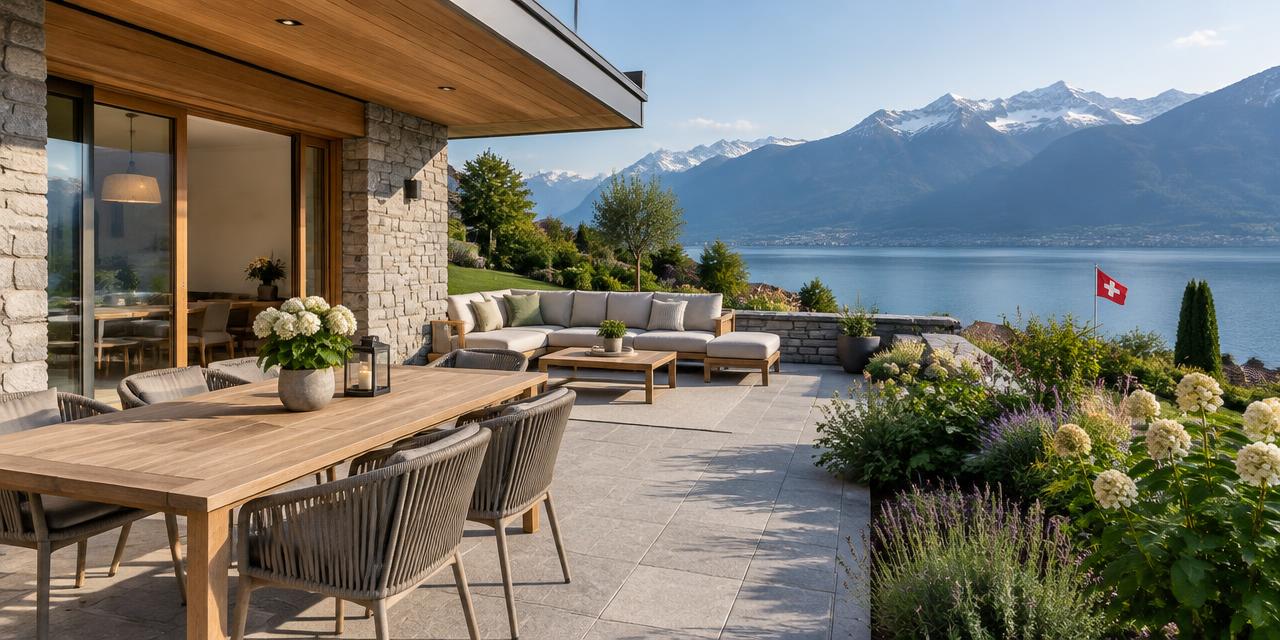
Small project
CHF 4'100 – CHF 13'900
Typical project
CHF 7'000 – CHF 22'700
Large project
CHF 11'500 – CHF 36'700
Computed with our estimator for Villars-sur-Glâne (regional factor included), standard finish. Only the project size changes.
Located at an altitude of 664 meters, the municipality of Villars-sur-Glâne has climatic conditions that directly influence the durability of your outdoor installations.3 °C, the choice of materials should not be left to chance.
Undertaking earthworks in spring or summer is essential to prevent foundations from being disturbed by intense frost or excessive humidity during implementation.
The local real estate market, which is in high demand, benefits greatly from a well-designed outdoor extension. Taking into account a solar irradiation of 1354 kWh/m²/an, optimizing the exposure of your future terrace allows for increased thermal comfort during sunny days.
Rigorous planning that considers the 3472 Kj/an of heating degree days highlights the importance of effective insulation between the building and the terrace to avoid long-term costly thermal bridges.
The technical quality of a terrace lies primarily in its structure. The support, whether it is a reinforced concrete slab, adjustable pedestals, or a compacted gravel bed, is the essential foundation to prevent soil subsidence in the face of thermal fluctuations.
In a region like ours, where the freeze-thaw cycle is frequent, it is imperative to select highly frost-resistant coverings. Dense natural stones or high-quality glazed porcelain stoneware often offer better durability against thermal shocks.
Beyond the covering, design options influence the longevity of your investment. A covered or raised terrace modifies the building structure and requires special attention to waterproofing and rainwater drainage systems.
It is advisable to plan for slight slopes to avoid water stagnation, which is responsible for many premature damages.
Finally, the choice between a wood, metal, or masonry structure will depend on the maintenance you wish to dedicate to your outdoor living space, as wood requires regular treatment against the ambient humidity characteristic of our altitude.
Villars-sur-Glâne has a diverse real estate stock that requires a differentiated approach. Houses built before 1990 present typical risks related to older materials.
When performing earthworks or fixing structures, it is crucial to verify the absence of asbestos in old glues or coverings if you are working on an existing slab.
Underground networks, often aging in older neighborhoods, must be mapped before any excavation to avoid drilling into obsolete pipes that could cause sanitation problems.
For more recent homes, the focus shifts to maintaining overall thermal insulation. Fixing a raised terrace on an externally insulated facade requires specific expertise to avoid creating thermal bridges. Fastenings must be isolated from the load-bearing structure to maintain your home's energy performance.
It is therefore recommended to integrate your terrace projects early in the energy renovation phase to coordinate facade works with outdoor development, thus ensuring continuous thermal protection against the region's harsh winter temperatures.
Modifying the exterior appearance of a building or creating a terrace may be subject to a building permit according to the regulations in force in Villars-sur-Glâne.
A covered or raised terrace is generally considered a substantial modification of the structure and requires a formal application to the competent authorities.
It is imperative to inquire in advance about the local development plan and distances to property boundaries, as these rules often dictate the authorized placement.
Respect for heritage and architectural integration is a priority. If your property is located in a protected area or near a historical monument, additional constraints on the choice of materials and colors may apply.
Before taking any commercial steps or signing a quote, contact the municipal urban planning department to verify the feasibility of your project. This verification step is essential to avoid any restoration proceedings or fines for non-compliant work, which could significantly delay your terrace project.
Regarding renovation and terrace construction projects, financial aid is often linked to comprehensive energy improvement works. If your terrace is part of a larger project including better insulation of your building, inquire about the available cantonal or federal grant programs before starting the work.
There is an absolute rule in Switzerland : any application for aid must be submitted and validated before the construction site begins. If you undertake the work before receiving a favorable response, you irrevocably lose your right to any potential support.
Concerning taxation, the maintenance of an existing terrace can in some cases be deducted from your income tax as real estate maintenance costs. However, construction or expansion works are generally considered as value-added investments and are not deductible in the same way.
It is highly recommended to consult a tax advisor or check the current Fribourg cantonal guidelines to differentiate maintenance costs from value-added investments. Carefully keep all your invoices, as they constitute the necessary proof for any future tax declaration or proof of value upon resale.
The planning of your construction site in Villars-sur-Glâne must take into account the local climate. The best season to start your terrace development is spring, once the risks of intense frost have diminished. The typical process begins with a study and administrative permit application phase.
Once permits are obtained, site preparation is the crucial step. Earthworks, the installation of drainage systems, and the laying of the foundation must imperatively be done when the ground is stabilized, thus avoiding terrain movements linked to frost.
The finishing installation phase follows, followed by the installation of finishes and railings if necessary. It is important not to rush the installation of the final covering on a foundation that has not had time to dry or stabilize properly.
By finishing your work during the temperate months of the year, you guarantee better implementation of mortars and glues, thus ensuring the durability of the structure against the 96 days of winter frost experienced in our municipality.
Anticipating each step helps to avoid construction interruptions caused by unfavorable weather conditions.
To ensure the success of your terrace in Villars-sur-Glâne, avoid classic errors such as neglecting the slope for water drainage, which causes major damage during frost. Never choose covering materials without checking their frost resistance index, as this would inevitably lead to rapid cracking.
Avoid building without checking easements or distances with your neighbors, as this may lead to a demolition requirement. Finally, never underestimate the quality of the support, because a high-end covering placed on unstable ground will deteriorate in just a few seasons.
Before asking for quotes, follow this checklist : Verify the compliance of your project with the municipal zone plan. Ensure you have identified all underground networks on your plot. List precisely the desired materials and their technical characteristics.
Determine if your project requires a building permit or a simplified declaration. Compare companies by requesting local references and guarantees on the installation of supports. Ensure that the work is scheduled outside of frost periods.
Confirm that the budget includes the costs of waste removal and support preparation.
No specific grant listed for this work. Maintenance tax deductions may still apply.
1752 Villars-sur-Glâne · about 0 km
J.N.R Étanchéité et Couverture is a Swiss company specializing in the renovation, repair, and maintenance of roofs and terraces.
jnr-etancheite-couverture.ch1762 Givisiez · about 2 km
Fribourg-based family business specializing in tile, mosaic, and natural stone installation for high-end interior and exterior renovations.
apcarrelages.ch1762 Givisiez · about 2 km
HKM SA, based in Givisiez, advises on, supplies, installs and renovates parquet and various floor coverings, and also builds outdoor terraces.
hkm.ch1762 Givisiez · about 2 km
Jérôme Helfer Sàrl is a company specializing in the installation, renovation, and maintenance of various floor coverings, including parquet, carpet, PVC, and linoleum, for interiors, terraces, and stairs.
jhsarl.chSuggestions from the commercial register by distance and activity. Not an endorsement or partnership.
It depends on the dimensions and height. It is strongly recommended to contact the Villars-sur-Glâne urban planning department before starting any construction work.
Yes, with 96 frost days per year, choosing resistant materials is essential. A poor support can lead to rapid cracking.
Favor dense natural stones or high-quality porcelain stoneware. Ensure the support is perfectly drained to prevent water stagnation.
Subsidies generally concern overall insulation. If your terrace is coupled with an energy renovation, inquire about current programs before starting.
Spring and early summer are ideal. This allows the foundations to dry properly before the arrival of winter temperatures.
Absolutely, especially in older areas. A pipe rupture can lead to significant repair costs.
Neglecting the support and drainage. Without a stable and drained base, any covering, even expensive, will deteriorate rapidly with frost.
Source : swisstopo – service d'altitude (MNT)
Source : Open-Meteo Historical Weather API (réanalyse ERA5, moyenne 2015-2024)
Source : Open-Meteo Historical Weather API (réanalyse ERA5, moyenne 2015-2024)
Source : Open-Meteo Historical Weather API (réanalyse ERA5, moyenne 2015-2024)
Source : Open-Meteo Historical Weather API (réanalyse ERA5, moyenne 2015-2024)
Source : Open-Meteo Historical Weather API (réanalyse ERA5, moyenne 2015-2024)