
Canton
Facade insulation — Geneva
Amounts based on area and target performance.
Geneva support for energy renovation of the building envelope.
www.ge.chFacade insulation · Carouge
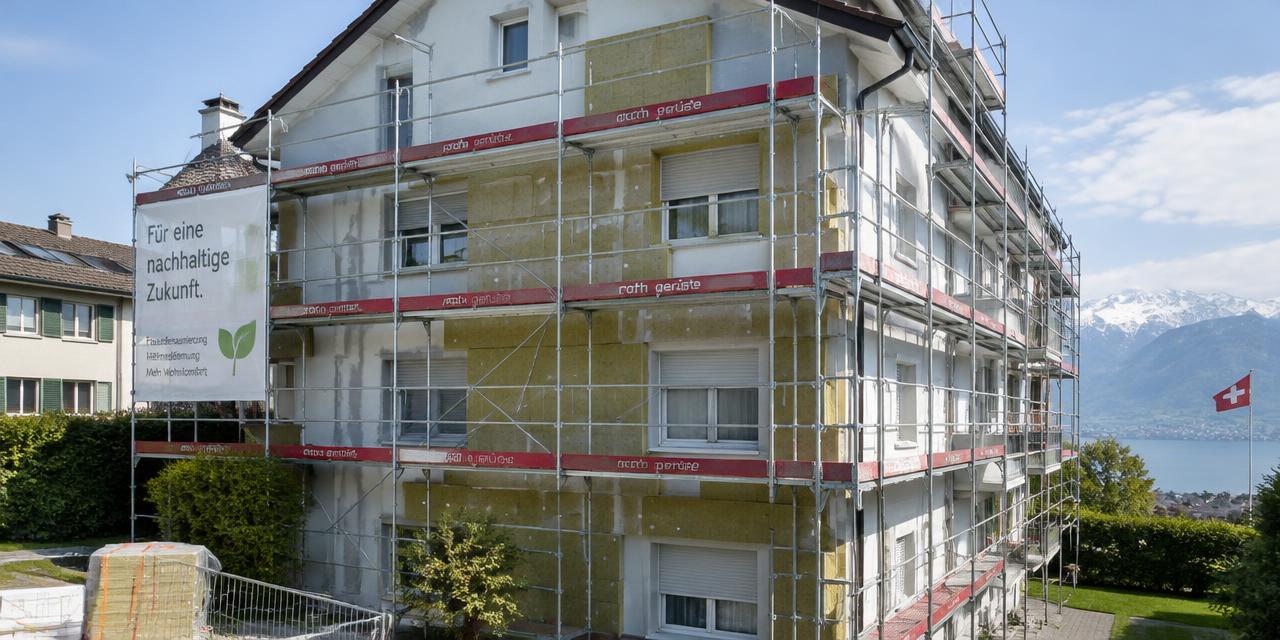
Small project
CHF 20'000 – CHF 41'400
Typical project
CHF 36'800 – CHF 73'000
Large project
CHF 62'100 – CHF 120'400
Computed with our estimator for Carouge (regional factor included), standard finish. Only the project size changes.
Carouge is located at an altitude of 382 meters and faces climatic conditions requiring rigorous thermal management, with approximately 2,695 heating degree days per year.5 °C and 46 frost days recorded annually, high-performance insulation is essential to maintain a stable indoor climate.
As a 'Gold Energy City' since 2008, the municipality has committed to an ambitious trajectory to achieve carbon neutrality by 2050, in line with the cantonal climate plan.
It is recommended to consider these works when your heating system reaches the end of its life or during a comprehensive renovation of the building envelope.
Improving insulation drastically reduces energy demand while sustainably increasing the value of your real estate assets in light of future cantonal regulatory requirements.
The choice of insulation system depends on your building's structure and current thermal performance. External Thermal Insulation (ETI) is generally the most effective as it wraps the building and limits thermal bridges, although it changes the exterior appearance.
Materials range from synthetic insulation panels to natural fibers, with each option offering different performances in terms of vapor permeability and thermal inertia.
Prior analysis of the wall condition is necessary. If your building has protected architectural elements, internal insulation may be preferred to preserve the original facade, despite a slight loss of living area. It is often advisable to couple insulation with window replacement to ensure optimal airtightness.
As scaffolding represents a significant part of the cost, it is wise to group facade works with roofing if it also requires repairs.
Carouge is distinguished by a marked architectural diversity, ranging from the historic Vieux-Carouge to more modern industrial or residential peripheral areas.
For older buildings, the nature of materials (stone, brick, lime mortar) requires specific expertise to avoid moisture or condensation issues when installing modern, low-breathability insulation.
Analysis of building materials is crucial, particularly to identify the possible presence of harmful substances such as asbestos in adhesives or old insulation for buildings dating from before 1990.
Buildings constructed during the post-war periods often have concrete structures requiring verification of reinforcement and network sealing. Inspection by a qualified professional is essential before starting work.
This step helps avoid unpleasant surprises in terms of structure and ensures that the chosen solution is adapted to the durability of the existing building, while respecting current safety standards.
The Vieux-Carouge holds a central place in the cantonal heritage. If your project concerns a protected area, respect for architectural characteristics is imperative. External insulation changes the appearance of the building and in all cases requires a building permit from the Office of Urban Planning.
Carouge has been the subject of specific studies, particularly on reconciling energy efficiency with the preservation of built heritage, highlighting the importance of consulting municipal services before your project.
Municipal regulations may impose specific conditions for facades located in a site plan or protected areas, aiming to preserve the visual coherence of the neighborhood. It is strongly advised to contact the Office of Urban Planning to find out the specific constraints for your plot.
Any visible modification must be integrated satisfactorily into the urban landscape. This process ensures that the work complies with legislation while sustainably increasing the value of your property in accordance with its architectural history.
The canton of Geneva offers aid for the energy renovation of the building envelope. These grants, the amounts of which are calculated based on the insulated area and the target performance, are an important lever for the realization of your work.
The procedure is strictly regulated : a grant application must be submitted and validated before the actual start of the work. It is therefore essential not to sign quotes or start the project before receiving a positive response from the competent authorities.
We invite you to consult the official energy portal of the canton of Geneva to obtain the necessary forms and details of eligibility criteria. Careful planning of your financial file upstream is a condition for obtaining aid.
Do not hesitate to inquire about possible tax deductions related to energy renovation works, which constitute an additional benefit to amortize the cost of your investment in the long term.
The typical flow of an insulation project begins with obtaining the necessary permits and confirming financial aid. Once the files are validated, site preparation begins with scaffolding installation. It is recommended to organize these works during mild seasons.
Indeed, facade works, particularly the application of plaster or mortar, are sensitive to weather conditions and low temperatures. With 46 frost days per year in Carouge, the choice of period is crucial to ensure the quality of implementation and the drying of materials.
The next step is to install the insulation according to the chosen technical system, followed by finishing work (plaster, siding, or other finishes). Scaffolding removal marks the end of the active phase. Rigorous monitoring by a professional ensures that every step respects best practices.
Good coordination of the various trades, if you are grouping window or roof work, is essential to minimize the total duration of your project.
To ensure the success of your project, avoid certain common mistakes. Never start your work without having previously submitted a grant application, otherwise you risk losing your rights to aid. Ensure you have obtained all necessary permits from the Office of Urban Planning before signing any contract.
It is also risky to ignore the composition of your current walls, which could lead to serious moisture problems in the long term.
Checklist before requesting quotes : 1. Check the structural condition of your current walls to identify potential treatment needs. 2. Contact the competent authorities to find out the constraints related to your area. 3. List all planned interventions (facade, windows, roof) to group the use of scaffolding. 4.
Ensure that the professional approached has the necessary qualifications for the chosen type of insulation. 5. Prepare your grant application by respecting the administrative steps. 6. Compare quotes by taking into account the overall thermal performance and not just the final cost.
Amounts based on area and target performance.
Geneva support for energy renovation of the building envelope.
www.ge.chCheck amounts and conditions with the provider before signing: apply before work starts in most cases.
1227 Les Acacias · about 0 km
Geneva-based specialist with 60 years of experience in tinware, roofing, waterproofing, roof insulation, and facade cladding for new builds and renovations.
macullo.ch1227 Les Acacias · about 0 km
Swiss manufacturer specializing in custom production of paints and varnishes for industry and construction since 1933.
decoral.ch1227 Les Acacias · about 0 km
Geneva-based company specializing in interior and exterior renovation, including painting, plastering, tiling, carpentry, and building maintenance.
swissrenovsarl.ch1227 Les Acacias · about 0 km
Geneva-based company with 40 years of expertise in installing tiles, earthenware, and mosaics for floors, walls, kitchens, bathrooms, and facades.
lanoir.chSuggestions from the commercial register by distance and activity. Not an endorsement or partnership.
Yes, external insulation changes the appearance of the building and requires a building permit. Consult the Office of Urban Planning to check the rules applicable to your area.
There are Geneva subsidies for energy renovation. You must mandatory submit your application before starting the work.
Vieux-Carouge is a protected area. Authorization is mandatory and specific constraints related to heritage preservation will be imposed by the municipality.
It is better to work during mild seasons. Mortars and plasters are sensitive to frost, which is frequent in Carouge in winter.
Yes, grouping facade work with windows and roofing is economical. Scaffolding accounts for a significant part of the budget.
For buildings built before 1990, a diagnosis is prudent. It is essential for health and waste management.
Information and forms are available on the energy portal of the canton of Geneva.
Source : swisstopo – service d'altitude (MNT)
Source : Open-Meteo Historical Weather API (réanalyse ERA5, moyenne 2015-2024)
Source : Open-Meteo Historical Weather API (réanalyse ERA5, moyenne 2015-2024)
Source : Open-Meteo Historical Weather API (réanalyse ERA5, moyenne 2015-2024)
Source : Open-Meteo Historical Weather API (réanalyse ERA5, moyenne 2015-2024)
Source : Open-Meteo Historical Weather API (réanalyse ERA5, moyenne 2015-2024)
Source : ge.ch
Source : Guide Installations Solaires et Thermopompes - Canton de Genève
Source : Énergie - Ville de Carouge