
Canton
Solar PV — one-off payment (Jura)
Based on installed capacity.
Federal one-off payment for PV in the canton of Jura.
www.pronovo.chSolar panels · Delémont
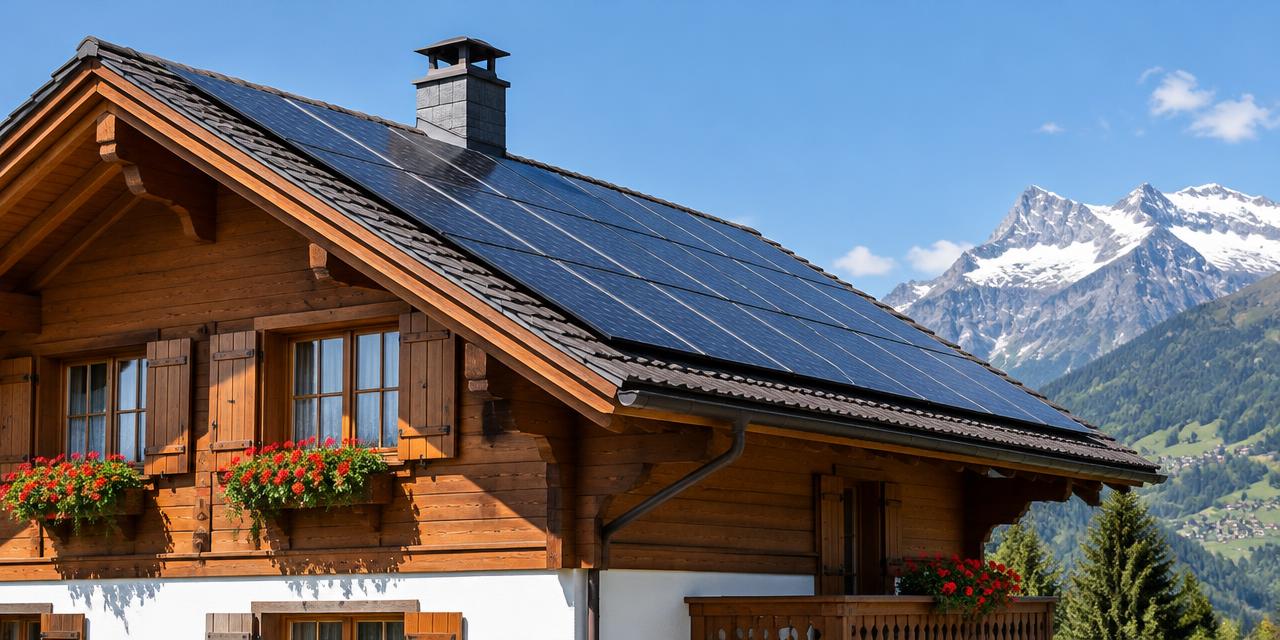
Small project
CHF 8'900 – CHF 16'900
Typical project
CHF 16'500 – CHF 29'900
Large project
CHF 28'500 – CHF 50'700
Computed with our estimator for Delémont (regional factor included), standard finish. Only the project size changes.
Delémont, located at an altitude of 418 meters, benefits from favorable sunshine with global irradiation estimated at 1270 kWh/m²/year. The canton's revised energy policy actively encourages the adoption of individual renewable solutions to meet 2050 targets.
9 °C, heating represents a significant portion of energy needs. Undertaking solar panel installation today helps reduce reliance on the electrical grid and optimizes self-consumption, especially when the heating system is coupled with a heat pump.
The ideal time to install panels is often during roof repairs or a comprehensive energy renovation. By anticipating future needs, owners secure their electricity production for decades while aligning with the cantonal strategy for energy sobriety and efficiency.
A well-sized system, taking into account local climate conditions, provides a concrete opportunity to increase the value of the property while participating in the gradual decarbonization of the Jura real estate sector.
The performance of a solar installation depends closely on the chosen technology and the roof configuration. For a south-facing roof with an inclination of approximately 30°, the estimated yield can reach 1118 kWh/kWc/year.
The choice of modules—monocrystalline or polycrystalline—as well as their integration (on-roof or in-roof) changes not only the building's aesthetics but also the system's durability.
Modern energy management systems and inverters allow for optimal conversion of DC to AC current while providing precise monitoring of production.
There are different quality levels depending on household needs and available space. Options such as coupling with storage batteries help increase the self-consumption rate, which is crucial for profitability.
It is advisable to analyze the specificities of the roof, particularly potential shading areas created by vegetation or neighboring buildings. The choice between a standard installation or high-performance modules will also depend on the available space and set financial goals.
A consultation with professionals will help evaluate the best option based on your current and future electricity consumption.
In Delémont, the building stock shows great diversity, ranging from old houses in the historic center to more recent villas. For buildings constructed before 1990, it is imperative to check for the possible presence of asbestos in roofing or insulation materials before starting installation work.
These materials must be handled by qualified professionals to ensure site safety. In addition, the attic thermal insulation should be checked, as a photovoltaic roof can influence thermal management in spaces under the roof.
The condition of the roof structure is also a critical point : it must be able to support the additional weight of panels and mounting systems.
For more recent constructions, electrical networks are generally better adapted to integrate decentralized production. However, upgrading the electrical panel may be necessary to ensure compatibility with solar inverters. In any case, it is essential to have a technical diagnosis of the roof carried out by an expert.
This check ensures that the structure is sound and capable of supporting an installation intended to last for several decades, in line with the environmental sustainability expectations advocated by local authorities.
The installation of photovoltaic panels in Delémont requires compliance with current administrative procedures. Although a system on a sufficiently adapted roof is often subject to a simple notification, it is strongly recommended to consult the municipality's technical department before any contractual commitment.
This step is crucial if the building is located in a protected area or classified as local heritage, where stricter aesthetic rules may apply. The goal is to ensure that the visual integration of the installation respects the architectural character of the Jura region.
Homeowners must inquire about official forms to be filled out and technical documents to be submitted. Municipal authorities may require plans, photos of the existing roof, and a precise description of the materials used. By taking this step early on, you avoid any risk of refusal or imposed restoration.
Do not hesitate to request written confirmation of the applicable procedures for your specific plot. Regulatory compliance is the first step toward a calm and sustainable project that fits long-term into Delémont's urban planning.
Jura homeowners can benefit from support for their photovoltaic projects, notably through the federal single remuneration managed by Pronovo. This mechanism significantly reduces the initial investment for small installations.
It is essential to inquire with official bodies before starting work, as support requests must generally be submitted strictly before any execution or irreversible financial commitment. The profitability of your installation will depend largely on your ability to consume the electricity produced on-site.
Tax-wise, the canton of Jura allows for certain advantageous deductions. Expenses related to energy-saving measures are deductible as actual costs. For maintenance, you can deduct a flat rate of 10% of gross income, increased to 20% if the building is over 10 years old, or opt for the deduction of actual costs.
These measures are designed to encourage homeowners to invest in energy efficiency and renewable production. It is recommended to carefully keep all invoices and supporting documents for your annual tax returns, thus ensuring optimal management of your real estate investments.
The execution of a solar project follows an organized cycle, starting with an in-depth technical study and the validation of municipal authorizations. Once the file is approved and grant requests are registered, the construction schedule is planned.
It is preferable to avoid periods of extreme cold, characterized by the 62 frost days per year recorded in Delémont, to ensure safe installation on the roof. The structural mounting, panel installation, and electrical wiring are followed by commissioning and performance testing.
Each step requires precise coordination between installers and the network operator.
The typical process includes several milestones : the initial site survey, preparation of the roof structure, actual installation, and connection. The total duration of the site varies according to the size of the installation and weather conditions. A mild season allows for smoother and safer execution.
It is crucial to maintain constant dialogue with your service provider to anticipate potential weather-related delays. Once connected, the installation undergoes a final inspection before being fully operational, thus allowing electricity production to begin under the best conditions of safety and compliance.
Never neglect to check the load-bearing capacity of your roof structure before planning an installation, as overloading can compromise the structure. It is essential not to forget to submit your grant and authorization requests before signing any firm commitment, so as not to lose your eligibility.
Avoid underestimating the self-consumption rate, which remains the main factor for profitability. Do not rush without having obtained at least three detailed comparative quotes based on similar technical conditions. Finally, ensure that the professionals contacted are trained in the specificities of local roofs.
Checklist before quotes : Check the date of your last roof repair. Ensure your electrical panel meets current standards. List your annual electricity needs and consumption habits. Specify if you have a heat pump or electric vehicle. Identify permanent shade areas on your roof.
Check if your building is subject to heritage protection rules. Ensure you have the space required for an inverter and, optionally, a battery. Prepare your electricity bills from the last two years to allow installers to properly size your system.
Based on installed capacity.
Federal one-off payment for PV in the canton of Jura.
www.pronovo.chCheck amounts and conditions with the provider before signing: apply before work starts in most cases.
2800 Delémont · about 0 km
The Alvazzi Group provides comprehensive technical building services, including heating, plumbing, electrical, ventilation, and renewable energy solutions.
alvazzigroupe.com2800 Delémont · about 0 km
Construction and renovation company in Delémont, specializing in masonry, sanitary facilities, heating, and turnkey projects in the Jura region.
adsconstruction.ch2800 Delémont · about 0 km
360 Comte Entreprise Générale SA provides comprehensive construction and renovation services with a focus on energy efficiency and photovoltaic installations.
360-comtesa.ch2800 Delémont · about 0 km
Thermosan SA, based in Delémont and Moutier, specializes in heating systems, sanitary installations, and solar solutions, offering a 24/7 repair service.
thermo-san.chSuggestions from the commercial register by distance and activity. Not an endorsement or partnership.
Photovoltaic panels generally have a lifespan exceeding 25 years. Inverters, however, often require replacement after 10 to 15 years.
Yes, profitability relies primarily on direct self-consumption. Batteries optimize this rate but are not strictly essential for a profitable project.
The tilt of the panels usually allows for self-cleaning via rain. An annual visual inspection is nonetheless recommended to check for persistent soiling.
It is strongly advised to use qualified professionals to ensure electrical and structural safety. A non-certified installation could jeopardize access to subsidies.
Shading reduces electricity production. An installer can perform a shading simulation to determine if the project remains viable or propose power optimizers.
Snow covers the panels and interrupts production. However, the tilt often allows for natural sliding of the snow during thaws.
It is an excellent combination. Surplus solar electricity can power the heat pump, thus increasing your overall self-consumption rate.
Source : Open-Meteo Historical Weather API (réanalyse ERA5, moyenne 2015-2024) · estimate
Source : swisstopo – service d'altitude (MNT)
Source : Open-Meteo Historical Weather API (réanalyse ERA5, moyenne 2015-2024)
Source : Open-Meteo Historical Weather API (réanalyse ERA5, moyenne 2015-2024)
Source : Open-Meteo Historical Weather API (réanalyse ERA5, moyenne 2015-2024)
Source : Open-Meteo Historical Weather API (réanalyse ERA5, moyenne 2015-2024)
Source : Open-Meteo Historical Weather API (réanalyse ERA5, moyenne 2015-2024)
Source : Ville de Delémont
Source : S0