
Humard Construction S.A.
2800 Delémont · about 0 km
Company specializing in masonry, reinforced concrete, and earthworks, also offering industrial automation solutions.
humard.comTerrace construction · Delémont
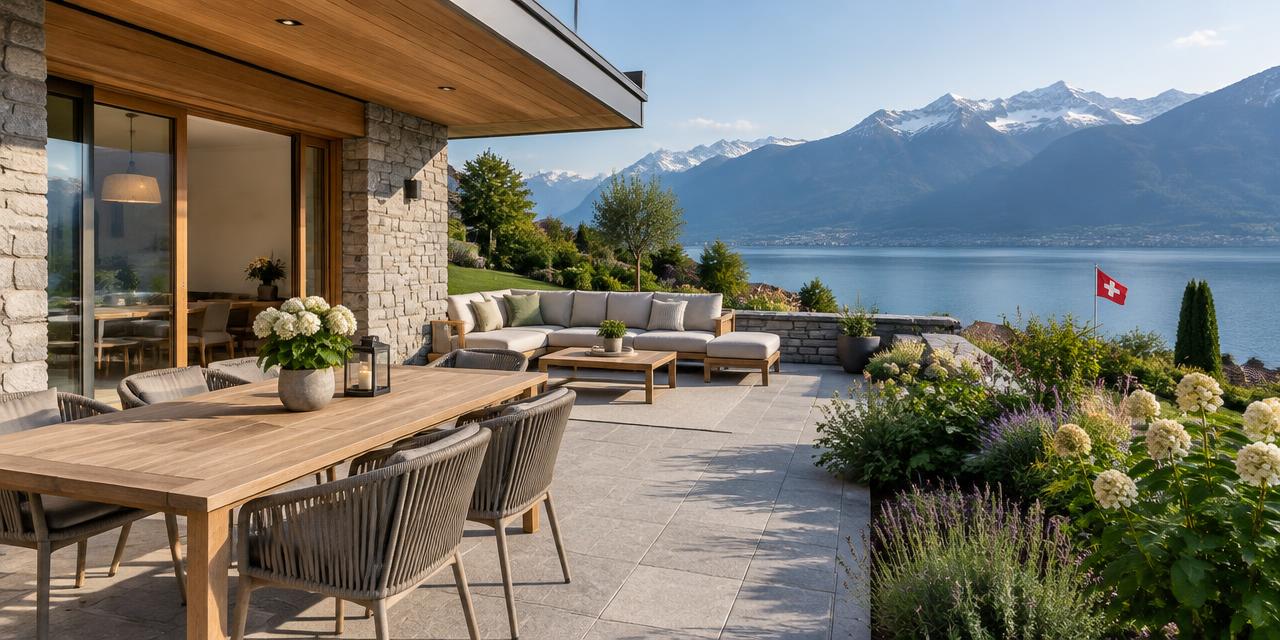
Small project
CHF 3'700 – CHF 12'600
Typical project
CHF 6'300 – CHF 20'600
Large project
CHF 10'500 – CHF 33'300
Computed with our estimator for Delémont (regional factor included), standard finish. Only the project size changes.
In Delémont, located at an altitude of 418 meters, climatic conditions strongly influence the choice and durability of your outdoor installations. With an average annual temperature of 11 °C and exposure to frost cycles, your terrace is subject to significant thermal stress.
Anticipating this work allows you to fully enjoy sunny days while protecting your building from residual humidity linked to local precipitation.
The Jura climate requires careful consideration of drainage and material resistance to seasonal variations. Undertaking the work before periods of high humidity or just after the end of the frost ensures better implementation.
A well-designed terrace becomes a real asset for your home, improving the transition between indoors and outdoors while adapting to the 1270 kWh/m²/an global irradiation typical of the region.
The success of a terrace lies in the quality of the support and the selection of materials. For Delémont, where frost days reach an average of 62 days per year, the choice of surfacing is paramount.
A well-reinforced concrete slab offers a stable base but must be perfectly drained to prevent frozen water from causing surface cracks.9 °C during harsh winters.
Regarding finishes, several options are available : natural wood, composite wood, or natural stone. While wood provides a warm aesthetic, it requires regular maintenance, especially due to the region's hygrometric conditions. Porcelain stoneware, meanwhile, is highly valued for its durability and ease of cleaning.
Whatever you choose, ensure the slope of the terrace is sufficient to drain rainwater away from the house facades, thus avoiding water infiltration.
The building stock in Delémont is diverse, ranging from old stone houses to more contemporary constructions. Before designing your terrace, inspect the state of the existing foundations.
In houses built before 1990, be vigilant about the presence of asbestos in adhesives or old coatings if you need to demolish an existing structure.
Thermal insulation of the basement is also a critical point; when installing a raised terrace, avoid creating thermal bridges that could impair the overall energy efficiency of your home.
It is recommended to check the layout of underground pipes under your future terrace area. Sewage, gas, or electrical networks might be located under the planned site. Consulting land registry plans is an essential step to avoid any structural damage.
Moreover, if you are attaching a wooden terrace or a heavy structure to an existing wall, ensure the fastening method does not compromise the structural integrity of the building, especially on older houses with wall structures that are less homogeneous than current constructions.
Before starting work on your terrace, it is crucial to contact the municipal administration of Delémont. Any significant change to the exterior appearance, the addition of a covered terrace, or an elevation often requires a building permit.
Local rules aim to preserve the harmony of the urban landscape and respect the neighborhood. If your house is located in a protected zone or near a historical monument, additional constraints may apply, particularly regarding the choice of materials and colors.
Never assume that no authorization is required. Generally, a ground-level terrace may be less restrictive than a raised or enclosed structure. Contact the local town planning department to obtain precise information related to your plot. They will be able to guide you on filing a permit application if necessary.
This step secures your project and avoids later appeals or requests for compliance, which could prove costly and complex to manage once the work is completed.
Regarding financial aid for terrace development, it is important to note that outdoor comfort works generally do not benefit from direct subsidies related to the energy transition.
However, if your project includes elements like high-performance slab insulation or sustainable rainwater management, it is advisable to inquire with the competent cantonal bodies to check for possible renovation incentives.
Regarding taxes, routine maintenance work can sometimes be deducted from your taxable income, unlike property value-adding works. It is therefore essential to keep all detailed invoices.
Before starting, seek advice from your tax authority or a specialist to understand the distinction between value-maintenance work (deductible) and improvement work (often considered capital investments).
Always follow the order of steps : ensure all authorizations are obtained before incurring any expenses, to guarantee the eligibility of your project regarding local rules.
The progress of a terrace construction site in Delémont must take into account climatic conditions to ensure the durability of the structure. The best time to start work is ideally at the end of the cold season, when the risks of frost are removed.
The first stage consists of site preparation and earthworks : the goal is to ensure efficient drainage to avoid any water accumulation under the slab. Once the support is ready, the installation of the surfacing can begin, respecting the necessary drying times for materials like concrete or jointing mortars.
The work continues with finishing touches and, if necessary, the installation of comfort elements like a pergola or railings. It is essential not to rush the steps, especially during periods of low temperatures or high humidity, as this could alter the properties of the building materials.
A well-structured schedule, developed with professionals accustomed to the specifics of the region, will allow you to enjoy your new terrace serenely from the arrival of the first beautiful days of spring or early summer.
Avoiding classic mistakes is essential to ensure the success of your project. The first mistake is neglecting the soil study, which often leads to premature subsidence. Another frequent mistake is the lack of sufficient slope for water evacuation, which creates damaging stagnation for the surface.
Finally, never underestimate the importance of perimeter drainage.
Before asking for quotes, follow this checklist : verify that your land registry plans are up to date. Ensure you have precisely defined your needs in terms of usage. Confirm with the municipality the necessity of an authorization.
Establish a list of desired materials, taking into account the climatic constraints of Delémont (frost resistance). Ask for detailed quotes specifying the preparation of the support, the type of drainage, the quality of the finishing material, and the guarantees offered by the craftsman.
Finally, ensure that the quotes include cleaning the site after the work for a clean delivery.
No specific grant listed for this work. Maintenance tax deductions may still apply.
2800 Delémont · about 0 km
Company specializing in masonry, reinforced concrete, and earthworks, also offering industrial automation solutions.
humard.com2800 Delémont · about 0 km
Hofmann Carrelage Sàrl specializes in laying tiles, silicone, and screed for customized projects in the Jura region.
ph-carrelage.ch2800 Delémont · about 0 km
Docourt + Renaud SA is a carpentry and cabinetry firm based in Delémont, specializing in custom-made interior fittings for homes.
docourt-renaud.ch2800 Delémont · about 0 km
Founded in 1990 in Delémont, this joinery company provides bespoke interior fittings and exterior joinery, including windows, doors, staircases, shutters, terraces and facades.
menuiserievallee.chSuggestions from the commercial register by distance and activity. Not an endorsement or partnership.
The ideal period is after the end of the spring frosts to ensure good implementation. Avoid harsh winter months which complicate the work with building materials.
Not necessarily, but it is common if the terrace is raised or covered. Always check with the local town planning department before starting.
Use certified frost-resistant materials and ensure impeccable drainage under the slab. A well-ventilated structure also helps to limit damage.
Check for the presence of asbestos before any earthworks and ensure that wall fixings respect the existing structure. Expert consultation is recommended.
Porcelain stoneware is excellent for its resistance. If you prefer wood, choose rot-proof species and plan for regular maintenance.
Yes, to avoid creating thermal bridges. Good insulation protects the energy efficiency of your house and prevents humidity.
Terraces are generally not subsidized. However, inquire about possible tax deductions for routine maintenance work.
Source : swisstopo – service d'altitude (MNT)
Source : Open-Meteo Historical Weather API (réanalyse ERA5, moyenne 2015-2024)
Source : Open-Meteo Historical Weather API (réanalyse ERA5, moyenne 2015-2024)
Source : Open-Meteo Historical Weather API (réanalyse ERA5, moyenne 2015-2024)
Source : Open-Meteo Historical Weather API (réanalyse ERA5, moyenne 2015-2024)
Source : Open-Meteo Historical Weather API (réanalyse ERA5, moyenne 2015-2024)