
Be Piscines SA
1204 Genève · about 0.1 km
Be Piscines SA is a Geneva-based company specializing in the construction, renovation, and maintenance of swimming pools and wellness areas since 1960.
bepiscines.chTerrace construction · Genève
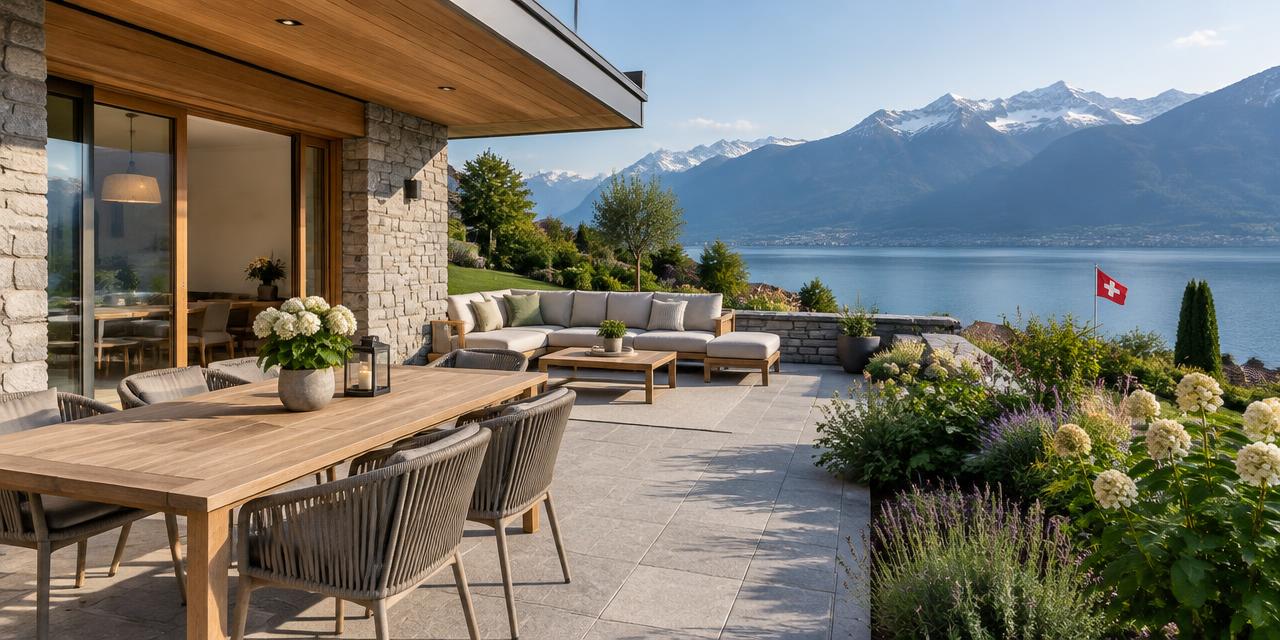
Small project
CHF 4'100 – CHF 13'900
Typical project
CHF 7'000 – CHF 22'700
Large project
CHF 11'500 – CHF 36'700
Computed with our estimator for Genève (regional factor included), standard finish. Only the project size changes.
Genève is characterized by an altitude of 374 meters and a climate marked by approximately 50 frost days per year. These conditions require deep reflection on the choice of materials and the load-bearing structure of your terrace.7 °C.
The ideal period to plan these developments is before the key season, to avoid frost weakening the foundations during construction. A well-designed terrace must withstand local thermal stresses, particularly during the freeze-thaw cycles common in the Genève basin.
Investing in robust design ensures longevity in the face of the region's varied climatic conditions.
The quality of your terrace essentially depends on the chosen base. Whether it is a concrete slab, adjustable pedestals, or a gravel bed, the base is as important as the final surface.
In Genève, the choice of materials should be dictated by their frost resistance, especially for tiles and paving stones exposed to the elements. A common mistake is to underestimate the importance of drainage under the surface, which can cause heaving or cracking over time.
Range options also vary according to finishes, whether natural stone, ceramic tiles, or treated wood. Each material imposes specific maintenance requirements.
For example, a raised terrace requires a different load-bearing structure than a ground-level terrace, impacting the cost and technical complexity of the project.
It is advisable to opt for durable materials that minimize the need for frequent renovations while maintaining an aesthetic in harmony with your architecture.
The building stock of Genève presents varied construction contexts. Although precise data on dominant construction periods is limited, it is crucial to consider the age of your building before any project.
Older constructions may hide fragile underground networks or require reinforced foundations to accommodate a new terrace without impacting the tightness of the building envelope.
For older homes, the management of rising damp and the transition between the interior and exterior are critical points. Any intervention on the structure must be designed so as not to compromise existing thermal insulation.
If your terrace is against the facade, check for the possible presence of old materials and the condition of the perimeter insulation.
Prior expertise ensures that adding the terrace does not degrade your home's energy performance, an essential aspect in a canton where the production of individual housing remains a key issue for quality of life.
In Genève, any significant transformation may be subject to a building permit issued by the Office of Urban Planning. If your project includes technical elements such as heat pumps, note that a prior declaration is sufficient for a power of 10 kW or less, while a full permit is required beyond that.
It is essential to check if your plot is located in a protected zone, particularly within the ISOS perimeter, where landscape integration rules are strengthened.
For simple projects, it is strongly advised to contact your municipality to get precise information on local regulations. If you are planning a covered or raised terrace, a permit is often necessary due to the impact on the view and the neighbors. Never start work without having obtained the necessary validations.
For buildings with heritage value, constraints are stricter, requiring particular attention to visual integration to respect the historical value of the site.
In the canton of Genève, there is no specific aid directly linked to the creation of a simple terrace. However, if your layout is integrated into a global energy renovation, such as improving insulation or installing high-performance systems, cantonal grant programs may be accessible.
The golden rule is always to make your applications before starting work. Work undertaken without prior approval is generally excluded from any financial benefit.
Tax-wise, expenses incurred for work aimed at maintaining the value of your property or adapting it can sometimes be deducted from your taxable income, according to the guidelines of the cantonal tax administration.
It is therefore recommended to carefully keep all invoices and proofs of payment from the mandated companies. Do not hesitate to request a consultation with a tax advisor or consult the official administration website to clarify the eligibility of your work in your specific situation.
The construction of a terrace follows a rigorous cycle. The first step, often underestimated, is the phase of soil study and foundation preparation. It is preferable to schedule your work outside of periods of deep frost to ensure optimal curing of sealing materials and to stabilize the ground.
Once the earthwork is completed, comes the installation of networks if necessary, then the load-bearing structure, and finally the finishing surface.
The project proceeds in successive phases : ground marking, base preparation, installation of structural elements, and finishes. Anticipate the administrative delays linked to obtaining permits, as these can vary according to the municipality and the complexity of the file.
A well-articulated plan with the contractors, based on respecting the technical stages, helps avoid site stoppages due to weather conditions. Once the terrace is completed, complete drying is essential before any intense use of the space.
The most common error is neglecting the importance of the base, which leads to differential settling. Be sure to check the nature of your soil before ordering any materials. It is also imperative to anticipate the slope required for rainwater drainage to avoid puddles.
Never order work without checking municipal regulations regarding distances to property lines. Systematically check for the presence of pipes or cables buried under the future site of the terrace.
Before requesting quotes, draw up a clear list of your needs, including the desired materials. Compare contractors based on their experience with local buildings. Ensure that the quote includes site preparation and debris removal. Verify that the chosen materials comply with local frost resistance standards.
Finally, validate with the contractor the management of construction waste to maintain the cleanliness of the area. Careful preparation remains the best guarantee against financial and technical disappointments.
No specific grant listed for this work. Maintenance tax deductions may still apply.
1204 Genève · about 0.1 km
Be Piscines SA is a Geneva-based company specializing in the construction, renovation, and maintenance of swimming pools and wellness areas since 1960.
bepiscines.ch1204 Genève · about 0.1 km
Geneva-based company specializing in light construction, facade renovation, interior finishing, parquet flooring, and outdoor structures.
vladico.ch1204 Genève · about 0.1 km
SOL GOLF International specializes in the construction, renovation, and landscaping of golf courses, including the installation of synthetic turf.
suchegaertner.ch1205 Genève · about 0.8 km
General contractor in Geneva specializing in full renovations, bespoke fittings, and maintenance for residential and commercial buildings.
ivaso-sa.chSuggestions from the commercial register by distance and activity. Not an endorsement or partnership.
No, it depends on the scale and nature of the terrace, especially if it is raised or covered. It is recommended to consult the Office of Urban Planning or your municipality to validate the requirements according to your zone.
You must choose frost-resistant materials, such as certain certified paving stones or tiles. The quality of the base preparation is equally decisive for durability.
You must consult the utility cadastre or contact the technical services of your municipality. A prior check avoids any costly damage to your existing networks.
There is no specific aid for the terrace alone. Grants are only possible as part of a certified global energy renovation.
Favor frost-free periods to ensure stable curing of the foundations. Absolutely avoid winter periods marked by frequent frosts in Genève.
It is a federal inventory of built sites of national importance. Projects in these zones must respect strict landscape integration rules.
Yes, but a prior declaration or permit is required depending on the power. Compliance with noise standards is also mandatory.
Source : swisstopo – service d'altitude (MNT)
Source : Open-Meteo Historical Weather API (réanalyse ERA5, moyenne 2015-2024)
Source : Open-Meteo Historical Weather API (réanalyse ERA5, moyenne 2015-2024)
Source : Open-Meteo Historical Weather API (réanalyse ERA5, moyenne 2015-2024)
Source : Open-Meteo Historical Weather API (réanalyse ERA5, moyenne 2015-2024)
Source : Open-Meteo Historical Weather API (réanalyse ERA5, moyenne 2015-2024)
Source : Guide Installations Solaires et Thermopompes - Canton de Genève