
Wegmüller et fils Sàrl
2300 La Chaux-de-Fonds · about 0 km
Wegmüller et fils is a company based in La Chaux-de-Fonds specializing in construction and renovation work for over 25 years.
wegmulleretfils.chFence installation · La Chaux-de-Fonds
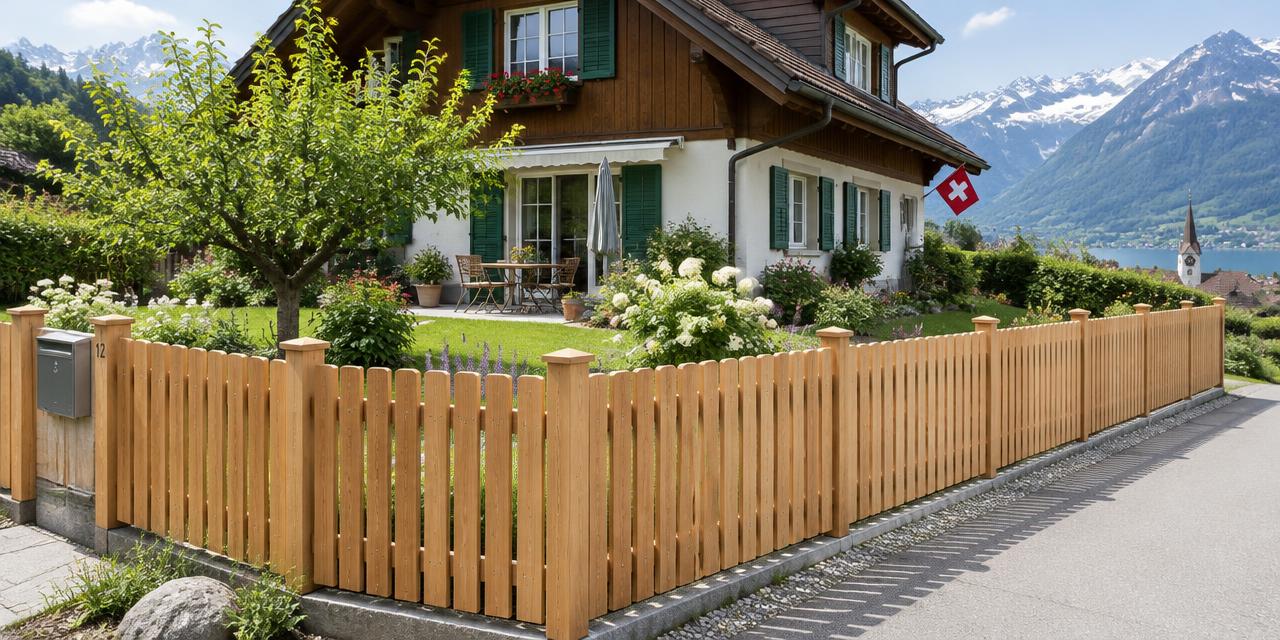
Small project
CHF 1'600 – CHF 4'500
Typical project
CHF 2'800 – CHF 7'300
Large project
CHF 4'600 – CHF 11'600
Computed with our estimator for La Chaux-de-Fonds (regional factor included), standard finish. Only the project size changes.
At an altitude of 990 meters, La Chaux-de-Fonds presents demanding climatic conditions marked by about 100 frost days per year.
Installing a fence is not just a matter of aesthetics or land boundaries; it is also a way to protect your exterior fittings from bad weather and define more sheltered microclimate zones in your garden.3 °C can drop rapidly.
3 °C. It is strongly recommended to avoid periods of intense frost for earthworks and concreting required for foundations.
Carrying out this work during the warm season not only ensures better adhesion of post sealing materials but also limits risks related to freeze-thaw cycles that can weaken a freshly installed structure. Anticipating your work before the arrival of full winter ensures better longevity for your investment.
The fence project depends largely on the nature of the terrain and your expectations in terms of robustness. The foundations of the posts represent a significant part of the cost on sloping ground, as they require specific implementation to stabilize the structure against the constraints of the local soil.
It is imperative to choose materials resistant to moisture and frost, conditions that are ubiquitous in the region. Treated wood, powder-coated metal, or natural stone offer different levels of durability. Each product range meets various needs, from simple visual delimitation to reinforced perimeter security.
In addition to materials, the overall design influences the complexity of the site. A solid fence will offer total privacy, but will be under more pressure during strong winds, which are frequent on the heights of La Chaux-de-Fonds, requiring more anchored foundations.
Conversely, an open-work fence allows for better air circulation while structuring the space. Finishing options, such as the integration of gates or screening systems, also modify the support structure.
Discussing with professionals allows you to adjust the technical quality level to find the right balance between durability against climatic conditions and staying within your budget.
La Chaux-de-Fonds is renowned for its particular urbanism. When installing a fence, it is important to pay attention to existing underground networks, particularly on older properties. The built structure can hide old water pipes or electrical cables that do not always appear accurately on cadastral plans.
A prior reconnaissance of the terrain is therefore essential to avoid any damage to your home's infrastructure.
Furthermore, if your property is located in an area with heritage protection constraints, the materials and height of your fence could be restricted by specific guidelines aimed at preserving the visual character of the neighborhood.
It is also wise to check the stability of the soil at the boundary of your plot. The grounds in this region can be rocky or, conversely, subject to movement during thawing periods, thus impacting the longevity of your posts.
For houses built before current insulation standards, the garden often plays a role as a thermal buffer. The addition of a fence can change these air flows. It is strongly advised to inquire about underground networks before any digging.
Also, remember that joint ownership is a common issue : inform your neighbors in advance, as a shared fence is sometimes shared, which greatly facilitates the administrative and financial management of the project.
The regulations concerning the installation of fences can vary depending on the exact location of your plot. Heights and distances to boundaries are set by the municipal regulation, which prevails to ensure harmony in the urban landscape.
It is imperative to consult the competent municipal authority before starting work, especially if your property is located in a protected area or an ISOS perimeter. Some neighborhoods have specific preservation objectives that restrict the choice of materials and colors for exterior fittings, including fences.
Although some solar installations benefit from simplified procedures, a standard fence remains subject to standard building rules. If you are planning a fence on a shared boundary, it is essential to obtain written consent from your neighbors to avoid any future disputes.
The municipality of La Chaux-de-Fonds will be able to confirm whether a formal building permit is required or if a simple declaration is sufficient depending on the planned height. Never underestimate the importance of this prior check.
An installation that does not comply with local rules can lead to demolition orders, which would represent a significant financial loss for the owner. Take the time to prepare a complete file with plans and the technical description of your project.
To date, there are no specific public subsidies for the installation of classic fences in the municipality of La Chaux-de-Fonds or the canton of Neuchâtel.
Unlike energy renovation works or solar installations which benefit from simplified procedures (announcement to the competent authority about 20 days before the start of work), fences are considered private improvements.
It is therefore important to plan your budget accordingly without hoping for state financial support or specific tax deductions related to this type of infrastructure, except in very specific cases of global renovation including landscaping fences integrated into a global energy or heritage enhancement project.
As part of work on your home, the best approach remains rigorous planning. Always check local conditions before incurring costs. If your project is part of a larger renovation, seek advice from an expert to see if certain ancillary services could be optimized for tax purposes.
Since there is no specific aid mentioned for fences, transparency in the quote becomes your best ally. Make sure that each element is well detailed by your contractor to avoid any confusion during invoicing.
Good financial management begins with a realistic preliminary study, taking into account the complexity of the terrain and the quality of the materials chosen.
The ideal schedule for installing a fence in La Chaux-de-Fonds is between late spring and early autumn, to avoid the 100 annual frost days. The first step is to validate your intentions with the municipality and your neighbors.
Once the authorizations are obtained, the work usually begins with staking out and preparing the ground. This phase is crucial, as the terrain may require specific earthworks to ensure a solid base.
The preparation of the foundations is then carried out, respecting the necessary drying times of the concrete, which can vary depending on humidity conditions and the local average temperature.
Once the foundations are ready, the posts are installed, followed by the assembly of the panels or wire mesh. If you have chosen materials requiring special attention, such as wood, the final treatment can be applied once the installation is complete.
It is essential not to rush these steps, especially during cooler periods, to ensure that the materials work correctly. The overall duration depends on the length of the fence and the complexity of the terrain.
By planning your work outside of frost periods, you optimize the final result and the life of your installation while avoiding logistical complications related to the mountain climate.
Among the common errors, not checking underground networks before digging remains the riskiest. It is also imprudent to neglect joint ownership by omitting to talk about it to your neighbors, which often generates unnecessary tension.
Trying to save on the depth of foundations on sloping ground is a major error that will cause instability in the short term. Finally, ignoring municipal regulations on authorized heights can lead to costly administrative procedures.
Before asking for quotes, follow this checklist : check cadastral plans to locate exact boundaries. Check with the municipality for maximum heights and authorized materials. Contact your neighbors to discuss potential joint ownership. Identify the presence of water, gas, or electrical lines before any excavation.
Ask for several detailed quotes comparing materials and foundation methods. Ensure that the service provider plans for proper waste management and ensures strict monitoring of drying times. Check that your project respects the visual aspect of your neighborhood to avoid any objection.
No specific grant listed for this work. Maintenance tax deductions may still apply.
2300 La Chaux-de-Fonds · about 0 km
Wegmüller et fils is a company based in La Chaux-de-Fonds specializing in construction and renovation work for over 25 years.
wegmulleretfils.ch2333 La Ferrière · about 4.3 km
Specialist in exterior joinery, manufacturing and installing garage doors, wrought iron gates, fences, and automation solutions.
dusadoor.com2056 Dombresson · about 9.2 km
General construction and renovation company in Dombresson, specializing in villas, apartments, outdoor landscaping, and renewable energy.
matile-sauser.ch2037 Montmollin · about 13.8 km
Company specializing in carpentry, roofing, and interior joinery work.
etter-menuiserie.chSuggestions from the commercial register by distance and activity. Not an endorsement or partnership.
It depends on the municipal regulation and the height of the installation. It is imperative to contact the competent municipal authority before starting work.
Inform your neighbors in advance. A shared fence is often shared, and a written agreement helps avoid future conflicts.
Favor the warm season, from spring to autumn, to avoid the 100 annual frost days and ensure good stability of the foundations.
Yes, they represent a significant part of the cost, especially on sloping ground, to ensure the longevity of the structure against soil constraints.
There is no specific aid for the installation of private fences. Plan your budget without relying on state financial support.
Consult your cadastral plans and contact the municipal technical services. Never dig without being certain of the location of the pipes.
Check if your property is in an ISOS perimeter. Materials and height may be restricted by heritage preservation objectives.
Source : azprojet.ch
Source : Ville de La Chaux-de-Fonds