
Canton
Heat pump grant — Neuchâtel
Variable contributions; check conditions with the cantonal energy service.
Neuchâtel cantonal support for renewable heating, in addition to the Buildings Programme.
www.leprogrammebatiments.chHeat pump installation · La Chaux-de-Fonds
Small project
CHF 30'000 – CHF 54'800
Typical project
CHF 37'800 – CHF 70'500
Large project
CHF 49'600 – CHF 93'900
Computed with our estimator for La Chaux-de-Fonds (regional factor included), standard finish. Only the project size changes.
Located at an altitude of 990 meters with a harsh climate, La Chaux-de-Fonds has significant heating requirements totaling 3824 Kj/year.3 °C, the choice of heating system is crucial for ensuring thermal comfort.
Replacing old fossil fuel heating has become a regulatory necessity when changing boilers, in accordance with the Cantonal Energy Law (LCEn).
Anticipating these works helps avoid emergency situations if your current boiler fails. By taking advantage of your installation renewal, you comply with legal requirements effective since May 1, 2021, which mandate the switch to renewable energies in residential buildings.
Before making any decisions, you must verify whether your neighborhood can be connected to district heating, particularly through the operator Viteos, as this solution can be a relevant alternative within the local housing stock.
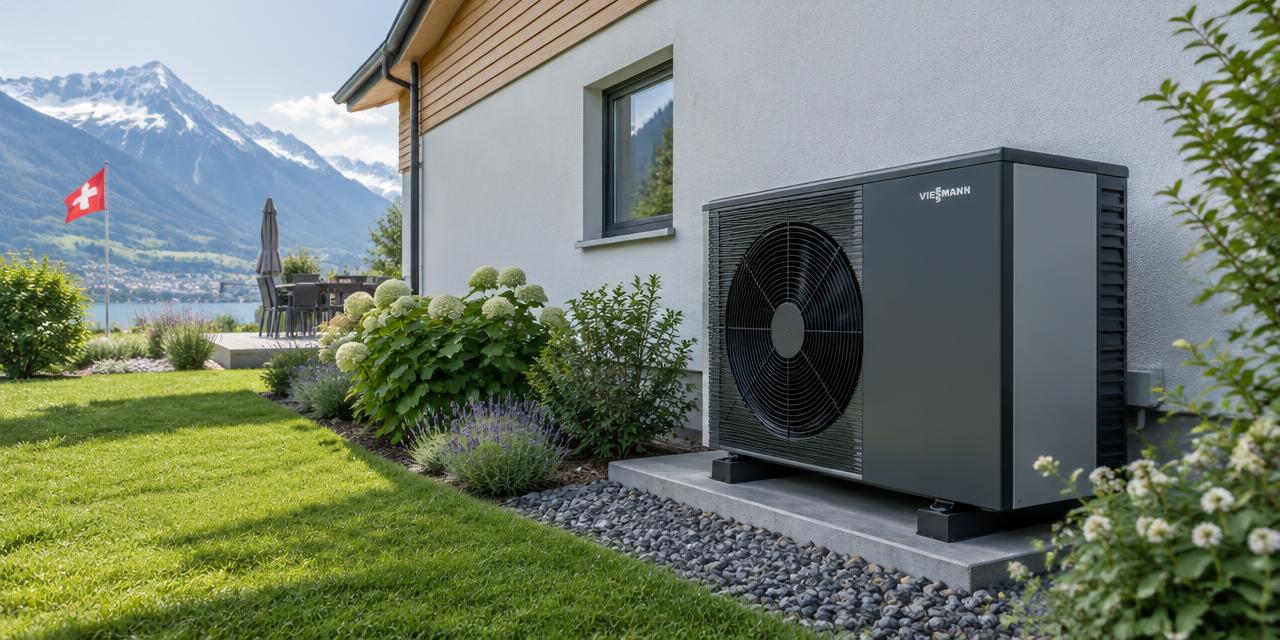
The installation of a heat pump in La Chaux-de-Fonds depends heavily on the chosen system and your building configuration. The air-to-water heat pump is the most common solution, but its efficiency is linked to the outside temperature.
3 °C, it is essential to correctly size the power to avoid excessive electricity consumption during very cold days.3 °C also influences the annual performance of your installation.
When planning, keep in mind that outdoor air-to-water heat pumps must strictly respect noise limits towards neighbors, a critical point in dense areas. Furthermore, options such as coupling with photovoltaics are recommended, knowing that the global irradiation in La Chaux-de-Fonds reaches 1304 kWh/m²/year.
A well-oriented solar installation can thus improve the self-consumption of your heat pump, increasing the overall sustainability of your heating system.
The housing stock in La Chaux-de-Fonds presents challenges linked to the age of certain buildings, particularly historical ones and those built before modern insulation standards. Before installing a heat pump, it is crucial to assess the thermal envelope.
A heat pump works optimally with low-temperature heat distribution systems, such as underfloor heating. If your building is equipped with high-temperature radiators, a preliminary thermal renovation may be necessary to ensure the profitability of the system.
Furthermore, during renovation work on older structures, it is advisable to check for potential pollutants or asbestos. The management of existing distribution networks must also be analyzed to ensure compatibility with the new flow requirements of the heat pump.
A 'Chauffez renouvelable' incentive advice is highly recommended to obtain a professional assessment of your current building and identify necessary improvement works before proceeding with the investment in a new heating system.
In La Chaux-de-Fonds, the installation of a heat pump may be subject to strict regulations, especially if the building is located in a protected area.
The municipality distinguishes between installations requiring a permit, particularly for listed cultural property or objects located in areas with an ISOS protection objective A. It is imperative to check the status of your object with the urban planning department before taking any steps.
Regarding energy, the Cantonal Energy Law (LCEn) imposes precise rules: any replaced heating system must be announced via the GAPE tool.
For projects including solar panels, a simple announcement procedure to the competent authority is generally sufficient, provided that the installation is sufficiently adapted and located outside protected zones. This announcement is made about twenty days before the start of work.
Compliance with the requirement for 20% renewable energy is mandatory, which is naturally fulfilled by the installation of an electric heat pump all year round.
The canton of Neuchâtel offers support measures for the energy transition. The subsidy for heat pumps, in addition to the Buildings Program, is available to homeowners. It is essential to submit your application before the start of work to be eligible.
In addition, the municipal energy fund in La Chaux-de-Fonds annually allocates significant resources to support the renovation of energy-intensive buildings.
Regarding taxation, investments intended to save energy are deductible from your income. If these costs cannot be fully deducted in the year of invoicing, they can be carried forward to the two following fiscal years. You can choose between deducting actual costs or a flat-rate deduction.
Note, however, that if you opt for carrying forward investment costs, the flat-rate deduction is no longer applicable for that fiscal period. The tax administration will determine the reportable amounts ex officio. These incentives aim to facilitate the transition to more sustainable and efficient systems.
Carrying out a heat pump project requires rigorous planning to avoid climatic unforeseen events. In La Chaux-de-Fonds, with its 100 frost days, it is preferable to avoid scheduling the shutdown of your heating installation during the harshest months of winter.
Ideally, the demolition of the old boiler and the installation of the new unit should take place during the mild season or in the shoulder season.
The process begins with an in-depth technical study and an application for financial assistance, which must imperatively precede the start of the work. Then, once the authorizations have been obtained from the competent authority, the project can begin.
The installation generally includes the dismantling of the old equipment, the installation of the outdoor unit, the hydraulic and electrical connections, as well as the adjustment and commissioning phase. The total time depends on the availability of equipment and qualified craftsmen.
It is advisable to plan these steps well in advance to ensure a smooth transition before the return of intense cold.
Do not neglect to check if your neighborhood allows connection to district heating before choosing an individual solution. Ensure you have obtained all necessary financial aid before signing any quote.3 °C to avoid under-sizing.
Do not forget to analyze the location of the outdoor unit to respect acoustic standards towards your neighbors.
Before requesting quotes, prepare a precise checklist : list the age of your current installation, check the need for thermal renovation, consult the municipal zoning plan, and identify the presence of asbestos. Request several quotes to compare technical approaches.
Verify that the installer is familiar with the specifics of the mountain climate. Finally, ensure that the renewable energy share of your project meets the legal 20%. Careful preparation is the key to efficient and sustainable heating in the long term.
Variable contributions; check conditions with the cantonal energy service.
Neuchâtel cantonal support for renewable heating, in addition to the Buildings Programme.
www.leprogrammebatiments.chCheck amounts and conditions with the provider before signing: apply before work starts in most cases.
2300 La Chaux-de-Fonds · about 0 km
Nogueira & fils Sàrl, based in La Chaux-de-Fonds, carries out sanitary and heating installations.
nogueira-sarl.ch2300 La Chaux-de-Fonds · about 0 km
Neuchâtel-based company specializing in heating, ventilation, and sanitary installations for buildings.
winkenbach.ch2300 La Chaux-de-Fonds · about 0 km
Voegtli SA specializes in sanitary installations, heating, air conditioning, and ventilation services based in La Chaux-de-Fonds.
voegtlisa.ch2300 La Chaux-de-Fonds · about 0 km
Robert-Sanitaire is a company specializing in sanitary installations, heating works, pipe cleaning, and fast repair services in the canton of Neuchâtel.
robert-sanitaire.chSuggestions from the commercial register by distance and activity. Not an endorsement or partnership.
You can apply for the cantonal subsidies from Neuchâtel as well as those from the Buildings Program. It is mandatory to submit the application before starting the work.
Yes, outdoor air-to-water heat pumps must strictly respect noise limits towards your neighbors. Good positioning is essential.
It is a Management of Authorizations for Energy Production installations tool that is mandatory for announcing any heating replacement in the canton.
Yes, investments intended to save energy are deductible. If the costs are high, they can be carried forward to the two following fiscal years.
The need for a permit depends on the situation of your property, particularly in a protected area. Always check with the competent authority.
In La Chaux-de-Fonds, it is -10.3 °C. It determines the power necessary to heat your home during the coldest days.
The law requires switching to renewable energies when changing boilers, when technically possible and without excessive additional cost.
Source : swisstopo – service d'altitude (MNT)
Source : Open-Meteo Historical Weather API (réanalyse ERA5, moyenne 2015-2024)
Source : Open-Meteo Historical Weather API (réanalyse ERA5, moyenne 2015-2024)
Source : Open-Meteo Historical Weather API (réanalyse ERA5, moyenne 2015-2024)
Source : Open-Meteo Historical Weather API (réanalyse ERA5, moyenne 2015-2024)
Source : Open-Meteo Historical Weather API (réanalyse ERA5, moyenne 2015-2024)
Source : Open-Meteo Historical Weather API (réanalyse ERA5, moyenne 2015-2024) · estimate
Source : Viteos — tarifs CAD 2026
Source : ne.ch
Source : Ville de La Chaux-de-Fonds
Source : SCCO_I772_Notice4_PP.pdf
Source : azprojet.ch