
Canton
Heat pump grant — Geneva
Flat rates and percentages depend on the replaced system; check with the cantonal energy office.
Geneva cantonal support for replacing oil or gas heating with renewable systems (heat pumps).
www.ge.chHeat pump installation · Meyrin
Small project
CHF 32'900 – CHF 60'300
Typical project
CHF 41'600 – CHF 77'500
Large project
CHF 54'600 – CHF 103'300
Computed with our estimator for Meyrin (regional factor included), standard finish. Only the project size changes.
9 °C. Facing these needs, replacing a fossil fuel installation with a heat pump (HP) is a strategic decision. In accordance with the Energy Law (Le) in force in the canton of Geneva, any replacement installation must aim for 100% renewable energy.
Anticipating this change before your current boiler fails completely allows you to carry out the necessary thermal studies with peace of mind.
The timing is crucial : acting now allows you to benefit from current incentives before your old boiler becomes a costly emergency.6 °C, the local climate is favorable to the efficiency of heat pumps.
As a homeowner, you actively contribute to the decarbonization of the housing stock while increasing the value of your property.
Check first if your neighborhood is connectable to a priority district heating system, especially if you live near the low-temperature district heating network in Les Vergers, before validating your individual HP project.
The installation of a heat pump requires a rigorous analysis of your home's thermal needs.9 °C, directly dictates the nominal power of the chosen unit.
You can choose between air-to-water systems, which extract heat from the air, or geothermal systems, which are more efficient but more expensive due to the necessary drilling.
It is essential to evaluate the compatibility of your existing heat emitters (standard radiators or underfloor heating) with the HP's low-temperature operating regimes.
The range of options varies according to the coefficients of performance (COP) and the acoustic comfort provided.
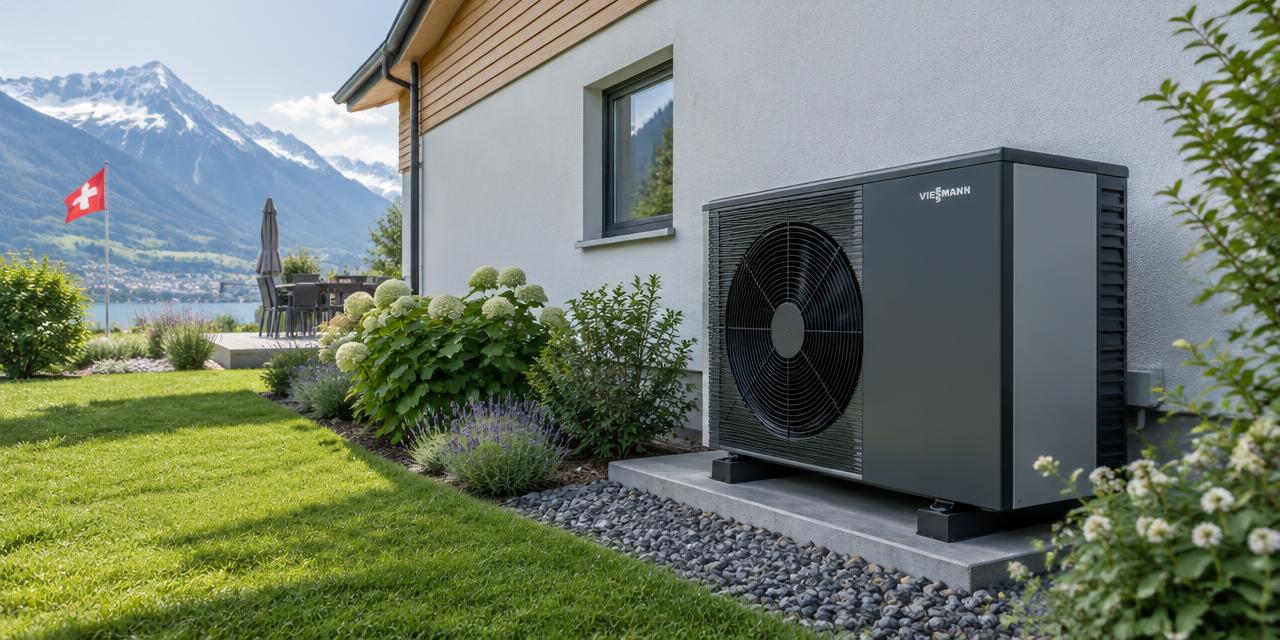
For outdoor air-to-water HPs, particular attention must be paid to compliance with noise limits, as noise emissions towards neighbors are strictly regulated by the Ordinance on Protection against Noise (OPN). Opt for certified models that guarantee quiet operation.
Finally, the integration of intelligent control systems optimizes electricity consumption based on your actual needs and local weather, ensuring increased durability for your technical investment.
Meyrin presents a diversity of real estate structures, ranging from residential areas to older buildings. If your building dates from before 1990, it is imperative to check for the potential presence of asbestos or hazardous materials in heating and plumbing systems when dismantling the old installation.
The performance of the future heat pump depends intrinsically on the state of your insulation. A poorly insulated house will require a more powerful HP and consume more electricity, often making a prior energy renovation (attic insulation, window replacement) more cost-effective in the long run.
The internal distribution network must also be checked. Old pipes can be clogged or unsuitable for the circulation of the low-temperature heat transfer fluid. Be sure to have a complete thermal diagnosis carried out by a specialist before placing any order.
This professional will be able to identify if your system is ready to host a heat pump or if it requires prior upgrading. Do not neglect the space available for the outdoor unit, which must be sufficiently clear to ensure optimal air circulation while remaining aesthetically integrated into your facade.
In Meyrin, the administrative procedure for installing a heat pump depends on the power of the system chosen. If the power exceeds 10 kW, a building permit is required from the Office of Urban Planning. For systems less than or equal to 10 kW, a prior declaration is sufficient.
This declaration must be accompanied by an acoustic compliance certificate, in accordance with the Ordinance on Protection against Noise (OPN) and cantonal regulations (rLCI). Air-to-water or air-to-air heat pumps installed outdoors are particularly scrutinized.
If you are considering an indoor installation, this falls under the Law on Constructions and Installations (LCI). It is advisable to hire an acoustic consultancy firm for complex projects to ensure that noise emission levels comply with the standards in force in residential areas.
For any specific questions about your property's zone, check the Meyrin municipal website. Remember that any change must comply with zoning laws. If your building has particular heritage value, additional placement constraints may apply.
The replacement of your fossil fuel heating is supported by advantageous financial incentives. The cantonal GEnergie program, in connection with the Buildings Program, offers subsidies whose amount varies according to the system replaced.
In addition, the City of Meyrin grants a significant municipal bonus: you can benefit from an additional subsidy equivalent to 50% of the subsidy granted by the canton of Geneva, up to a limit of 50,000 CHF per project. These aids apply to both air-to-water heat pumps and geothermal ground-source systems.
The golden rule to benefit from these funds is imperative : the subsidy application must be submitted BEFORE the start of work. Any installation started without prior validation will not be eligible for financial support.
Inquire now with the Cantonal Energy Office (OCEN) to find out the amounts applicable to your specific situation. These subsidies are an essential lever for reducing the overall cost of your energy transition while ensuring a sustainable heating system that complies with Geneva's legal requirements.
The progress of a heat pump project follows several structured stages. The first phase consists of a technical feasibility study and the application for administrative permits, including the prior declaration. Once subsidies are granted, the choice of installer is validated.
The best season for carrying out the work is generally the non-frost period, between spring and early autumn, to limit thermal discomfort for residents during the central heating shutdown, although professionals can install these systems all year round.
The construction site begins with the safe dismantling of the old boiler, including fluid management. This is followed by the installation of the outdoor unit (for air-to-water systems) or drilling (for geothermal systems).
The connection to the hydraulic and electrical circuits is a delicate step that requires special know-how. Finally, commissioning and fine-tuning (hydraulic balancing and regulation parameterization) allow for the finalization of the project.
Allowing a time buffer for each step helps to avoid rushing and ensures an installation that meets energy performance standards.
One of the most frequent errors is under- or over-sizing the heat pump relative to the actual needs of the home, which significantly reduces its energy efficiency.
It is essential to avoid neglecting the acoustic aspect of the outdoor unit, as an installation that is too noisy can lead to disputes with neighbors and costly compliance adjustments. Another trap: forgetting to check if the existing heat emitters are compatible with low temperatures.
Before requesting any quote, be sure to have a thermal audit of your building carried out. Also, check if you are in a heritage protection zone that would limit the location of the outdoor unit.
Prepare a rigorous checklist : always ask the professional for an estimate of the annual COP, demand an acoustic compliance certificate for the planned location, check that the quote includes waste management (old boiler, residual oil), confirm that the installer is familiar with the subsidy application process, and ensure you compare at least two detailed quotes based on the same performance assumptions.
Also, don't forget to check the installer's availability before committing.
Once installed, a heat pump requires regular maintenance to ensure its durability and maintain optimal performance. Although these systems are considered robust, an annual check by an authorized professional is strongly recommended.
This follow-up allows for checking the tightness of the refrigerant circuit, cleaning filters, and checking the condition of mechanical components such as the compressor.
By anticipating maintenance interventions, you avoid major breakdowns and extend the life of your investment, while ensuring controlled electricity consumption in the long term.
The durability of your installation also depends on responsible use. Learn to set your control system according to your absences and weather conditions. A well-maintained and correctly adjusted heat pump is a guarantee of lasting comfort for your home.
Do not hesitate to ask your installer to train you on how to read the HP's control panel. In case of unusual noises or a sudden increase in your consumption, contact your specialist quickly.
Durability is the combined result of a high-quality initial installation, compliance with acoustic standards, and diligent technical monitoring.
Flat rates and percentages depend on the replaced system; check with the cantonal energy office.
Geneva cantonal support for replacing oil or gas heating with renewable systems (heat pumps).
www.ge.ch+50% de la subvention cantonale GEnergie (max 50'000 CHF/projet)
La Ville de Meyrin accorde un bonus communal équivalent à 50% de la subvention octroyée par l'Office cantonal de l'énergie (GEnergie / Programme Bâtiments) pour le remplacement par une PAC air-eau ou sol-eau géothermique.
meyrin.chCheck amounts and conditions with the provider before signing: apply before work starts in most cases.
1217 Meyrin · about 0 km
Geneva-based specialist in home automation, HVAC control, water treatment, and energy metering since 1976.
paul-vaucher.com1217 Meyrin · about 0 km
Geneva-based specialist in the maintenance, service, and sanitization of ventilation, air conditioning, and heating systems for all types of buildings.
venticlean.ch1217 Meyrin · about 0 km
General contractor in Meyrin specializing in new construction, full renovation, transformation, and 24/7 heating and plumbing emergency services.
cclbestate.ch1217 Meyrin · about 0 km
B PARTNER Sàrl, based in Meyrin, works in plumbing and heating installation and technical building optimisation studies, particularly for heating and ventilation.
spm-metallurgie.chSuggestions from the commercial register by distance and activity. Not an endorsement or partnership.
You can obtain a cantonal subsidy via the GEnergie program, combined with a municipal bonus of 50% of this amount, limited to 50,000 CHF.
A building permit is required if the power exceeds 10 kW. Below this, a prior declaration with an acoustic certificate is sufficient.
The local design temperature is set at -4.9 °C for power calculation.
It is highly recommended to reduce the required power and electricity consumption, making the investment more cost-effective.
Contact the Services industriels de Genève (SIG) to see if your building can be connected to a district heating network.
Yes, outdoor installations must comply with the limits set by the Ordinance on Protection against Noise (OPN).
The subsidy application must be submitted before any installation work begins.
Source : swisstopo – service d'altitude (MNT)
Source : Open-Meteo Historical Weather API (réanalyse ERA5, moyenne 2015-2024)
Source : Open-Meteo Historical Weather API (réanalyse ERA5, moyenne 2015-2024)
Source : Open-Meteo Historical Weather API (réanalyse ERA5, moyenne 2015-2024)
Source : Open-Meteo Historical Weather API (réanalyse ERA5, moyenne 2015-2024)
Source : Open-Meteo Historical Weather API (réanalyse ERA5, moyenne 2015-2024)
Source : Open-Meteo Historical Weather API (réanalyse ERA5, moyenne 2015-2024) · estimate
Source : Retour d'expérience énergétique sur le quartier des Vergers à Meyrin (Genève) - expert-ise.ch
Source : Guide Installations Solaires et Thermopompes - Canton de Genève