
Canton
Solar PV — one-off payment (Neuchâtel)
Based on installed capacity.
Federal one-off payment for PV, applicable in the canton of Neuchâtel.
www.pronovo.chSolar panels · Neuchâtel
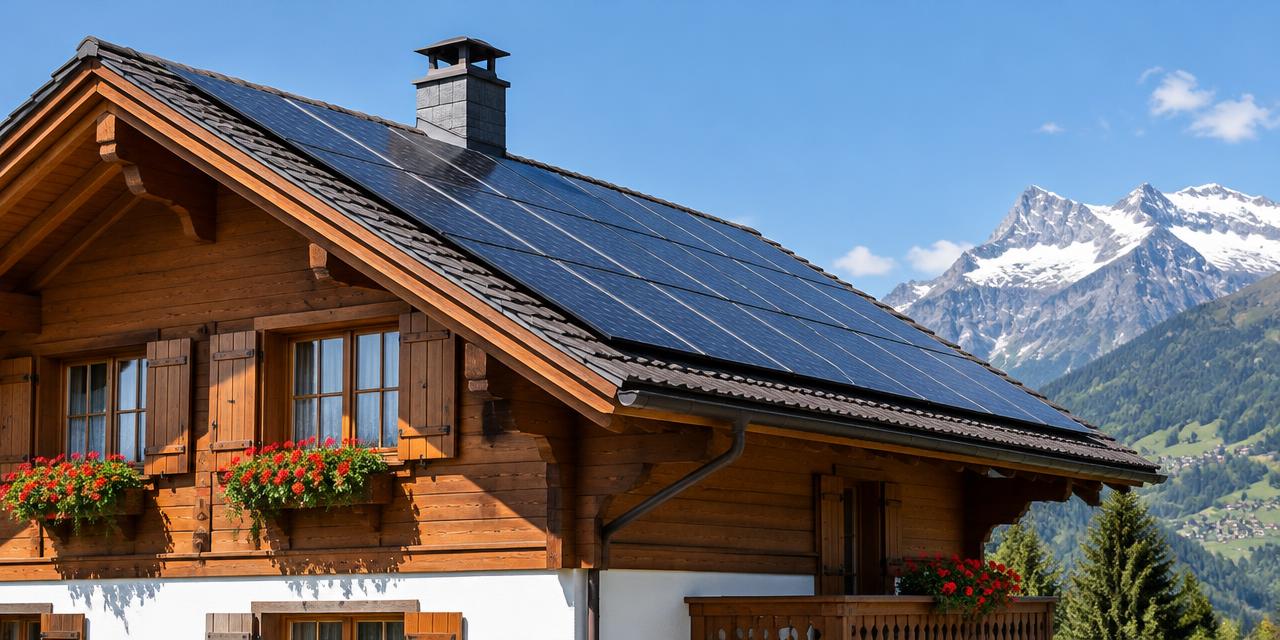
Small project
CHF 8'900 – CHF 16'900
Typical project
CHF 16'500 – CHF 29'900
Large project
CHF 28'500 – CHF 50'700
Computed with our estimator for Neuchâtel (regional factor included), standard finish. Only the project size changes.
The canton of Neuchâtel benefits from interesting annual global irradiation, allowing for stable photovoltaic production.3°C and an altitude of 434 m, the local climate is compatible with current solar technologies.
The city, distinguished by the Energy City Gold label, actively encourages renewable production to meet energy needs related to a climate marked by 2,866 heating degree days per year.
Undertaking this work not only improves your building's energy efficiency but also reduces your dependence on the conventional power grid. It is wise to plan the installation during roof renovations or heating system updates to maximize the technical and economic synergies of your investment.
Considering the 51 annual frost days, planning must take weather conditions into account to avoid periods of intense cold that can slow down construction. Opting for a photovoltaic solar installation in Neuchâtel is a forward-looking choice that fully aligns with the municipality's energy policy.
By producing your own energy, you contribute directly to the region's climate goals while securing your long-term energy costs. It is a structuring step that enhances the value of your property on the local market.
The success of a photovoltaic installation relies on rigorous technical choices. The materials used, particularly the type of cells (monocrystalline or polycrystalline), influence the final yield.
In Neuchâtel, a cautious estimate expects a yield of approximately 1,162 kWh/kWp/year for a roof facing south with a 30-degree tilt., full black or framed), and the mounting system are factors that vary your project.
It is crucial to evaluate the quality of the inverters, which are the brains of the installation, converting direct current into usable alternating current.
Options such as power optimizers allow for managing partial shading areas, thus optimizing each panel individually. The possibility of adding a battery storage system is an option to consider to increase your self-consumption rate.
Do not forget that the federal single remuneration via Pronovo helps reduce the initial investment for small installations. The overall profitability of your project depends mainly on the share of electricity you consume on-site.
Discuss with your installer the best solutions adapted to the specific configuration of your roof to ensure optimal performance throughout the seasons.
The building stock in Neuchâtel is very diverse, ranging from historic buildings to recent constructions. For buildings built before 1990, it is advisable to be vigilant regarding the potential presence of harmful substances like asbestos during any intervention on the roof or insulation.
A prior inspection of the roof structure is essential to ensure it can support the weight of the solar panels. The electrical networks of older houses may also require an upgrade to current standards to accommodate the inverter and ensure the injection of the produced energy.
For more recent buildings, thermal insulation is often already efficient, which facilitates installation but requires special attention to roof sealing during the installation of mounting systems. Each construction period imposes its specific constraints in terms of accessibility and solidity.
It is recommended to have a technical diagnosis carried out by a professional before validating any quote. This helps identify necessary preparatory work to avoid unpleasant surprises.
The robustness of your roof and the state of your electrical installation are the pillars that will support the durability and efficiency of your new solar panels in the long term.
For solar installations in Neuchâtel, the procedure has been simplified. If your project involves a so-called sufficiently adapted solar installation, placed on a roof, located in the building zone, and outside of zones or objects protected by cantonal law, a simple notification is sufficient.
This procedure replaces the traditional building permit, thus facilitating your steps. It is imperative to address this notification to the competent communal or cantonal authority about twenty days before the start of the work.
This period allows the authorities to verify the project's compliance without unnecessarily hindering the energy transition.
It is highly recommended to check the classification of your zone and any potential restrictions related to built heritage with your municipality before ordering the equipment.
If your building is listed or located in a specific protection perimeter, stricter rules may apply, requiring particular architectural integration. In these specific cases, the simple notification procedure will likely not be sufficient, and a formal building permit will be required.
Always anticipating these checks with the competent authority allows you to secure your solar project schedule and avoid costly administrative delays.
The financing of your solar installation benefits from several incentives in the canton of Neuchâtel. The federal single remuneration, managed by Pronovo, is the main aid to reduce investment costs for small installations. It is essential to submit the application before the start of work to guarantee your eligibility.
Regarding taxation, investments aimed at saving energy and preserving the environment are deductible from your income.
If these investment costs cannot be fully deducted in the year they are invoiced, they can be carried forward to the two following fiscal years, offering valuable flexibility for your personal financial planning.
It should be noted that if costs are carried forward, the flat-rate deduction is not possible for the property concerned during this period. Owners can choose each year between the deduction of actual costs and the flat-rate deduction. Energy investments are considered improvement costs.
The Tax Administration determines the deductible amounts automatically. This tax structure promotes a sustainable approach to managing your real estate assets by encouraging improvements that increase the value of your property in the long term.
Remember to keep all your invoices and supporting documents to simplify your future tax returns and optimize the benefit of these incentives.
A well-managed solar project follows several logical steps. The initial phase is the feasibility study, where you evaluate the potential of your roof with an expert. Once this step is completed, the application for aid from Pronovo must be submitted.
In parallel, you make the notification to the competent communal or cantonal authority. The planning must anticipate the seasons, keeping in mind that the installation cannot be effectively installed if the roof is frozen or covered with snow.
Spring and autumn months are generally preferred to avoid climatic extremes.
Once authorizations are obtained and components are ordered, work begins with the preparation of the mounting structure. Electricians then connect the panels to your electrical panel. Finally, commissioning and performance tests validate the success of the project.
It is recommended not to set rigid deadlines, as the availability of installers and weather conditions can influence the actual duration. A good schedule is one that leaves room for maneuver, ensuring a safe and durable installation that complies with the high technical requirements of the canton of Neuchâtel.
To avoid pitfalls, ensure your project is well-dimensioned from the start. A common mistake is neglecting the condition of the roof: install panels only on a roof whose residual lifespan is sufficient. Never sign a quote without first checking if your building is subject to heritage protection rules.
The checklist before any request includes : inspect the structure of your roof to verify its solidity; inquire about municipal constraints related to your building's zone; ask for an estimate of the expected self-consumption rate; ensure that the provider includes the application for single remuneration in their services; check if your internal electrical installation requires an upgrade to current standards.
Be vigilant when choosing materials. Do not only prioritize initial costs, but consider the long-term yield and the quality of components, especially the inverter. Finally, compare several detailed offers. Require that each quote specifies technical services, equipment warranties, and planned maintenance procedures.
By strictly following these recommendations, you will avoid administrative or technical disappointments while ensuring optimal performance for your future photovoltaic installation.
Based on installed capacity.
Federal one-off payment for PV, applicable in the canton of Neuchâtel.
www.pronovo.chCheck amounts and conditions with the provider before signing: apply before work starts in most cases.
2000 Neuchâtel · about 0 km
Since 1996, ElectroPro S.A. has provided electrical and photovoltaic installations for private customers and businesses in the canton of Neuchâtel.
electropro.ch2000 Neuchâtel · about 0 km
Based in Neuchatel, Capner Switzerland installs renewable energy solutions including photovoltaics, heat pumps, and battery storage systems.
capner.ch2000 Neuchâtel · about 0 km
JENOSA SA is a Swiss company that finances, acquires, and operates photovoltaic power plants, battery storage systems, and heat production facilities.
jenosa.ch2000 Neuchâtel · about 0 km
Wilight telecoms specializes in electrical installations, photovoltaic projects, structured cabling, and IT infrastructure management.
wilight.chSuggestions from the commercial register by distance and activity. Not an endorsement or partnership.
You can benefit from the federal single remuneration via Pronovo. It is imperative to submit the application before work begins.
If your installation is sufficiently adapted and outside a protected zone, a simple notification to the municipality is generally sufficient.
Spring and autumn are recommended to avoid risks of frost or heavy snow on the roof.
Yes, investments for energy saving are deductible and can be carried forward over two years if necessary.
This refers to an installation mounted on a roof, located in the building zone and respecting cantonal integration rules.
Profitability relies mainly on maximizing your self-consumption and the quality of the installed equipment.
The notification procedure generally takes about twenty days before work can begin.
Source : Open-Meteo Historical Weather API (réanalyse ERA5, moyenne 2015-2024) · estimate
Source : swisstopo – service d'altitude (MNT)
Source : Open-Meteo Historical Weather API (réanalyse ERA5, moyenne 2015-2024)
Source : Open-Meteo Historical Weather API (réanalyse ERA5, moyenne 2015-2024)
Source : Open-Meteo Historical Weather API (réanalyse ERA5, moyenne 2015-2024)
Source : Open-Meteo Historical Weather API (réanalyse ERA5, moyenne 2015-2024)
Source : Open-Meteo Historical Weather API (réanalyse ERA5, moyenne 2015-2024)
Source : Ville de Neuchâtel
Source : azprojet.ch
Source : SCCO_I772_Notice4_PP.pdf