
Canton
Facade insulation — Geneva
Amounts based on area and target performance.
Geneva support for energy renovation of the building envelope.
www.ge.chRoof renovation · Vernier
Small project
CHF 16'400 – CHF 37'600
Typical project
CHF 29'700 – CHF 65'400
Large project
CHF 49'600 – CHF 107'200
Computed with our estimator for Vernier (regional factor included), standard finish. Only the project size changes.
In Vernier, located at an altitude of 441 meters, the climate imposes specific constraints on your roof.5 °C and approximately 54 frost days per year, roofing materials undergo significant expansion and contraction cycles.
Renovation becomes necessary when the waterproofing is no longer guaranteed or the thermal insulation shows signs of weakness, causing unnecessary heat loss.
As the municipality is committed to the 'Energy City Gold' approach and aims for a 2000-Watt society, roof renovation is part of a global energy transition.
Undertaking these works not only protects your property against local climatic conditions but also contributes to the City of Vernier's climate goals by improving the energy efficiency of your building through high-performance insulation.
The choice of materials is decisive for the durability and energy efficiency of your roof in Vernier. Depending on the pitch and style of your building, you can choose between various types of tiles or modern roofing materials.
It is imperative to integrate rigorous thermal insulation during the replacement of the covering, as this optimizes your home's energy balance and facilitates access to subsidies.
If you are considering installing solar panels, note that their removal and reinstallation must be budgeted for in the overall project. With favorable sunshine, a photovoltaic installation can produce an attractive yield.
Ensure that the choice of materials is compatible with local requirements, especially for buildings located in heritage protection zones where visual integration rules are strict and must be respected.
The architectural landscape of Vernier is characterized by a diversity ranging from traditional single-family homes to large complexes built before 1975, such as Le Lignon or Les Avanchets.
For buildings dating from before 1990, it is essential to conduct a search for pollutants, particularly asbestos, before starting work. This diagnostic step protects your health and that of the workers on site.
Older buildings often have limited energy performance, with roofs requiring complete renovation to meet current standards. In case of renovation, it is also necessary to check the condition of underlying networks that could be obsolete.
Respecting the heritage character is paramount; buildings with high heritage value impose specific constraints such as installing solar panels flat only on certain areas of the roof.
In Vernier, the construction permit is the standard procedure for roof renovation projects. For solar installations, a simplified procedure is possible if certain conditions are met. For example, panels must not exceed the roof slopes by more than 20 cm or the top ridge by more than 1 meter for flat roofs.
These rules ensure visual integration that respects the urban landscape.
If your building is classified as high heritage value, more restrictive rules apply, particularly regarding the location of solar panels, which must be installed flat on roof terraces. The City of Vernier offers free and personalized support to owners to guide these choices.
It is advisable to contact the Urban Planning Office before any steps to confirm if your project requires a formal application or if it can benefit from a simplified procedure.
The renovation of your building envelope, including roof insulation, may be eligible for financial aid at the cantonal level in Geneva. These programs aim to encourage energy retrofitting. It is imperative to submit the aid application before starting work.
Once the work has started or is completed, rights to subsidies can no longer be guaranteed, which highlights the importance of rigorous planning from the start.
Geneva's aid programs are structured according to the targeted energy performance and the treated area. In addition to direct subsidies, renovation can offer long-term tax benefits by reducing energy consumption and increasing the value of your real estate property.
For details on amounts and forms, regularly consult the official energy portal of the Canton of Geneva.
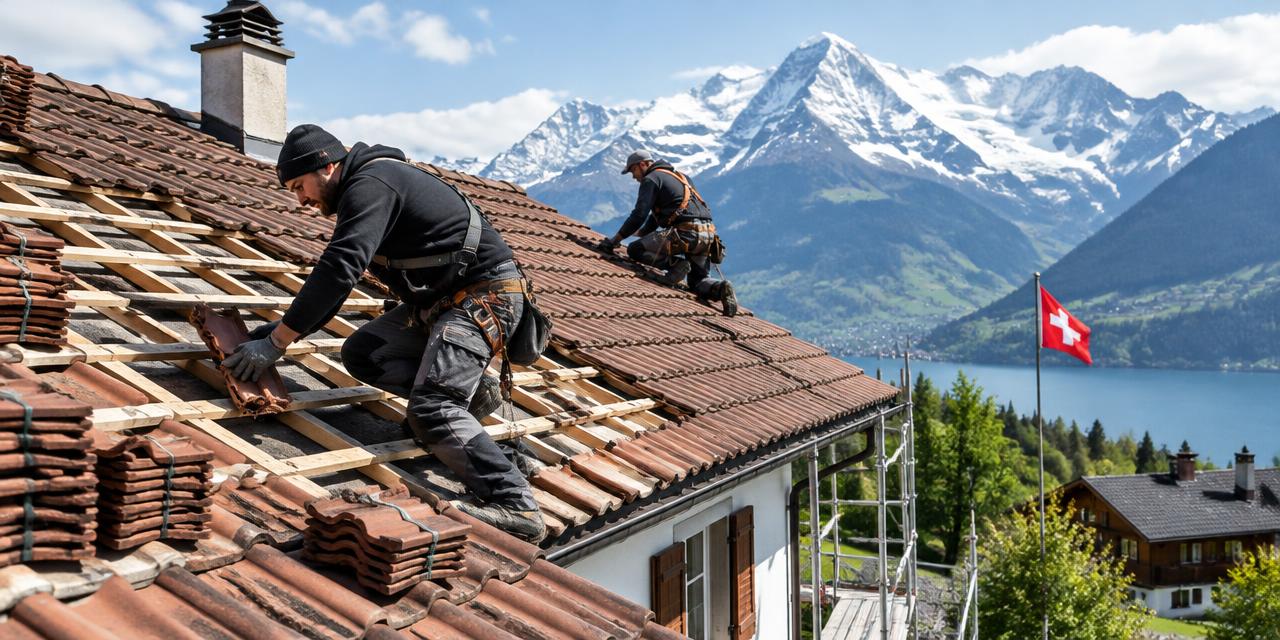
A roof renovation project follows several key steps. First, the planning phase includes energy diagnostics and the application for permits.
Seasonality is an important factor : it is preferable to avoid periods of extreme cold, with 54 frost days per year in Vernier, to ensure optimal installation of waterproofing materials and the comfort of workers.
The site generally begins with the installation of safety measures, followed by the dismantling of the old covering. After installing the insulation, the new covering is laid, followed by finishing work and connecting additional systems.
Good coordination of the various trades, such as roofers, tinsmiths, and possibly electricians for solar, ensures a smooth flow of tasks until the final acceptance of the work.
Never neglect the energy diagnostic step to benefit from cantonal aid. Ensure that the company selected has the necessary certifications to handle old materials, especially for buildings from before 1990. It is essential to provide a budgetary margin for technical contingencies related to the roof structure.
Checklist before requesting quotes : check the age of your roof and visible signs of wear, request a feasibility study for solar energy, ensure that insulation is included in the quote, check if you need a construction permit or a simplified procedure, prepare your file for energy subsidies, and solicit several comparative quotes to obtain equivalent services.
Finally, clarify the conditions for removal and reinstallation if you are installing solar panels.
Amounts based on area and target performance.
Geneva support for energy renovation of the building envelope.
www.ge.chCheck amounts and conditions with the provider before signing: apply before work starts in most cases.
1214 Vernier · about 0 km
Geneva-based specialist in scaffolding assembly for all types of building construction, renovation, and transformation projects.
echami.ch1214 Vernier · about 0 km
Ateliers Casaï SA is a Geneva-based company specializing in carpentry, joinery, wood construction, staircases, and outdoor landscaping since 1995.
casai.ch1214 Vernier · about 0 km
Specialist in scaffolding assembly and traceability solutions for equipment safety via the Verticontrol app.
verticontrol.ch1214 Vernier · about 0 km
Based in Vernier since 2006, Aquatec mainly provides plumbing installations, renovations and repairs in the canton of Geneva, with registered activities also covering sheet-metal roofing and heating.
aqua-tec.chSuggestions from the commercial register by distance and activity. Not an endorsement or partnership.
In Vernier, a simplified procedure is possible depending on the zone, but a permit is required if integration rules are not met. It is advisable to contact the Urban Planning Office.
Insulation is highly recommended to meet the municipality's energy goals and access cantonal subsidies. Doing it at the same time as the roofing is an excellent strategy.
The subsidy application must be submitted before the start of renovation work. Once the project has started, aid can generally no longer be granted.
A roof can last several decades, but it depends on materials and maintenance. Regular inspection every few years helps anticipate major renovations.
Yes, the city offers free and personalized support for owners, including project definition and monitoring of tenders. It is a valuable service to simplify your procedures.
Buildings constructed before 1990 may contain asbestos in certain materials. This verification is crucial for the health safety of occupants and craftsmen.
On a flat roof, panels must be laid flat without exceeding the top edge by more than one meter to meet standards. This installation is subject to authorization if it does not meet the simplified criteria.
Source : swisstopo – service d'altitude (MNT)
Source : Open-Meteo Historical Weather API (réanalyse ERA5, moyenne 2015-2024)
Source : Open-Meteo Historical Weather API (réanalyse ERA5, moyenne 2015-2024)
Source : Open-Meteo Historical Weather API (réanalyse ERA5, moyenne 2015-2024)
Source : Open-Meteo Historical Weather API (réanalyse ERA5, moyenne 2015-2024)
Source : Open-Meteo Historical Weather API (réanalyse ERA5, moyenne 2015-2024)
Source : ge.ch
Source : Guide Installations Solaires et Thermopompes - Canton de Genève
Source : Open-Meteo Historical Weather API (réanalyse ERA5, moyenne 2015-2024) · estimate