
Eco6therm Sàrl
2832 Rebeuvelier · about 29.2 km
Eco6therm specializes in the installation of heating systems, particularly heat pumps, and solar photovoltaic energy solutions.
eco6therm.chHome solar battery · Basel
At a glance
Small project
CHF 4'200 – CHF 9'500
Typical project
CHF 7'600 – CHF 16'100
Large project
CHF 13'000 – CHF 26'700
| Project | Quantity | Low | High | Per unit |
|---|---|---|---|---|
| Small project | 5 kWh | CHF 4'200 | CHF 9'500 | CHF 1'300 |
| Typical project | 10 kWh | CHF 7'600 | CHF 16'100 | CHF 1'100 |
| Large project | 18 kWh | CHF 13'000 | CHF 26'700 | CHF 1'000 |
Computed with our estimator for Basel (regional factor included), standard finish. Only the project size changes.
Included
Not included
In Basel, the federal building register lists 18'537 residential buildings and 104'691 dwellings. These municipal benchmarks help put your home in context, but do not replace an individual assessment.
92 % built before 1980
Construction year does not reveal past renovations: check the current insulation condition.
46 % · District heating
This distribution describes recorded buildings, not your system's consumption or efficiency.
| Energy | Heating | Hot water |
|---|---|---|
| Gas | 36 % | 19.9 % |
| Heating oil | 8 % | 4 % |
| District heating | 46 % | 45.9 % |
| Heat pump | 9 % | 8.6 % |
| Electricity | 1 % | 17.1 % |
| Wood | 1 % | 0.7 % |
| Solar thermal | 0 % | 3.8 % |
Each line gives the share of buildings using that energy, separately for heating and for hot water. The two columns do not always reach 100%: some buildings combine two systems, or reported none.
A standard non-condensing boiler is usually older and less efficient.
26.6 % of buildings mix housing with shops or offices.
For your renovation plans in Basel, the RegBL data provides essential guidance. With 2299 buildings under heritage protection, it is vital to contact the municipality early to discuss permits. While building volume figures according to the SIA 416 standard are unavailable, the data coverage for renovation history is complete. The median renovation year is recorded as 2024, reflecting recent activity in the area. Please note that for certain technical aspects, data coverage remains partial. Consequently, you should conduct a thorough on-site assessment to accurately plan the scale of your insulation or heating works, as official figures do not cover all metrics.
Source : OFS — RegBL (export communal complet). Existing residential buildings; percentages of recorded values.
A battery is worthwhile when solar output clearly exceeds your daytime use, a common situation for active households. By storing surplus energy, you reduce your dependence on the electrical grid and limit long-term costs.
This transition to energy autonomy is a sustainable step that enhances your property value. To evaluate the return on investment for your project, it is essential to understand the capacity needed based on your actual lifestyle.
RenoIndex helps you estimate these renovation costs today.
Sizing is a key step to ensure the profitability of your investment. It is highly recommended to base storage capacity on your evening consumption, rather than just the power of your solar panels.
An oversized system would generate unnecessary costs, while a battery that is too small would not meet your nighttime needs. Analyze your electricity bills and daily usage profile to find the perfect balance.
Do not forget to consult RenoIndex for a reliable estimate of material and installation costs in Switzerland.
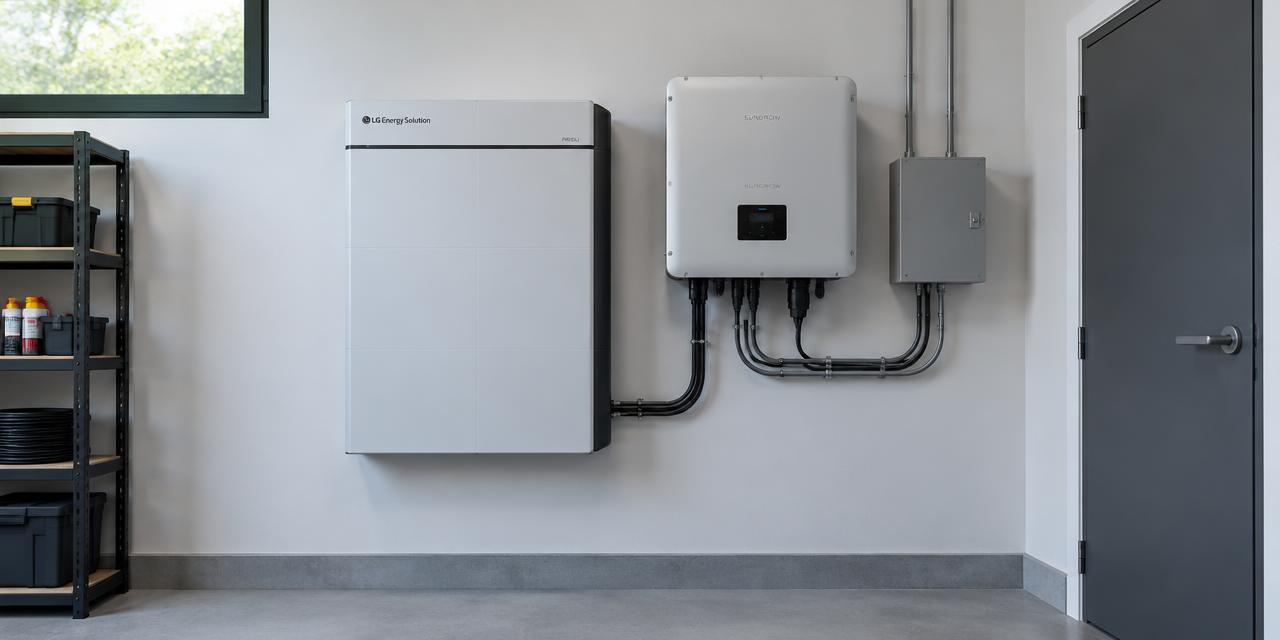
Before any purchase, it is crucial to check the compatibility between the new battery and your existing inverter. Some inverters are designed specifically for AC or DC coupling, which influences equipment selection.
A rigorous technical check avoids complications during commissioning and optimizes the system's overall efficiency. Work with qualified professionals who can audit your current setup.
To get a clear idea of the total budget including these technical aspects, use the RenoIndex estimation tool for free.
Investing in a solar battery is not just about energy savings; it is a major asset for your property. In Basel, homes equipped with autonomous energy management systems are increasingly sought after.
By increasing energy efficiency, you improve the energy rating of your building, which can positively influence its resale value. Plan your project methodically by following the advice provided.
To quickly visualize your investment, access RenoIndex and get your personalized price range in just a few clicks.
1. Estimate
Set a budget range with the estimator.
2. Grants
Apply before work starts.
3. Quotes
Compare at least 3 quotes.
4. Permit
Check with the municipality whether a permit is needed.
5. Works
Follow the site and do a written handover.
No specific grant listed for this work. Maintenance tax deductions may still apply.
2832 Rebeuvelier · about 29.2 km
Eco6therm specializes in the installation of heating systems, particularly heat pumps, and solar photovoltaic energy solutions.
eco6therm.ch2735 Malleray · about 41.9 km
Company specialized in electrical installations and telecommunications systems, including network infrastructure and related trade.
telecrengglisa.ch2718 Lajoux JU · about 45.4 km
Jura-based specialist in photovoltaic panel installation and energy storage solutions with AI-driven optimization.
hypersolaire.ch2605 Sonceboz-Sombeval · about 51.2 km
Solar conseil Sàrl specializes in the installation of photovoltaic power plants, energy storage solutions, and energy efficiency consulting in the Jura and Bernese Jura regions.
solarconseil.chSuggestions from the commercial register by distance and activity. Not an endorsement or partnership.
The inverter ensures the conversion of direct current into alternating current. Poor compatibility can prevent the efficient charging or discharging of your battery, leading to significant energy losses or a faulty installation. Always check the data sheet with your installer.
The ideal capacity does not depend on the surface area, but on your nighttime consumption. An average family generally needs 5 to 10 kWh. Analyze your evening consumption habits to avoid costly and inefficient oversizing.
It is not mandatory, but often more economical. Installing both simultaneously limits labor costs and ensures that the inverter is perfectly matched. A later upgrade is possible but requires thorough technical planning.
Use the RenoIndex calculator to get a personalized price range based on the Swiss market. This tool gives you a reliable basis for discussions with local companies and helps you plan your renovation budget with precision.