
Canton
Facade insulation — Valais
Contribution per m² depending on requirements met.
Valais support for envelope insulation via the Buildings Programme.
www.leprogrammebatiments.chFacade insulation · Brigue-Glis
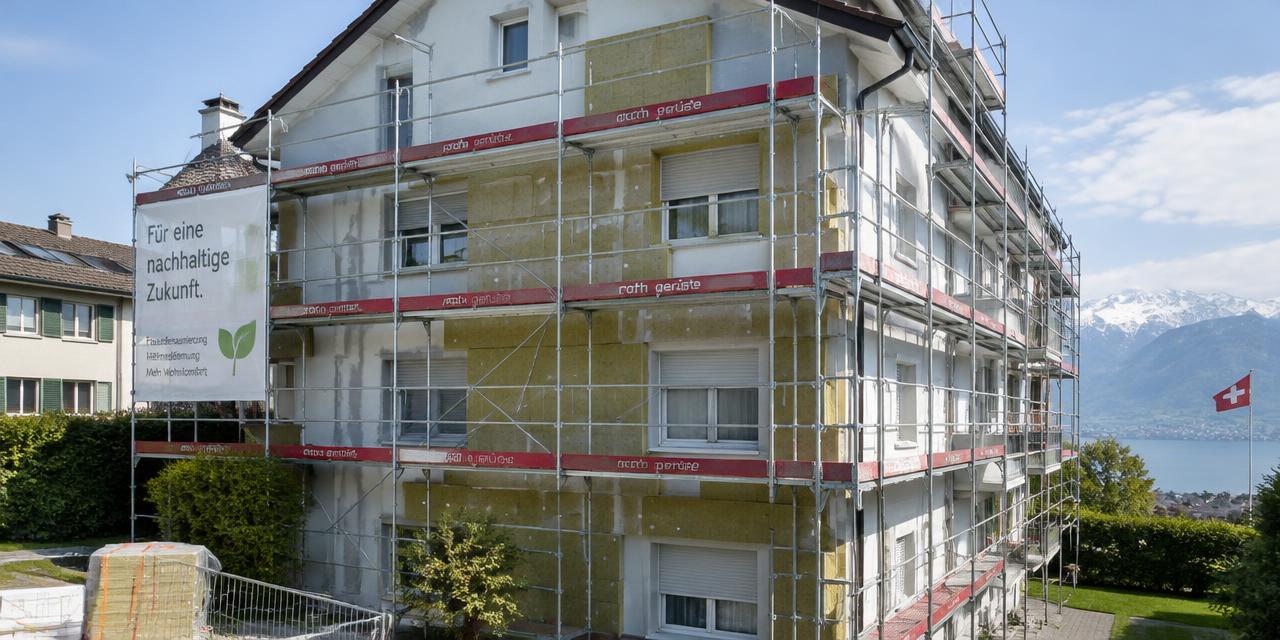
Small project
CHF 18'500 – CHF 38'400
Typical project
CHF 34'200 – CHF 67'700
Large project
CHF 57'600 – CHF 111'700
Computed with our estimator for Brigue-Glis (regional factor included), standard finish. Only the project size changes.
Located at an altitude of 685 meters, Brig-Glis presents a demanding climate for property.4°C, heat loss is a major issue. Heating needs, illustrated by 3019 degree days per year, highlight the necessity of a high-performance building envelope to limit energy consumption throughout the year.
The opportunity to act arises ideally during a global renovation. In line with the 2050 Energy Strategy, aiming for ambitious targets by 2035 and 2050, improving insulation allows for long-term cost reduction.
Consider this work as soon as your facade shows signs of wear, or before replacing your heating system to optimally size your future needs.
The choice of the exterior thermal insulation system (ETICS) depends on the building materials of your walls. Synthetic, mineral, or bio-sourced insulation materials offer different properties in terms of thermal resistance, durability, and water vapor permeability.
It is essential to have an energy audit carried out by a professional to define the optimal thickness required to meet current performance standards.
Beyond the insulation layer, the finish plays a crucial role. Plaster, wood cladding, or mineral coatings influence not only the aesthetics but also the moisture management on the facade.
Discuss with your architect the range of options adapted to your budget and your expectations regarding future maintenance, while taking into account the global irradiation of 1477 kWh/m²/an which influences the wear of exposed materials.
The building stock in Brig-Glis is diverse. Older buildings often have massive stone or brick walls, requiring breathable solutions to avoid internal condensation.
For buildings dating from before 1990, it is imperative to carry out an asbestos diagnostic before any intervention, as this material was frequently used in tile adhesives, sealants, or old insulation boards.
Post-war buildings often present structural thermal bridges at balcony slabs. Renovation is the ideal time to treat these sensitive areas.
Also, ensure that the heat distribution network is compatible with a lower flow temperature, following the insulation improvement, to maximize the efficiency of your current or future heating system.
In Brig-Glis, as elsewhere, exterior insulation modifies the building's appearance and often requires an authorization. Before starting work that changes the facade, systematically contact your municipality's building department.
They will inform you if your building is subject to specific heritage or site protection rules, which could restrict your aesthetic choices.
Compliance with property line distances, occupation of public domain by scaffolding, and compliance with the municipal planning scheme are crucial points. Never underestimate the need to consult local authorities, as failure to follow procedures can lead to construction stops or restoration obligations at your expense.
Rigorous planning with authorities guarantees peace of mind.
The Valais encouragement program for building envelope insulation via the Building Program offers financial contributions based on the insulated m². These aids are conditional on meeting precise technical requirements. It is crucial to note that a subsidy application must generally be filed before the start of work.
Any intervention started without prior agreement risks depriving you of financial support.
Check the official website for current criteria. Tax-wise, energy-saving works are often deductible from taxable income in Switzerland. Carefully keep all your detailed invoices and payment proofs, as they constitute the necessary justifications for your tax returns.
The combination of subsidies and tax benefits can significantly reduce the overall cost of your energy renovation project.
The planning of such a project must take into account the weather conditions of Brig-Glis. Insulation and plastering work require stable temperatures, generally outside long frost periods. Ideally, the season between late spring and early autumn is preferred to ensure optimal adhesion of plasters and adhesives.
Scaffolding represents a significant part of the cost : group facade, windows, and roof work to optimize time and budget.
The construction site begins with the installation of safety measures, followed by surface cleaning. Then comes the installation of insulation boards, followed by the mesh and finishing coat. Drying times between each step must be strictly respected, despite potential scheduling constraints.
Smooth coordination with your contractors helps to avoid humid periods that could compromise the durability of your new facade.
Avoid asking for quotes before having a clear vision of your energy needs. It is common to forget to include the treatment of thermal bridges in the overall project. Ensure that the chosen company has verifiable references. Always check if a building permit is required by the municipality before signing.
Don't forget to request detailed comparative offers including scaffolding costs. Finally, ensure that the proposed materials meet the requirements of the Building Program for your subsidies.
Checklist : Have you carried out an initial energy audit? Has the subsidy application been filed? Is the building permit obtained? Are the works grouped with other interventions on the envelope? Are finishing guarantees integrated into the contract? Is the company aware of local climatic constraints?
Have you checked for asbestos in old coatings?
Contribution per m² depending on requirements met.
Valais support for envelope insulation via the Buildings Programme.
www.leprogrammebatiments.chCheck amounts and conditions with the provider before signing: apply before work starts in most cases.
3900 Brig · about 0 km
Valais-based rope access specialist performing maintenance, cleaning, and repairs on hard-to-reach roofs and facades.
ibextec.ch3900 Gamsen · about 0 km
General construction company in Valais specializing in structural engineering, civil engineering, landscaping, and building materials for real estate projects.
walpen-ag.ch3900 Gamsen · about 0 km
Hans Gassler AG is a Swiss company specializing in painting, plastering, industrial coating, and corrosion protection.
gassler.ch3900 Gamsen · about 0 km
AS Gerüste AG, part of the Schaller Group, is a Valais-based company specializing in scaffolding assembly for various construction projects.
schallergroup.chSuggestions from the commercial register by distance and activity. Not an endorsement or partnership.
You can benefit from contributions from the Building Program in Valais. These are granted per m² according to the technical requirements met, provided an application is submitted before the start of the work.
Yes, as exterior insulation modifies the appearance of the facade. You must absolutely consult the municipality to know the applicable rules.
Absolutely, as scaffolding represents a significant part of the cost. It is very cost-effective to group facade insulation with window replacement or roof repair.
It is best to intervene between late spring and early autumn. This avoids the frost periods in Brig-Glis which would harm the application of plaster.
These buildings may contain asbestos in adhesives or insulation. A mandatory diagnosis is necessary to guarantee construction site safety.
In Switzerland, energy-saving works are generally deductible from taxable income. Keep all your invoices to justify these deductions.
The altitude and local climate generate significant heating needs with 62 frost days. High-performance insulation is therefore essential to reduce your costs.
Source : swisstopo – service d'altitude (MNT)
Source : Open-Meteo Historical Weather API (réanalyse ERA5, moyenne 2015-2024)
Source : Open-Meteo Historical Weather API (réanalyse ERA5, moyenne 2015-2024)
Source : Open-Meteo Historical Weather API (réanalyse ERA5, moyenne 2015-2024)
Source : Open-Meteo Historical Weather API (réanalyse ERA5, moyenne 2015-2024)
Source : Open-Meteo Historical Weather API (réanalyse ERA5, moyenne 2015-2024)
Source : Stadtgemeinde Brig-Glis