
Canton
Heat pump grant — Valais
Flat contributions per kW or per installation depending on technology.
Valais supports renewable heating via the Buildings Programme and additional cantonal grants.
www.leprogrammebatiments.chHeat pump installation · Brigue-Glis
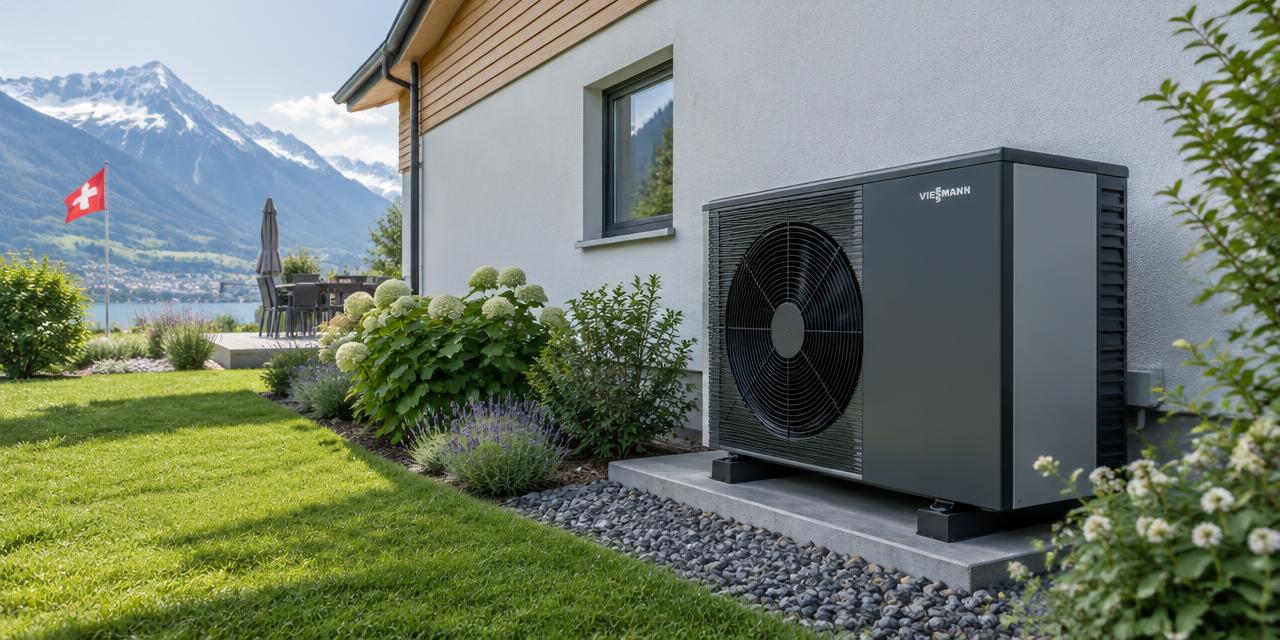
Small project
CHF 30'600 – CHF 55'900
Typical project
CHF 38'600 – CHF 71'900
Large project
CHF 50'600 – CHF 95'800
Computed with our estimator for Brigue-Glis (regional factor included), standard finish. Only the project size changes.
With an altitude of 685 meters and approximately 62 frost days per year, the climate in Brig-Glis imposes strict requirements on heating technology.4°C highlights the importance of a robust system capable of operating efficiently despite harsh winters.
The transition to a heat pump is part of the local Energiestadt Gold strategy, which aims for 100% renewable heat supply by 2050.
The ideal time to replace your current heating system depends on its age and efficiency. If your current boiler is reaching the end of its life, planning this replacement before the cold season is crucial to avoid any loss of comfort.
Given the high annual heating degree days, investing in a heat pump is not only a way to reduce your carbon footprint but also to sustainably increase the value of your property in a municipality actively committed to the cantonal energy transition.
4°C. Depending on the building configuration, the choice between an air-to-water heat pump or a solution using groundwater will be paramount. In certain areas, the Anergienetz Brig-Glis constitutes a high-performance alternative.
It is imperative to check the feasibility of connecting to the district heating network, as this centralized solution can significantly simplify your individual installation.
Options also include hybrid systems, combining a heat pump with a solar photovoltaic installation. With attractive global irradiation, the estimated yield of 1300 kWh/kWc/year allows for optimized energy self-consumption.
Furthermore, the performance level of the outdoor unit must be selected according to acoustic constraints to respect neighbors. A preliminary thermal study helps define the appropriate power to avoid oversizing, a common factor in premature wear and energy efficiency loss for heat pumps.
The building stock in Brig-Glis is diverse, ranging from older houses in need of renovation to new constructions. For buildings erected before 1990, particular vigilance is required regarding the potential presence of asbestos in glues, pipe insulation, or floor tiles.
Before starting work, an asbestos assessment may be necessary to ensure the safety of the site. Thermal insulation also plays a key role: a heat pump will be more efficient the better the building is insulated, thus reducing flow temperature requirements.
Heat distribution, whether via radiators or underfloor heating, also influences the project. Old high-temperature radiators may need replacement or oversizing to function effectively with a modern heat pump. It is advisable to assess the quality of the existing hydraulic network.
A building analysis helps determine whether a comprehensive renovation of the envelope should accompany the heating installation.
This integrated approach ensures not only a significant reduction in heating costs but also prevents risks of mismatch between the pump's power and the actual heat distribution capacity of your home.
Installing a heat pump in Brig-Glis requires careful attention to municipal regulations, particularly regarding the noise generated by outdoor units to protect the tranquility of the neighborhood.
If your property is in a protected area or near a historical monument, architectural restrictions may apply, limiting location options for devices visible from public space.
It is essential to contact the technical services of the municipality of Brig-Glis before finalizing your project to obtain specific local directives.
Furthermore, the management of groundwater is strictly regulated by municipal ordinance, particularly in connection with the Anergienetz Brig-Glis. Choosing a geothermal probe or water extraction requires specific environmental permits to ensure the protection of the groundwater.
Do not neglect to check if your neighborhood imposes specific constraints related to the local energy network. A complete file, including a site plan and an acoustic data sheet, must be submitted to the competent authorities to obtain the necessary permits before ordering any equipment.
Investing in a heat pump in Valais is supported by financial incentives aimed at encouraging the energy transition. You can benefit from subsidies via the Buildings Program, which offers flat-rate contributions per kW or per installation depending on the chosen technology.
These cantonal aids, which can be combined with other measures in some cases, aim to facilitate the replacement of fossil fuel heating systems with renewable solutions.ch' to check current eligibility criteria and details of the amounts allocated.
The golden rule to benefit from these aids is to submit your application before starting work. No subsidy will be granted for a project that has already begun or been completed. Ensure you have obtained written confirmation of the grant award before signing any contract with a heating company.
Also, check the possibilities of tax deductions related to energy renovation works with the cantonal tax administration, as these measures can effectively complement direct subsidies and reduce the overall cost of your transition to sustainable heating.
The installation of a heat pump follows several structured steps to ensure compliance and performance. Everything starts with the thermal diagnosis and acoustic study, followed by the administrative phase of applying for permits and subsidies. Once permits are obtained, planning can begin.
It is best to avoid periods of intense cold, when heating needs are at their maximum, for replacing your boiler, to minimize inconvenience caused by temporary service interruptions.
The installation itself includes removing the old boiler, installing the heat pump, hydraulic and electrical connections, and finally commissioning and control settings. Functional tests are performed to validate the installation's compliance with the building's needs.
Coordination between different trades, especially for electricity and heating, is essential to ensure a smooth transition. By anticipating your steps in advance, you ensure a smooth implementation, respecting the seasonal constraints specific to the climate of Brig-Glis.
To ensure the success of your project, avoid neglecting the acoustic study of your outdoor unit, as non-compliance with noise limits can lead to neighborhood conflicts.
Do not sign any quote without first checking if your neighborhood can be connected to a priority district heating network, which could change your technical choice. It is also risky to underestimate the impact of building insulation on the required pump power.
Always request multiple comparative quotes to get a clear view of the technical solutions proposed by different installers.
Before requesting quotes, check if your current electrical installation meets the pump's requirements. Ensure you have gathered all building plans, especially for older houses. Check that the chosen installer has the necessary certifications for subsidies.
Confirm the feasibility of a connection to the Anergienetz Brig-Glis with the municipal services. Finally, require a simulation of annual energy yield based on the region's design temperatures to validate the economic relevance of the planned investment.
Flat contributions per kW or per installation depending on technology.
Valais supports renewable heating via the Buildings Programme and additional cantonal grants.
www.leprogrammebatiments.chCheck amounts and conditions with the provider before signing: apply before work starts in most cases.
3942 Raron · about 10.8 km
TZ Stromag is a full-service provider of electrical engineering for buildings, covering installations, automation, security, and in-house switchgear construction.
stromag.ch3961 Vissoie · about 29.7 km
Company specializing in tinware, roofing, sanitary installations, heating, and facade cladding for construction and renovation projects.
theodoloz.ch3961 Vissoie · about 29.7 km
Zufferey Electricité SA specializes in electrical installations, photovoltaics, and remote control systems for heating.
zuffelectro.ch3972 Miège · about 30.8 km
Clavien Fabrice Sanitaires Sàrl in Miège provides plumbing and heating installations, including heat pumps, as well as roofing work and the installation of solar thermal and photovoltaic panels.
fabriceclavien.chSuggestions from the commercial register by distance and activity. Not an endorsement or partnership.
The installation must respect noise limits towards neighbors, often regulated by municipal guidelines. It is recommended to perform an acoustic study before installation.
Contact the technical services of the municipality of Brig-Glis directly to learn about the Anergienetz connection plans.
The subsidy application must be submitted before starting renovation work. No aid is paid retroactively.
Yes, current models are designed to operate efficiently at these temperatures. Correct sizing based on this design temperature is essential.
With regular maintenance and proper sizing, a heat pump can operate efficiently for about 15 to 20 years.
It is highly recommended, as better insulation reduces the required flow temperature and significantly improves the overall efficiency.
Absolutely, coupling with photovoltaic panels allows for self-consumption of the energy produced, thereby reducing annual operating costs.
Source : swisstopo – service d'altitude (MNT)
Source : Open-Meteo Historical Weather API (réanalyse ERA5, moyenne 2015-2024)
Source : Open-Meteo Historical Weather API (réanalyse ERA5, moyenne 2015-2024)
Source : Open-Meteo Historical Weather API (réanalyse ERA5, moyenne 2015-2024)
Source : Open-Meteo Historical Weather API (réanalyse ERA5, moyenne 2015-2024)
Source : Open-Meteo Historical Weather API (réanalyse ERA5, moyenne 2015-2024)
Source : Open-Meteo Historical Weather API (réanalyse ERA5, moyenne 2015-2024) · estimate
Source : Stadtgemeinde Brig-Glis
Source : Stadtgemeinde Brig-Glis