
Canton
Solar PV — Geneva support
Variable additional grants; federal one-off payment by capacity.
Geneva strongly supports solar PV, with grants in addition to the federal one-off payment.
www.pronovo.chSolar panels · Carouge
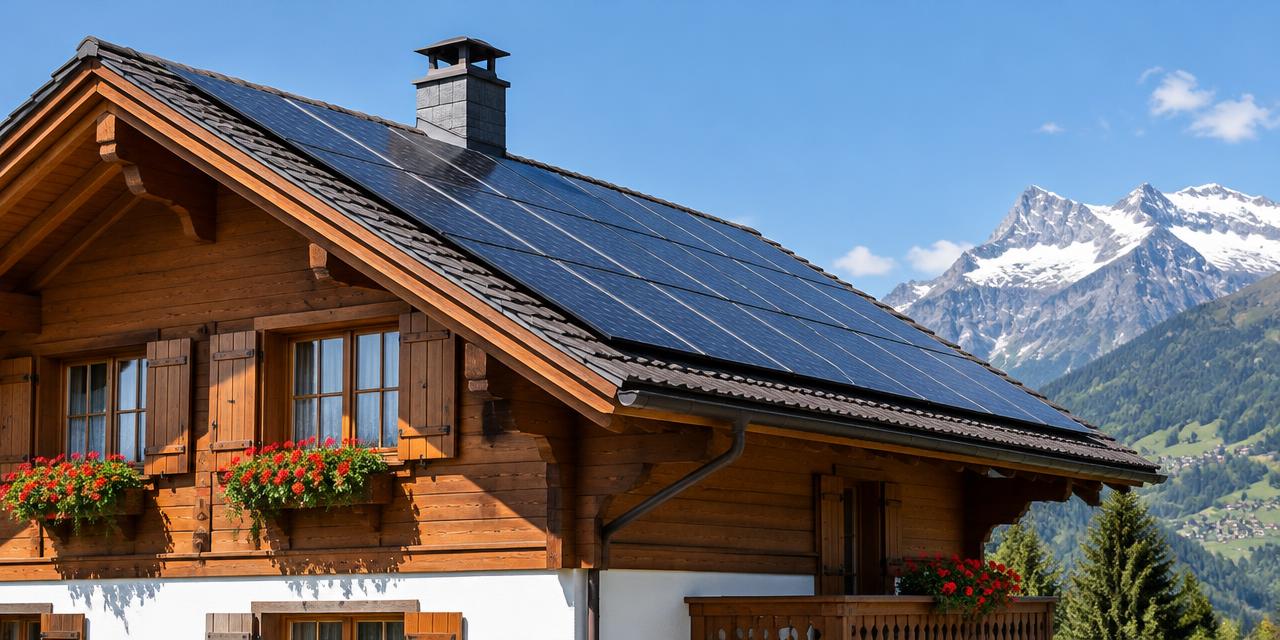
Small project
CHF 9'800 – CHF 18'500
Typical project
CHF 18'100 – CHF 32'900
Large project
CHF 31'400 – CHF 55'800
Computed with our estimator for Carouge (regional factor included), standard finish. Only the project size changes.
Carouge, awarded 'Energy City Gold' since 2024, is firmly committed to carbon neutrality by 2050 in line with the cantonal climate plan. With annual global solar irradiation allowing an estimated yield of 1213 kWh/kWc, investing in solar energy has become a strategic lever for the local housing stock.
9 °C, offers favorable conditions for stable electricity production throughout the year. Undertaking these works now allows you to benefit from current incentives while improving your home's energy autonomy.
It is particularly wise to consider these works during a roof renovation or when improving the building's thermal envelope. Coordinating with other maintenance tasks avoids repeated interventions on the structure and maximizes the lifespan of your installation.
As the municipality pursues its ambitious goals, anticipating this transition helps increase your property's value in the long term. Homeowners thus benefit from better energy efficiency while actively contributing to Geneva's sustainable energy landscape.
The success of a photovoltaic project relies on rigorous technical choices tailored to each roof. Profitability depends mainly on the share of electricity consumed on-site, which may guide the choice between high-performance panels versus standard solutions.
The type of panels, whether monocrystalline or polycrystalline, influences aesthetics and efficiency, particularly on flat or pitched roofs.
Integration into the building is crucial, with options ranging from mounting on top of the roof to full integration (solar tiles), the latter often being preferred for aesthetic reasons in sensitive areas.
Furthermore, adding an energy management system or a storage battery can transform a simple installation into an intelligent system capable of optimizing self-consumption. The quality of inverters also plays a key role in the overall lifespan of the system.
It is essential to work with professionals to assess the specific needs of your household and choose robust components that can withstand the 46 days of frost recorded annually, while ensuring optimal yield over several decades.
Carouge presents a notable architectural diversity, ranging from the historic Old Town to more recent industrial and residential areas. This heterogeneity requires particular vigilance during planning.
Buildings constructed before 1990 may present risks related to the presence of asbestos in building or insulation materials, requiring a professional diagnosis before any work on the frame or roofing.
The load-bearing structure of these old buildings must also be checked to ensure it can support the additional weight of the solar panels and the necessary ballast.
Furthermore, the roof's thermal insulation should be checked before installation; installing panels on a dilapidated roof is not recommended as it would require dismantling the installation in the event of a later thermal renovation.
For older buildings, the connection to the electrical grid may sometimes require bringing the main electrical panel up to standard.
A prior analysis of the roof's condition and the need for structural reinforcement is therefore an essential prerequisite for any request for quotes, in order to avoid financial and technical surprises during the construction phase.
In Carouge, heritage management is central, particularly in the Vieux-Carouge area, which is recognized as a protected sector. For these zones, a building permit is systematically required.
A suitably adapted roof installation is often subject to simple notification in non-protected zones, but prudence dictates always contacting the Urban Planning Office.
The Vieux-Carouge has actually been the subject of a national pilot project to reconcile architectural preservation and solar deployment, proving that harmonious integration is possible subject to a specific file study.
For installations under 100 kVA, a simplified procedure can be applied via a prior declaration, provided that the landscape integration criteria are met. Municipal regulations can vary depending on the construction zone; it is therefore imperative to check if your building is listed or located in a site plan.
Compliance with these rules is essential to obtain the necessary permits. We advise consulting the Urban Planning Office before any formal steps to obtain the precise guidelines applicable to your plot and avoid any disputes related to the project's aesthetics.
The financial incentive system in Switzerland is based on several pillars. The federal one-off remuneration (Pronovo) significantly reduces the initial investment for small photovoltaic installations. In addition, the canton of Geneva offers specific aid to encourage solar deployment.
It is imperative to follow the order of steps : the application for aid must be submitted before the start of work. Any work started without these prior administrative steps may make your project ineligible for subsidies, whether federal or cantonal.
It is strongly advised to consult the official Pronovo website for details on federal aid and to inquire with the Geneva authorities for supplementary aid. The overall profitability of your project will be influenced by this support, but also by local taxation.
Although solar installations can sometimes allow for tax deductions according to current cantonal rules, you should contact your tax advisor to properly integrate this investment into your tax return. Rigor in submitting files is the key to maximizing your return on investment.
The progression of a photovoltaic project follows logical steps that help secure the installation. After the technical audit and validation of aid, the authorization phase is initiated with the municipality. Once permits are obtained, site planning can begin.
It is best to carry out roofing work outside of severe frost periods, although Carouge only experiences 46 days of frost per year, which leaves a wide window for intervention. A qualified team can thus work safely, respecting best practices to ensure the sealing and solidity of the installation.
The project usually begins with the installation of supports on the existing structure. Then, the panels are fixed, followed by the internal electrical wiring that connects the modules to the inverter. Once connections are made, the system undergoes a technical inspection to verify its conformity.
Official commissioning takes place after connection to the distribution network. This process ensures that every installation is not only efficient but also safe according to Swiss standards.
Seasonality is an important factor, and planning the installation in the spring or autumn helps avoid extreme weather constraints.
To guarantee the success of your project in Carouge, avoid neglecting the structural analysis of your roof beforehand. It is common to forget to check thermal insulation before installing panels, which is a costly error in the event of later renovation.
Ensure you have obtained all necessary authorizations from the Urban Planning Office before signing any contract. Never neglect to submit your Pronovo aid application before the actual start of work.
Finally, do not base your choice of provider solely on the total price; prioritize the quality of materials and the warranties offered.
Checklist before requesting quotes : 1. Have a professional establish the condition of the roof frame and insulation. 2. Check the conformity of your building with the solar cadastre and zoning regulations. 3. List your annual electricity needs to best size your installation. 4.
Require a detailed quote including equipment, installation, connection, and administrative tasks. 5. Ensure the company has the necessary qualifications to work on protected buildings if needed. 6. Ask for a precise estimate of the expected energy yield based on the orientation of your roof.
Variable additional grants; federal one-off payment by capacity.
Geneva strongly supports solar PV, with grants in addition to the federal one-off payment.
www.pronovo.chCheck amounts and conditions with the provider before signing: apply before work starts in most cases.
1227 Les Acacias · about 0 km
Based in Geneva, ADN ENERGIE SA specializes in heating, air conditioning, plumbing, and the installation of photovoltaic panels and heat pumps.
nedim-chauffage.ch1227 Les Acacias · about 0 km
Geneva-based specialist with 60 years of experience in tinware, roofing, waterproofing, roof insulation, and facade cladding for new builds and renovations.
macullo.ch1227 Carouge GE · about 0 km
Energie 3 SA provides energy concepts, sustainability consulting, and installation of renewable energy and building service systems.
energie3.ch1227 Carouge GE · about 0 km
STUTZ ÉLECTRICITÉ SA in Carouge carries out electrical and telecommunications installations, electrical renovations for kitchens and bathrooms, and work involving heat pumps and solar panels.
stutz-e.chSuggestions from the commercial register by distance and activity. Not an endorsement or partnership.
Yes, a building permit is required, especially in protected areas like Vieux-Carouge. In other zones, a simplified procedure or notification may suffice depending on the conditions.
Profitability remains possible with an east or west orientation, although the yield is slightly lower. On-site consumption is the determining factor for final profitability.
You must submit your application online on the Pronovo website before the start of work. It is crucial not to start the project before this step.
The major risk is the potential presence of asbestos in roofing materials. A professional diagnosis is imperative to evaluate the health of the materials.
Yes, with favorable sunshine and an estimated yield of 1213 kWh/kWc, local conditions are very conducive to photovoltaics. Production is stable despite the frost days.
The Urban Planning Office is your primary contact for any questions related to planning rules. A specialized architect can also assist you with the procedures.
Annual or biennial maintenance is recommended to check connections and clean the modules. This ensures the maintenance of yield over the long term.
Source : Open-Meteo Historical Weather API (réanalyse ERA5, moyenne 2015-2024) · estimate
Source : swisstopo – service d'altitude (MNT)
Source : Open-Meteo Historical Weather API (réanalyse ERA5, moyenne 2015-2024)
Source : Open-Meteo Historical Weather API (réanalyse ERA5, moyenne 2015-2024)
Source : Open-Meteo Historical Weather API (réanalyse ERA5, moyenne 2015-2024)
Source : Open-Meteo Historical Weather API (réanalyse ERA5, moyenne 2015-2024)
Source : Open-Meteo Historical Weather API (réanalyse ERA5, moyenne 2015-2024)
Source : Énergie - Ville de Carouge
Source : ge.ch
Source : Guide Installations Solaires et Thermopompes - Canton de Genève