
Canton
Solar PV — one-off payment and Vaud support
One-off payment calculated on installed capacity (kWp).
Federal one-off payment for PV installations, sometimes topped up by cantonal or municipal grants.
www.pronovo.chSolar panels · Écublens
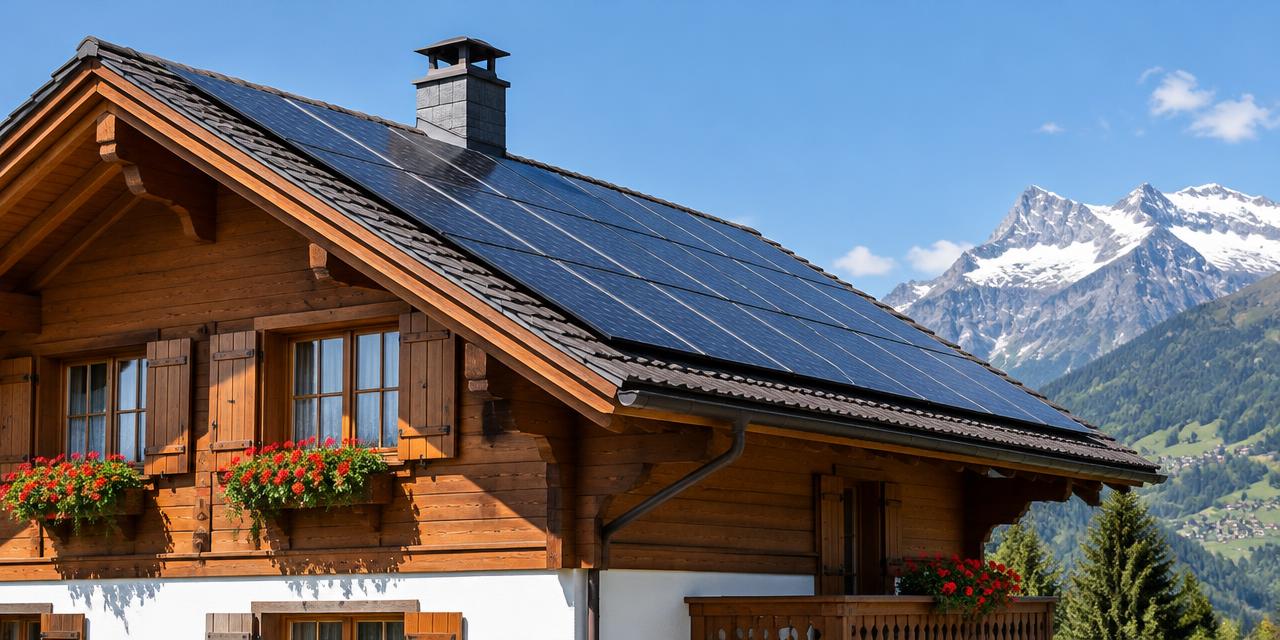
Small project
CHF 9'800 – CHF 18'500
Typical project
CHF 18'100 – CHF 32'900
Large project
CHF 31'400 – CHF 55'800
Computed with our estimator for Écublens (regional factor included), standard finish. Only the project size changes.
In Écublens, the adoption of photovoltaic solar panels aligns with the municipal Climate Plan, which targets a 35% reduction in greenhouse gas emissions by 2030. As an 'Energy City,' Écublens actively encourages citizens to reach carbon neutrality by 2050.
With a global irradiation of 1371 kWh/m²/year, your roof has significant potential to optimize your energy autonomy. The best time to consider an installation is before a planned roof renovation to reduce logistics costs and integrate the system aesthetically.
Given volatile electricity prices, self-consumption is particularly attractive. Evaluating your annual power consumption early is essential to right-size the installation according to your household's actual needs.
Designing a photovoltaic installation in Écublens depends on several technical variables. The estimated yield of about 1206 kWh/kWp/year for a 30° south-facing roof varies depending on the actual pitch.
Choosing between monocrystalline panels, often preferred for high efficiency, and polycrystalline modules directly affects the required roof surface. The quality of components, especially the inverter, determines the system's longevity and efficiency.
A relevant option is adding battery storage, which increases self-consumption by allowing daytime energy to be used at night. Mounting systems are also crucial for long-term waterproofing and aesthetics. All components must be designed to withstand local weather, including freezing days that strain the structure.
Écublens has a diverse building stock. For buildings from before 1990, checking for potential asbestos in insulation or structures before drilling is mandatory. Verifying the roof structure is essential, as solar panels impose permanent additional loads that an aging roof must support.
Roof thermal insulation should also be evaluated beforehand; installation is an ideal time to combine energy efficiency works. Internal electrical wiring must be checked to ensure safe solar energy injection. In dense areas, checking the network connection is necessary to avoid costly upgrades.
When in doubt, a professional technical inspection before ordering equipment is highly recommended.
Most photovoltaic projects in Écublens fall under the simplified procedure or are exempt from building permits, according to Canton Vaud practices. This significantly accelerates project implementation.
However, if your building is listed or in a heritage protection zone, specific rules regarding materials or visual integration may apply. Always consult the municipal urban planning services to check for constraints. Installations on suitable roofs often only require notification.
Provide a complete file to the administration. If the project significantly changes the roof's appearance, the exemption might be challenged. Adherence to local setback rules is mandatory.
Financial support is primarily provided via the federal one-off payment (Pronovo), based on the installed kWp capacity. Submit your application before starting work. Profitability strongly depends on your self-consumption. Tax-wise, Canton Vaud offers benefits: investments for energy efficiency are 100% tax-deductible.
If these exceed net income, the balance can be carried over to the following two tax periods. Note that only out-of-pocket costs are deductible.
Taxpayers can choose between actual costs and a flat-rate deduction; however, the flat-rate deduction is incompatible with carrying over energy investment costs to subsequent years.
A solar project in Écublens follows logical steps : analysis, applying for grants, ordering, and obtaining permits. Actual construction begins with roof mounting. Given the average of 48 frost days per year, mild seasons are preferred to ensure safety and workflow efficiency.
After mounting, electrical connections are made, followed by system commissioning after voltage testing. The overall duration depends on material availability and contractor scheduling. Plan well in advance. Upon completion, confirming the installation's compliance is crucial to receive financial aid.
Never start work before submitting a grant application. Always verify roof load capacity. Avoid undersizing if planning heat pumps or EV chargers. Always demand written quotes. Checklist before requesting quotes: 1. Check building age for asbestos. 2. Have 24 months of electricity consumption records. 3.
Visually inspect roof condition. 4. Check heritage status with the municipality. 5. Define goals (self-consumption vs. sales). 6. Ensure safe roof access for workers. 7. Request a profitability analysis based on self-consumption.
One-off payment calculated on installed capacity (kWp).
Federal one-off payment for PV installations, sometimes topped up by cantonal or municipal grants.
www.pronovo.chCheck amounts and conditions with the provider before signing: apply before work starts in most cases.
1024 Ecublens VD · about 0 km
Home-Electricité Sàrl specializes in general electrical installations, home automation, and the installation of photovoltaic systems.
home-electricite.ch1022 Chavannes-près-Renens · about 1.3 km
Swiss Solar System Sàrl is a Chavannes-près-Renens based company specializing in photovoltaic installations and energy storage systems.
swisssolarsystem.ch1026 Denges · about 1.7 km
Electrical company specializing in high and low voltage installations, photovoltaics, home automation, and IT networks in Denges.
bersierelect.ch1026 Denges · about 1.7 km
DOLEFAR SA, based in Denges, installs and maintains heating, solar PV, solar thermal and plumbing systems in French-speaking Switzerland, with tiling also listed in its registered business purpose.
dolefar.comSuggestions from the commercial register by distance and activity. Not an endorsement or partnership.
Most photovoltaic installations in Écublens fall under a simplified procedure or are exempt. Contact the municipal planning office for confirmation.
Yes, you can benefit from the federal one-off payment. Also, check for any available cantonal or municipal subsidies at the time of your project.
Have your roof structure inspected by a professional. It is often better to renovate the roof before installing solar panels.
A photovoltaic system typically lasts over 25 to 30 years. Inverters often require replacement after 10 to 15 years.
Yes, profitability relies on immediate self-consumption. Batteries are an option, but it depends mainly on your daytime consumption habits.
Generally, rain is enough. A visual inspection every few years is sufficient.
Submission is done online directly via the Pronovo portal. Do this before signing any material purchase contracts.
Source : Open-Meteo Historical Weather API (réanalyse ERA5, moyenne 2015-2024) · estimate
Source : swisstopo – service d'altitude (MNT)
Source : Open-Meteo Historical Weather API (réanalyse ERA5, moyenne 2015-2024)
Source : Open-Meteo Historical Weather API (réanalyse ERA5, moyenne 2015-2024)
Source : Open-Meteo Historical Weather API (réanalyse ERA5, moyenne 2015-2024)
Source : Open-Meteo Historical Weather API (réanalyse ERA5, moyenne 2015-2024)
Source : Open-Meteo Historical Weather API (réanalyse ERA5, moyenne 2015-2024)
Source : Ecublens.ch - Plan climat
Source : ge.ch · estimate
Source : Canton de Fribourg: Permis de construire (example, this is Fribourg) · estimate
Source : Règlement sur la déduction des frais relatifs aux immeubles privés (RDFIP)