
Canton
Facade insulation — Geneva
Amounts based on area and target performance.
Geneva support for energy renovation of the building envelope.
www.ge.chRoof renovation · Genève
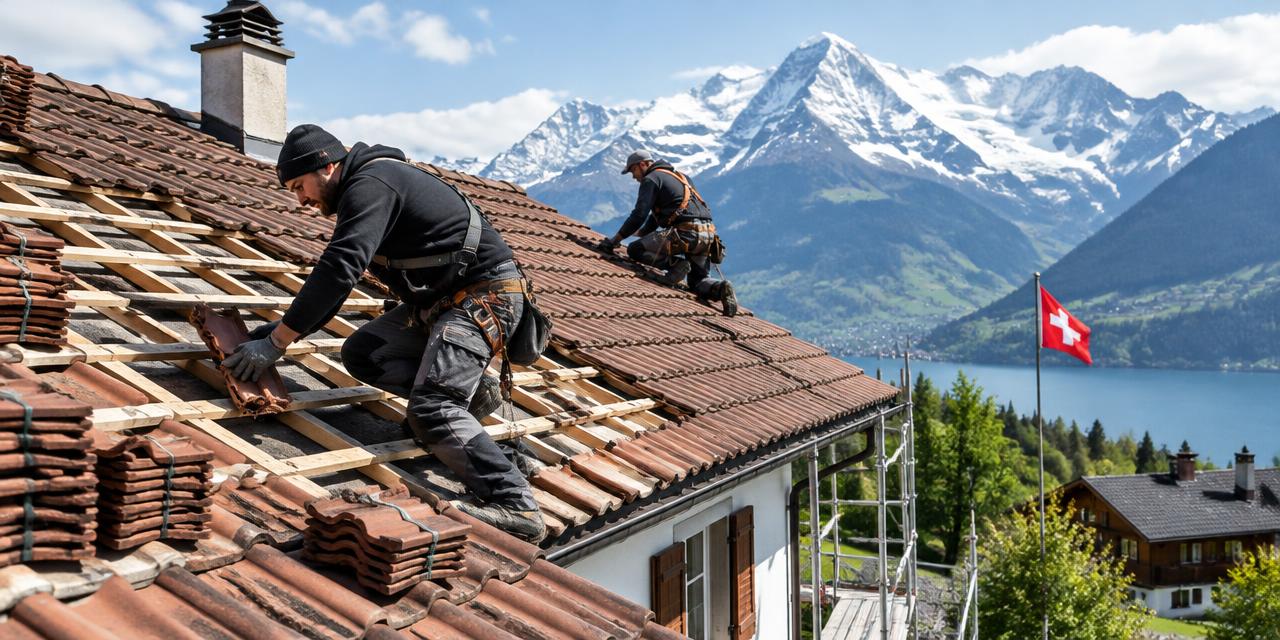
Small project
CHF 16'400 – CHF 37'600
Typical project
CHF 29'700 – CHF 65'400
Large project
CHF 49'600 – CHF 107'200
Computed with our estimator for Genève (regional factor included), standard finish. Only the project size changes.
In Genève, situated at an altitude of 374 meters, the climate imposes real physical constraints on structures.7 °C and about 50 days of frost per year, roofing materials undergo intense thermal cycles that accelerate their aging.
Timely renovation prevents damaging water infiltration, often exacerbated by freeze-thaw cycles.
The heating degree days index of 2752 kJ/year highlights the importance of a well-insulated roof. Undertaking these works not only secures the building envelope against bad weather but also significantly reduces energy consumption.
It is recommended to monitor the condition of your roof as soon as signs of wear appear, particularly after harsh winters, to avoid more expensive structural repairs in the long run.
The choice of roofing materials must meet local climatic requirements. At altitude, snow loads and frost directly influence the type of tiles or membranes to favor to ensure water tightness and durability.
Higher-range options, treated for better resistance to thermal shocks, are often preferable in the canton of Genève.
Thermal roof insulation is a key point. Insulating the roof at the same time as the roofing is an opportunity often eligible for the 'Programme Bâtiments', allowing for improved indoor comfort while optimizing overall performance.
Finally, if you are considering installing solar panels to exploit the 1378 kWh/m²/year of irradiation, their removal and reinstallation must be budgeted for from the start.
Consider integrating these technical elements into your overall reflection to maximize the energy yield of your building and anticipate future maintenance costs.
The building stock in Genève shows great diversity, ranging from 19th-century ensembles to contemporary constructions. For older buildings, typical risks include the potential presence of asbestos in old insulation or roofing materials. A preliminary expertise is essential to secure the site.
Roof structure can vary considerably, requiring a rigorous check of load-bearing elements before any overload due to additional insulation or solar panels.
In the Genevan context, managing networks and attic spaces often poses technical challenges. Many attics have been converted without taking current energy performance standards into account. It is therefore crucial to assess the quality of the support when renovating the roofing.
Ensuring compliance of old electrical networks passing through roofs is an essential step for fire safety. A detailed analysis of the structure by a professional helps avoid bad surprises and ensures a sustainable renovation that respects historical characteristics while integrating modern standards.
In Genève, any intervention on a roof must comply with the procedures of the 'Office de l'urbanisme'. If your building is located in a heritage protection zone (notably ISOS sectors or Old Town), specific conditions apply.
The installation of solar panels, although encouraged, is subject to strict rules on protected buildings: a building permit is required, and the layout must often be limited to terrassons or flat roofs, installed flat.
For simpler projects or outside protected zones, the building permit procedure remains the rule. If you are considering an air-to-water or air-to-air heat pump, note that a prior declaration is sufficient if the power is equal to or less than 10 kW, accompanied by an acoustic certificate.
For higher power, a building permit becomes mandatory. Always check with your municipality for the specific constraints at your address, as compliance with federal and cantonal law is imperative for the validation of your works.
The canton of Genève offers financial support for energy renovation works. Among the available measures, you can request aid for facade insulation, calculated according to the surface area and the targeted performance.
These aids are an integral part of Genevan measures in favor of energy renovation of the building envelope.
It is imperative to respect the order of steps : you must submit your aid application before the start of works. Any work carried out without a prior application will be excluded from the benefit of subsidies.
We recommend that you consult the official energy portal in Genève to know the updated amounts and precise eligibility conditions before incurring any costs or signing a quote. Administrative anticipation is the guarantor of your project's financial success.
The planning of a roof construction site in Genève depends heavily on weather conditions, particularly due to the 50 annual days of frost. The ideal period for carrying out the work is during the milder months, to ensure rapid sealing after stripping the frame.
The process always begins with a diagnostic phase and the request for authorizations from the cantonal authorities.
Once the authorization is obtained, the site begins with the installation of safety equipment and scaffolding. The removal phase of the old roofing is followed by structural work and insulation, if planned. The installation of new roofing materials constitutes the final phase.
It is essential to plan for the protection of the interior of your home throughout the duration of the works. Rigorous monitoring ensures that the steps follow each other smoothly, limiting exposure to the elements.
The most common error is neglecting the structural analysis of the frame before adding high-performance insulation or solar panels. Systematically check if your works require a building permit before signing a quote. Never start work before receiving a favorable response to your subsidy application.
Ensure that the quote includes waste management and site protection.
Here is your checklist : ensure you have had an asbestos diagnosis carried out if your building is old, check with the municipality if your address is in a protected zone, budget for the removal and reinstallation of solar installations if necessary, request an acoustic compliance certificate for heat pumps, and demand a forecast schedule taking seasons into account.
Meticulous preparation is the best defense against cost overruns.
Amounts based on area and target performance.
Geneva support for energy renovation of the building envelope.
www.ge.chCheck amounts and conditions with the provider before signing: apply before work starts in most cases.
1204 Genève · about 0.1 km
Halma is a Geneva-based company specializing in roof maintenance, repair, cleaning, skylight installation, and facade renovation.
couvreur-sauzer.ch1204 Genève · about 0.1 km
Geneva-based company specializing in sanitary installations, tinware, bathroom and kitchen renovations, including 24/7 emergency services.
plomberiegrosch.ch1204 Genève · about 0.1 km
Geneva-based company specializing in light construction, facade renovation, interior finishing, parquet flooring, and outdoor structures.
vladico.ch1204 Genève · about 0.1 km
Chris Energies is a Geneva-based company specializing in the installation, maintenance, and repair of heating systems, heat pumps, as well as photovoltaic and solar thermal equipment.
chris-energies.chSuggestions from the commercial register by distance and activity. Not an endorsement or partnership.
Yes, a building permit is generally required in Genève. It is advisable to contact the 'Office de l'urbanisme' or your municipality to confirm according to your zone.
Although highly recommended, it depends on current energy standards. It is primarily a condition for obtaining certain financial aids.
Yes, under strict conditions, often limited to flat installations on terraces. A building permit is mandatory in this case.
The application must be submitted before the start of the works. No retroactive applications are accepted.
There are about 50 days of frost per year in Genève. This necessitates the choice of very resistant materials.
A declaration is sufficient below 10 kW with an acoustic certificate. Above that, a building permit is required.
It is better to intervene during the milder months to avoid frost periods. This facilitates the installation work and sealing.
Source : swisstopo – service d'altitude (MNT)
Source : Open-Meteo Historical Weather API (réanalyse ERA5, moyenne 2015-2024)
Source : Open-Meteo Historical Weather API (réanalyse ERA5, moyenne 2015-2024)
Source : Open-Meteo Historical Weather API (réanalyse ERA5, moyenne 2015-2024)
Source : Open-Meteo Historical Weather API (réanalyse ERA5, moyenne 2015-2024)
Source : Open-Meteo Historical Weather API (réanalyse ERA5, moyenne 2015-2024)
Source : ge.ch
Source : Guide Installations Solaires et Thermopompes - Canton de Genève
Source : Open-Meteo Historical Weather API (réanalyse ERA5, moyenne 2015-2024) · estimate