
Canton
Heat pump grant — Geneva
Flat rates and percentages depend on the replaced system; check with the cantonal energy office.
Geneva cantonal support for replacing oil or gas heating with renewable systems (heat pumps).
www.ge.chHeat pump installation · Genève
Small project
CHF 32'900 – CHF 60'300
Typical project
CHF 41'600 – CHF 77'500
Large project
CHF 54'600 – CHF 103'300
Computed with our estimator for Genève (regional factor included), standard finish. Only the project size changes.
7 °C, imposes strict requirements on heating systems.7 °C, heat pumps are a proven solution for covering heating needs while reducing carbon footprints. The Geneva Energy Law, in effect since June 1, 2020, makes the transition to renewable sources mandatory.
The ideal time to act is when replacing your current boiler or during a global renovation. It is essential to check beforehand if your building is located in a priority zone for district heating connection.
The deployment of structured thermal networks such as GéniLac or CAD SIG is ongoing, and a connection obligation has applied since January 2025 during any boiler replacement, subject to technical feasibility.
Selecting a heat pump depends primarily on your building's thermal requirements, calculated based on heating degree days (2,752 Kj/year). Air-water systems are the most common, but their efficiency depends on the flow temperature of the radiator network.
Good insulation is often a necessary prerequisite to ensure optimal operation without excessive electrical backup.
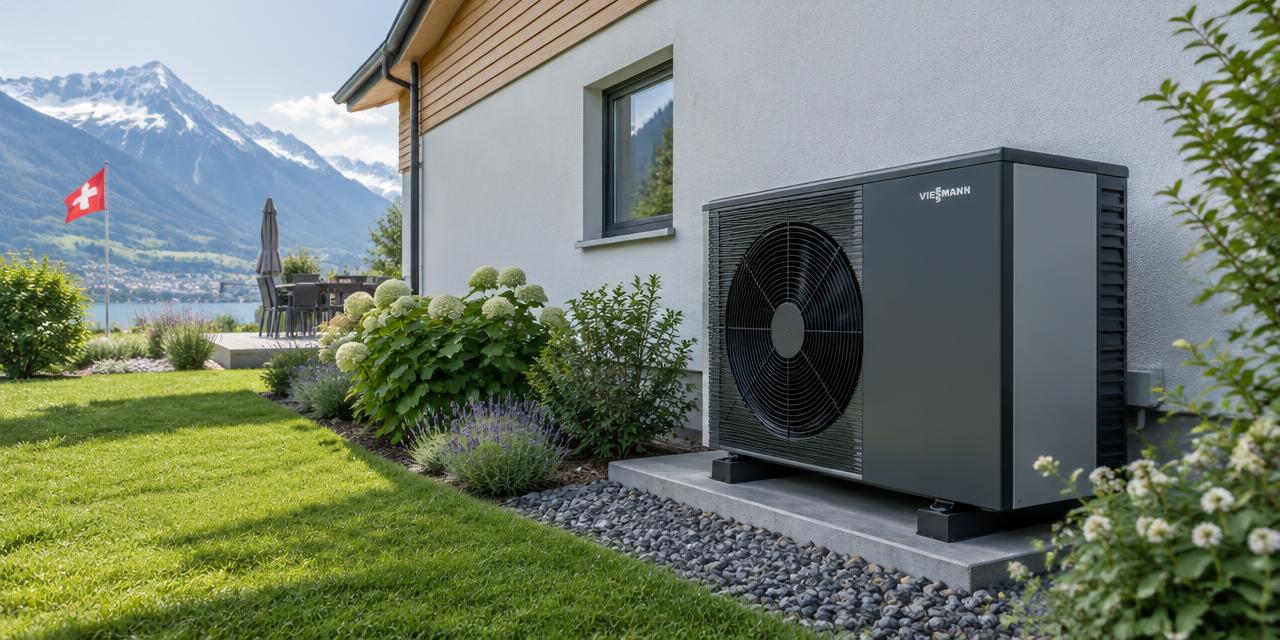
The choice between an indoor or outdoor installation influences not only the available space but also acoustic constraints. Outdoor heat pumps must strictly comply with the immission limit values set by the Noise Abatement Ordinance (NAO).
It is therefore essential to include an acoustic study from the design phase, especially in dense residential areas, to avoid neighbor disputes and comply with local regulations.
The canton of Geneva features marked architectural diversity, ranging from traditional single-family homes to apartment buildings from various eras. When installing a heat pump, the condition of your heat distribution network is decisive.
If your house was built before the 1990s, an asbestos diagnostic is mandatory before any work on pipes or the boiler room. Older buildings are often characterized by insufficient thermal insulation, requiring particular attention to the power of the heat pump.
It is recommended to analyze the quality of the thermal envelope before sizing the machine. Power incorrectly calculated relative to actual thermal loss can lead to excessive electricity consumption. Remember that the Office of Urban Planning closely monitors the compliance of installations over 10 kW.
For buildings of character, attention to landscape integration is also expected so as not to denature the aesthetics of the neighborhood.
In Geneva, every heat pump installation is subject to strict rules managed by the Office of Urban Planning. If your heat pump's power exceeds 10 kW, you must obtain a building permit. For power equal to or less than 10 kW, a prior declaration is required, accompanied by an acoustic compliance certificate.
These steps aim to ensure that noise constraints do not harm neighbors, in accordance with the Noise Abatement Ordinance (NAO).
If your building is located in a protected area, such as the Old Town or an ISOS sector, additional constraints may apply, particularly regarding the visual integration of the outdoor unit. Although renewable installations are encouraged, aesthetics are monitored.
In some cases, a building permit application is required to ensure that the equipment does not distort heritage elements, whether for listed monuments or buildings on the inventory.
The canton of Geneva offers subsidies for replacing fossil fuel heating systems with heat pumps. The amount of aid is structured into packages and percentages that vary according to the system replaced.
To benefit from them, you must respect the order of steps : you must submit your application to the Cantonal Energy Office (OCEN) before starting work. Any installation started without prior authorization leads to the definitive loss of the right to subsidies.
ch/energie to get the latest guidelines on allocated amounts. This aid is part of the cantonal energy policy aimed at abandoning oil and gas.
Ensure that you include all compliant quotes and technical documents for the chosen machine in your file to facilitate the processing of your application by administrative services.
The execution of a heat pump project follows a structured calendar. After your subsidy application is validated by the OCEN and the building permit is obtained, work can begin. It is preferable to plan the work outside of extreme cold periods, to avoid leaving your home without heating for too long.
The typical flow begins with the dismantling of the old boiler, followed by the removal of oil tanks if necessary, then the installation of the outdoor unit and the hydraulic connection.
Commissioning and machine setting stages follow the physical installation. A qualified installer will then carry out leak tests and verify noise levels.
It is crucial to anticipate the administrative deadlines related to obtaining permits, which can vary according to the complexity of the file, and to coordinate the work with heating professionals to ensure a smooth transition to the new system.
To make your project a success, avoid neglecting the preliminary thermal analysis of your home. A classic error is to choose a machine whose power is ill-adapted to actual needs, which lowers the overall efficiency.
Before requesting quotes, check if your neighborhood can be connected to a priority district heating network. Ensure that your installation respects the acoustic limits imposed by the NAO to avoid any noise nuisance. Demand that your service providers integrate a precise acoustic study into their offer.
Prepare a complete checklist before meeting with companies : check the year of construction, the condition of your radiators, and the availability of an outdoor location. Do not sign any quotes before receiving the acknowledgment of receipt for your subsidy application from the OCEN.7 °C.
Finally, ensure that the selected professionals possess the necessary certifications to work in compliance with the current cantonal standards.
Flat rates and percentages depend on the replaced system; check with the cantonal energy office.
Geneva cantonal support for replacing oil or gas heating with renewable systems (heat pumps).
www.ge.chCheck amounts and conditions with the provider before signing: apply before work starts in most cases.
1204 Genève · about 0.1 km
AQUA & TECH SARL is a general construction company based in Geneva specializing in bathroom renovations, plumbing, and interior finishing works.
aqua-and-tech.ch1204 Genève · about 0.1 km
Chris Energies is a Geneva-based company specializing in the installation, maintenance, and repair of heating systems, heat pumps, as well as photovoltaic and solar thermal equipment.
chris-energies.ch1205 Genève · about 0.8 km
Léman Ventilation SNC specializes in the installation, maintenance, and repair of heating, ventilation, and sanitary systems.
h2o-leman.ch1205 Genève · about 0.8 km
Geneva-based specialist since 1988 in thermal installations, heating systems, and sanitary equipment for industrial and residential sectors.
desprazsa.chSuggestions from the commercial register by distance and activity. Not an endorsement or partnership.
Yes, a prior declaration is necessary for power up to 10 kW. A building permit is mandatory above this threshold.
Subsidies are available as packages and percentages. You must contact the OCEN for details based on your current system.
It is imperative to submit the application before any work begins. Otherwise, you lose the right to any financial aid.
Installations must respect the immission limit values of the NAO. An acoustic study is often required to ensure compliance.
It depends on the required flow temperature. Good insulation often allows you to keep existing radiators.
The sizing must account for the winter temperature of -4.7 °C to ensure efficiency during cold days.
Consult the interactive online map from the SIG to verify your building's planned thermal network connection.
Source : swisstopo – service d'altitude (MNT)
Source : Open-Meteo Historical Weather API (réanalyse ERA5, moyenne 2015-2024)
Source : Open-Meteo Historical Weather API (réanalyse ERA5, moyenne 2015-2024)
Source : Open-Meteo Historical Weather API (réanalyse ERA5, moyenne 2015-2024)
Source : Open-Meteo Historical Weather API (réanalyse ERA5, moyenne 2015-2024)
Source : Open-Meteo Historical Weather API (réanalyse ERA5, moyenne 2015-2024)
Source : Open-Meteo Historical Weather API (réanalyse ERA5, moyenne 2015-2024) · estimate
Source : Guide Installations Solaires et Thermopompes - Canton de Genève