
AS Ascenseurs SA
2300 La Chaux-de-Fonds · about 0 km
AS Aufzüge provides planning, construction, maintenance, and repair services for various types of elevators throughout Switzerland.
lift.chElevator installation or upgrade · La Chaux-de-Fonds
Small project
CHF 46'400 – CHF 114'600
Typical project
CHF 58'000 – CHF 143'200
Large project
CHF 81'100 – CHF 200'500
Computed with our estimator for La Chaux-de-Fonds (regional factor included), standard finish. Only the project size changes.
In La Chaux-de-Fonds, the altitude of 990 meters and harsh climatic conditions directly influence the maintenance of the building stock.3 °C, the choice of materials for an elevator, especially if located on a facade or in an uninsulated shaft, is paramount.
Modernization becomes urgent when maintenance costs rise or the equipment no longer meets current safety standards. Anticipating these works helps prevent immobilizing breakdowns during cold weather.
Installing a new elevator also meets the growing demand for accessibility for seniors and people with reduced mobility. In La Chaux-de-Fonds, where the building stock is historical, the addition of this equipment significantly increases the value of apartments on upper floors.
It is advisable to assess the structural condition of the stairwell or facade before launching the project to ensure the durability of the installation against local thermal constraints.
The cost and complexity of an elevator project depend primarily on two major factors: the number of stops and the possible creation of a shaft.
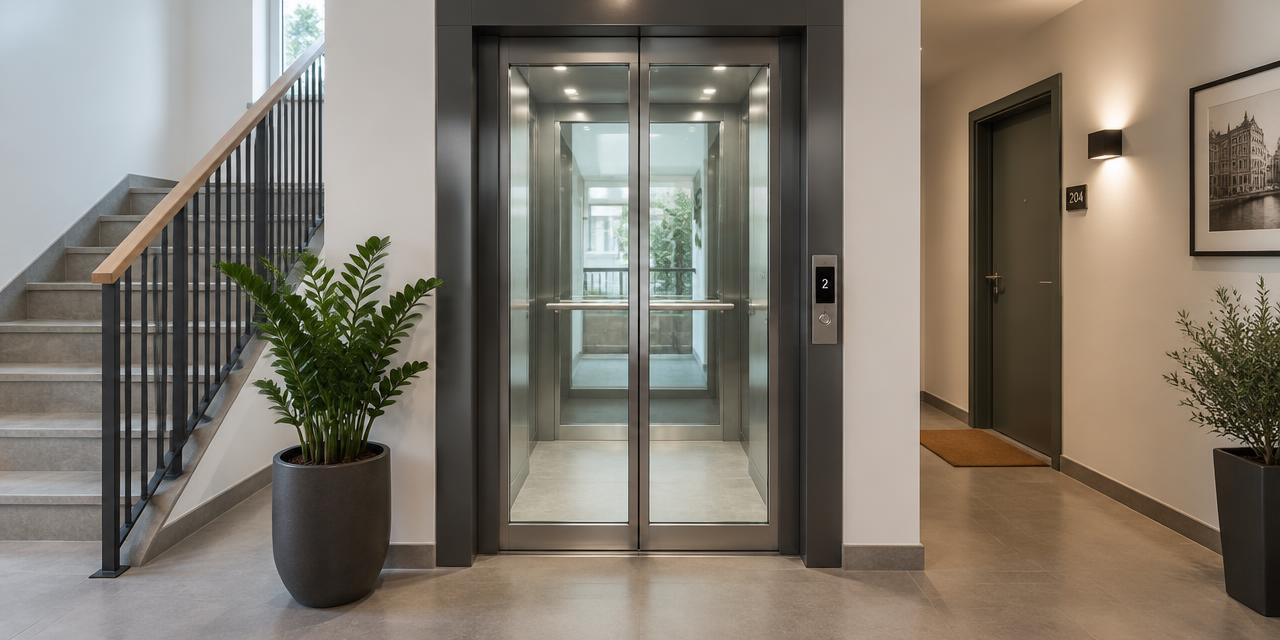
For an existing building, you can choose between a masonry shaft, which is more traditional and robust, or a metal structure with glass cladding, often favored to minimize visual impact and let light through.
The traction type, hydraulic or electric, also influences energy consumption and the space required for machinery.
Among the options, the choice of interior finishes (stainless steel, mirrors, type of lighting) changes the aesthetics and the quality level of the installation. It is crucial to include an annual maintenance contract in your comparison of offers to anticipate recurring costs.
Also consider the accessibility requirements for disabled persons, which mandate specific cabin dimensions.
Each technical choice must take the site configuration into account: integrating an external shaft, for instance, can reduce work inside the apartments but requires high-performance insulating finishes to cope with the low winter temperatures of La Chaux-de-Fonds.
The building stock in La Chaux-de-Fonds consists of various building types, many dating from before 1990. These buildings pose potential risks related to the presence of asbestos in old coatings or conduits. Before starting drilling for an elevator shaft, an asbestos diagnostic is essential.
Furthermore, the thermal insulation of older buildings is often insufficient for current standards. Adding an elevator shaft is an opportunity to integrate reinforced thermal insulation to avoid creating thermal bridges, which would be particularly energy-costly given the annual heating requirements.
Existing networks (water pipes, electricity, drainage) in old buildings can be complex and difficult to modify. A precise preliminary study is necessary to ensure that the installation of the new elevator does not require a complete overhaul of the building's risers.
It is also common to encounter load-bearing structures made of wood or old bricks requiring specific floor reinforcements.
A structural analysis by a civil engineer is therefore recommended to validate technical feasibility, particularly to anchor the load-bearing elements of the elevator securely without compromising the overall integrity of the building.
Adding an elevator to an existing building is a major intervention that systematically requires a building permit from the competent municipal authority. In La Chaux-de-Fonds, it is essential to check if your building is located in a protected perimeter or is classified as a cultural heritage asset.
The municipality distinguishes between installations subject to permits, particularly for protected cultural assets and certain ISOS perimeters with a conservation objective A. It is imperative to identify the affected zone before any financial or technical commitment.
We advise you to contact the local urban planning department to obtain the specific guidelines related to your exact address. Although a simplified notification procedure exists for certain solar installations, it does not apply to structural transformation work such as adding an elevator.
Prepare a complete dossier including plans, sections, and visual integrations to demonstrate that the project respects architectural harmony and applicable conservation constraints. Failure to follow these steps can lead to the immediate stop of the site by local authorities.
Regarding financial aid in La Chaux-de-Fonds, it is crucial to note that no specific direct aid currently covers the installation of elevators in private buildings.
However, it is advisable to check periodically with your municipality or the canton of Neuchâtel if temporary incentive programs for energy renovation or accessibility have been launched. If subsidies are available, the golden rule is to submit your request before starting work.
Any expense incurred before obtaining a grant promise generally makes your application ineligible.
Tax-wise, renovation and maintenance work, including elevator installation, can often be deducted from your taxable income as maintenance or property value improvement expenses. It is recommended to consult a tax advisor or your cantonal administration to distinguish between allowed deductions.
Carefully keep all invoices and certificates of conformity after completion. Financial planning must integrate all costs: design, structural work, elevator installation, and electrical connection fees to have a clear view before seeking tax deductions.
The progress of an elevator project follows rigorous steps, starting with a feasibility study and the permit application with the competent authorities. Once the permit is obtained, the component ordering phase is launched, followed by structural work.
In La Chaux-de-Fonds, planning must take extreme weather conditions into account. Although interior work can continue, phases involving opening the building or handling frost-sensitive materials are ideally scheduled outside the winter period, marked by 100 frost days per year.
After structural work comes mechanical installation, electrical wiring, and finally cabin finishes. The construction site ends with rigorous safety tests, essential for obtaining official commissioning. Respecting this order is essential to avoid costly interruptions.
It is advisable to start thinking in the spring to allow studies and permits to follow their course before planning execution during a period of favorable weather. Anticipating the schedule also allows for coordinating different trades, thus ensuring the elevator is operational at the right time.
To succeed in your project, avoid neglecting the preliminary structural analysis which can reveal unforeseen reinforcement needs. Do not choose an elevator solely based on price without considering the annual maintenance contract cost, which will weigh on your long-term budget.
Forgetting to consult heritage protection services if your building is old is a common mistake that can block your site. Before requesting quotes, ensure you have a precise building plan with the locations of the risers. Prepare a clear dossier stating your expectations in terms of accessibility.
Check if you need a building permit. Compare quotes by imperatively including the annual maintenance cost and the warranty duration of components. Ensure you have consulted a civil engineer to validate technical feasibility.
Finally, plan your work outside the intense frost period to ensure the quality of the finish implementation.
No specific grant listed for this work. Maintenance tax deductions may still apply.
2300 La Chaux-de-Fonds · about 0 km
AS Aufzüge provides planning, construction, maintenance, and repair services for various types of elevators throughout Switzerland.
lift.ch2300 La Chaux-de-Fonds · about 0 km
Specialist in timber framing, carpentry, and innovative structures such as CLT buildings and wooden elevator shafts.
edifice-bois.ch2333 La Ferrière · about 4.3 km
Edifice LF Sàrl specializes in timber frame construction, carpentry, joinery, and the realization of bespoke timber structures.
edifice-bois.ch2340 Le Noirmont · about 12.9 km
Carpentry and woodworking company specializing in custom wood constructions, interior fittings, and CLT structures based in Le Noirmont.
edifice-bois.chSuggestions from the commercial register by distance and activity. Not an endorsement or partnership.
The number of stops and the possible creation of a shaft are the main cost factors. The configuration of your building determines the scale of the structural work required.
Yes, an elevator added to an existing building requires a building permit. You must submit your request to the competent municipal authority.
No, the annual maintenance contract must be included in your comparison of offers. These recurring costs are crucial for long-term financial management.
Yes, low winter temperatures require high-performance insulating materials. Choosing components adapted to freezing is essential to avoid breakdowns.
Yes, essential for buildings built before 1990. It allows securing the site and avoiding health risks for workers.
The grant application must be submitted before work begins. Any prior commitment generally makes your application ineligible.
It is better to avoid the intense frost period. Plan your work outside the winter months to ensure the quality of implementation.
Source : Ville de La Chaux-de-Fonds
Source : azprojet.ch