
Canton
Heat pump grant — Valais
Flat contributions per kW or per installation depending on technology.
Valais supports renewable heating via the Buildings Programme and additional cantonal grants.
www.leprogrammebatiments.chHeat pump installation · Monthey
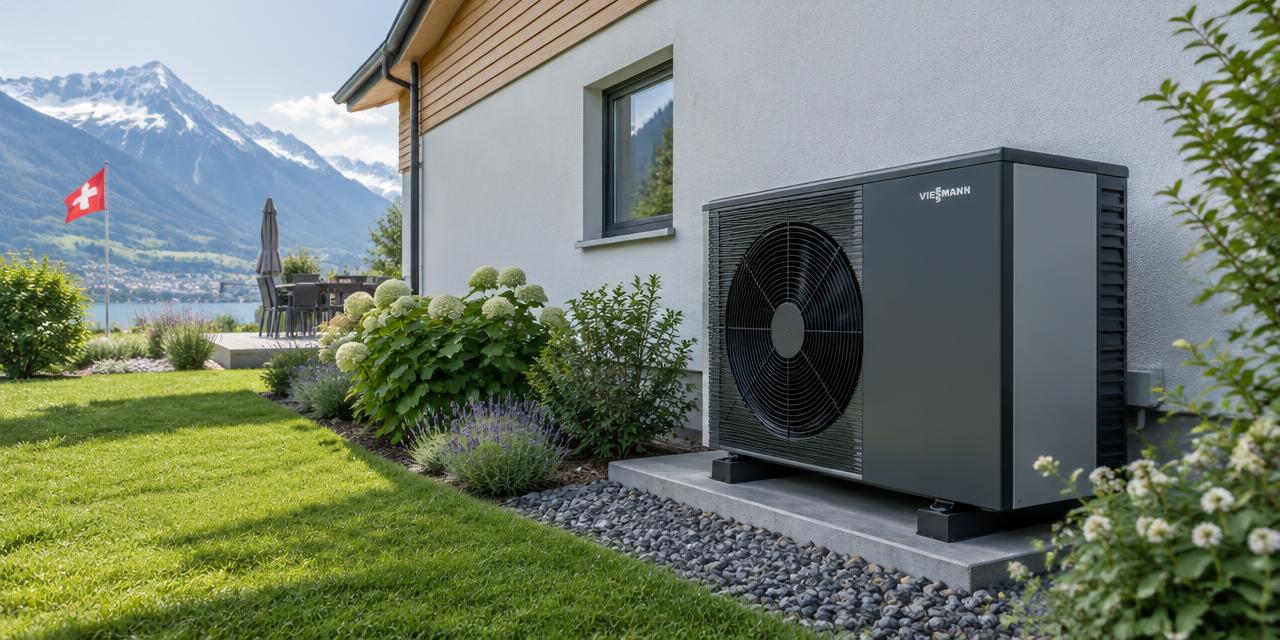
Small project
CHF 32'900 – CHF 60'300
Typical project
CHF 41'600 – CHF 77'500
Large project
CHF 54'600 – CHF 103'300
Computed with our estimator for Monthey (regional factor included), standard finish. Only the project size changes.
7 °C. With approximately 64 frost days per year, choosing a high-performance heating system is crucial to ensure your thermal comfort throughout the winter.
Installing a heat pump (HP) allows you to meet your home's energy needs by leveraging renewable resources, while aligning with the city's 'Energy City Gold' strategy aimed at reducing energy consumption.
The ideal time to replace your current boiler is either during a comprehensive renovation aimed at improving energy efficiency, or when your current system reaches the end of its service life.
Before making any decision, it is imperative to check whether your neighborhood can be connected to the district heating network, the expansion of which is being actively pursued in Monthey, particularly towards Avenue de la Plantaud and Route des Saphirs.
This alternative may constitute a simpler and more sustainable solution depending on your specific geographical location relative to the existing network.
The technology of your heat pump must be adapted to the thermal characteristics of your building. The required power is determined by the local winter design temperature, which directly influences the sizing of the heat exchanger.
Depending on the space available on your plot and the nature of the soil, you will need to choose between an air-water HP, which captures calories from the ambient air, or a geothermal solution, which is more stable but requires drilling.
Air-water models are particularly popular, but their location must be carefully studied to respect noise limits towards neighbors.
The range of equipment chosen also impacts the overall energy efficiency of your installation. Opting for the latest generation of heat pumps allows for higher coefficients of performance (COP), thus reducing your annual electricity consumption.
Do not forget to include the domestic hot water demand, which can be managed in a coupled or independent manner.
Additionally, if your roof is favorably oriented (significant solar potential with an estimated yield of 1219 kWh/kWc/year), installing photovoltaic panels can optimize the self-consumption of electricity for your HP, thus maximizing long-term profitability.
Monthey's housing stock presents varied characteristics requiring an energy audit before any heat pump installation. For buildings constructed before 1990, it is essential to be vigilant regarding the possible presence of pollutants such as asbestos, particularly in pipe insulation or old heating systems.
A diagnosis of the thermal envelope is also essential : a HP will be all the more efficient as your building is well insulated. If heat is escaping through walls or windows, installing a HP risks being oversized and costly to use, covering only partially the high-temperature needs.
Internal heat distribution, whether through high-temperature radiators or floor heating, also conditions the choice of heat pump. An existing floor heating network is ideal because it operates at low temperatures, promoting optimal efficiency of the device.
For older houses equipped with radiators, it will sometimes be necessary to plan for adaptation or replacement to allow the HP to operate efficiently.
Renovating the internal distribution network is often the ideal time to validate water flows and ensure that the installation will comply with modern technical requirements, thus guaranteeing stable thermal performance against the Monthey winters.
Before starting your installation work, it is necessary to consult the technical services of the municipality of Monthey. Although no specific information mentions an ISOS inventory or a restrictive protected zone, it is your responsibility to check whether your plot is subject to specific municipal regulations.
The submission of a building permit application is generally required for any major modification of the heating system, especially if the installation involves civil engineering works, such as geothermal drilling.
In terms of urban planning, ensure you comply with the distances to property boundaries and guidelines on noise pollution, especially for air-water HP outdoor units which must respect noise standards towards immediate neighbors.
We advise you to contact the municipal administration directly to obtain the list of documents required for your file, if applicable.
This preliminary step ensures the compliance of your project with the city's energy master plan and avoids any subsequent administrative blockage before the actual start of the construction site.
Valais actively supports the transition to renewable heating, which includes heat pumps. You can benefit from flat-rate contributions per kilowatt (kW) or per installation depending on the technology chosen.
This aid is accessible via 'The Buildings Program', which centralizes federal and cantonal subsidies to encourage energy efficiency. It is essential to understand that the process must follow a precise order: you must imperatively submit your grant application before the actual start of work.
Any installation started without prior approval risks not being eligible for financial aid.
In addition to these direct subsidies, consider including the tax deduction of investment costs related to energy saving and environmental protection, according to the legislation in force.
The aid is modulated according to the technology, a geothermal heat pump potentially benefiting from different support than an air-water HP. Regularly consult the official 'Buildings Program' website to check the conditions for combining aid and the required supporting documents.
Good financial planning, carried out before signing quotes, will allow you to maximize the financial support available for your project in Monthey.
The installation schedule for a heat pump follows several key phases, starting with the energy audit and validation of technical feasibility. Once quotes are compared and financial aid is requested from the competent authorities, the administrative timeframe depends on the complexity of the file.
7 °C requires the final connection work to be carried out at a time when heating will not be essential on a daily basis.
The construction site itself begins with the preparation of the location for the outdoor unit, followed by the installation of the hydraulic module and connection to the distribution network.
If the project includes drilling, this work must be planned in advance to avoid frozen ground, taking into account the 64 frost days recorded per year in Monthey. Commissioning by a certified professional is the final step, including temperature rise tests and hydraulic balancing.
Anticipating the schedule ensures that the installation will be operational by the first signs of falling autumn temperatures, thus ensuring a transition without loss of comfort for your home.
To ensure the success of your project, avoid choosing a heat pump solely based on the initial price without considering the long-term operating cost. A common error is neglecting the building's insulation, which leads to installing an oversized machine incapable of operating efficiently.
Also, ensure you do not ignore acoustic constraints; a poorly placed outdoor unit can become a source of significant nuisance for you and your neighbors. It is imperative to request several comparative quotes based on precise specifications.
Checklist before requesting quotes : check if your neighborhood can be connected to district heating before committing; have a complete energy audit of your home carried out; determine if insulation work is needed as a priority; request a sizing study based on local climatic data; check the conditions for obtaining Valais cantonal subsidies; ensure the chosen company has the required certifications for installing renewable systems; plan the integration of your future heating system in compliance with neighborhood rules.
Flat contributions per kW or per installation depending on technology.
Valais supports renewable heating via the Buildings Programme and additional cantonal grants.
www.leprogrammebatiments.chCheck amounts and conditions with the provider before signing: apply before work starts in most cases.
1870 Monthey · about 0 km
Valais-based company specializing in plumbing, roofing, tinsmithing, and heating systems including solar thermal and heat pumps.
parchet.ch1870 Monthey · about 0 km
Specialist in bathroom renovation and sanitary installations in Monthey, offering complete heating services and emergency repairs.
perfect-eau.ch1870 Monthey · about 0 km
Groupe Thermo is a Swiss company specializing in the installation and maintenance of heating, plumbing, ventilation, and air conditioning systems.
groupe-thermo.ch1870 Monthey · about 0 km
Aquarenov is a Swiss company specializing in full bathroom and kitchen renovations, as well as sanitary and heating system installations.
aquarenov.chSuggestions from the commercial register by distance and activity. Not an endorsement or partnership.
You can obtain flat-rate contributions via 'The Buildings Program', managed at the cantonal level. It is crucial to submit your application before starting the work.
Yes, a permit is generally required for the replacement of the heating system, especially for work involving geothermal drilling.
This depends on the space on your land and the nature of your soil. A preliminary technical study is essential to validate the best option.
Outdoor units must respect strict noise limits towards neighbors. A thoughtful placement can effectively mitigate these nuisances.
Yes, good insulation optimizes the performance of your HP and allows for a reduction in its installed power. This is a recommended step for thermal comfort.
The district heating network in Monthey is in full expansion. Check your connectivity, as it can simplify your energy management.
It is best to plan the work outside of the deep cold period. Spring and summer are ideal to avoid heating interruptions.
Source : swisstopo – service d'altitude (MNT)
Source : Open-Meteo Historical Weather API (réanalyse ERA5, moyenne 2015-2024)
Source : Open-Meteo Historical Weather API (réanalyse ERA5, moyenne 2015-2024)
Source : Open-Meteo Historical Weather API (réanalyse ERA5, moyenne 2015-2024)
Source : Open-Meteo Historical Weather API (réanalyse ERA5, moyenne 2015-2024)
Source : Open-Meteo Historical Weather API (réanalyse ERA5, moyenne 2015-2024)
Source : Open-Meteo Historical Weather API (réanalyse ERA5, moyenne 2015-2024) · estimate
Source : S0
Source : monthey.ch