
Eco6therm Sàrl
2832 Rebeuvelier · about 102.5 km
Eco6therm specializes in the installation of heating systems, particularly heat pumps, and solar photovoltaic energy solutions.
eco6therm.chHome solar battery · Schaffhausen
At a glance
Small project
CHF 4'400 – CHF 10'200
Typical project
CHF 8'100 – CHF 17'200
Large project
CHF 13'900 – CHF 28'500
| Project | Quantity | Low | High | Per unit |
|---|---|---|---|---|
| Small project | 5 kWh | CHF 4'400 | CHF 10'200 | CHF 1'400 |
| Typical project | 10 kWh | CHF 8'100 | CHF 17'200 | CHF 1'200 |
| Large project | 18 kWh | CHF 13'900 | CHF 28'500 | CHF 1'100 |
Computed with our estimator for Schaffhausen (regional factor included), standard finish. Only the project size changes.
Included
Not included
In Schaffhausen, the federal building register lists 6'414 residential buildings and 20'175 dwellings. These municipal benchmarks help put your home in context, but do not replace an individual assessment.
73 % built before 1980
Construction year does not reveal past renovations: check the current insulation condition.
53 % · Gas
This distribution describes recorded buildings, not your system's consumption or efficiency.
| Energy | Heating | Hot water |
|---|---|---|
| Gas | 53 % | 47.5 % |
| Heating oil | 23 % | 15.2 % |
| District heating | 3 % | 4.2 % |
| Heat pump | 15 % | 7.4 % |
| Electricity | 2 % | 19.2 % |
| Wood | 4 % | 1.8 % |
| Solar thermal | 0 % | 3.9 % |
Each line gives the share of buildings using that energy, separately for heating and for hot water. The two columns do not always reach 100%: some buildings combine two systems, or reported none.
A standard non-condensing boiler is usually older and less efficient.
10.9 % of buildings mix housing with shops or offices.
For renovation planning in Schaffhausen, the current official building register data provides no specific figures regarding renovation years, heritage protection status, or building volumes. Because this coverage is effectively absent for these metrics, you cannot rely on register data to determine the scale of your insulation works or permit requirements. Consequently, we advise you to contact the municipality of Schaffhausen directly to confirm the regulatory status of your property. Engaging with local authorities early is essential to ensure your project aligns with all municipal requirements, as these specific building register parameters remain unavailable for analysis.
Source : OFS — RegBL (export communal complet). Existing residential buildings; percentages of recorded values.
A battery is worthwhile when solar output clearly exceeds your daytime use. By storing the surplus, you avoid reinjecting energy into the grid at unfavorable rates.
This allows you to power household appliances or your electric car with your own electricity in the evening. Analyze your annual consumption profile to evaluate if the investment will pay off through savings on your electricity bill.
Remember that the main goal is to maximize the local use of your production to reduce your dependence on traditional suppliers.
Size capacity by evening consumption, not panel power. It is pointless to install a battery that is too large and will never be fully charged. The goal is to have a capacity that covers your needs between sunset and sunrise.
A qualified installer in Schaffhausen can help you calculate the optimal size based on your habits. Improper sizing can reduce the overall profitability of your system. Take the time to estimate your average nighttime peak consumption to make the best choice.
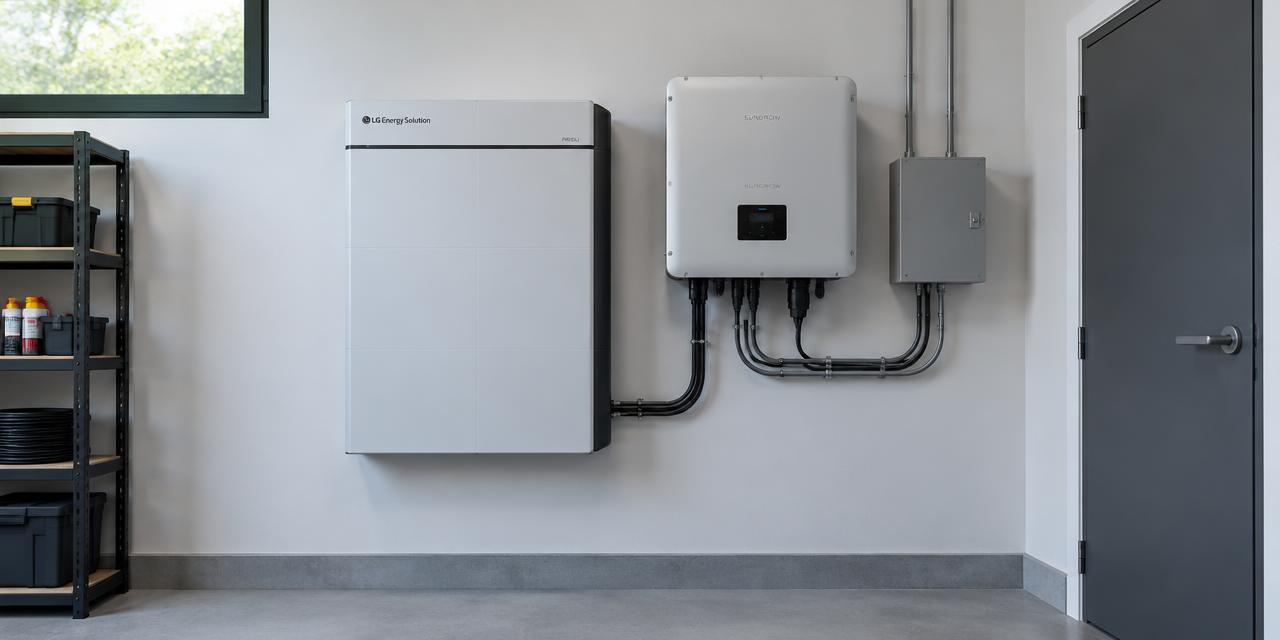
Check compatibility with your existing inverter before buying. Some solar systems require a hybrid inverter to work with a battery. If your current installation is not compatible, you may need an additional investment for management hardware.
Hire local professionals to ensure installation meets current safety standards. They will check the location, necessary ventilation, and system connectivity.
A professional installation ensures not only the safety of your home but also an optimal lifespan for your lithium-ion batteries.
Setting up a storage solution is a significant initial investment, but one that can pay off in the long term. Costs depend on the chosen technology, storage capacity (kWh), and the complexity of the installation on your site.
To avoid surprises and get a clear view of market prices, use our RenoIndex tool. It allows you to generate a personalized cost range for free. Then compare quotes from several companies to choose the solution that best fits your project and your budget.
1. Estimate
Set a budget range with the estimator.
2. Grants
Apply before work starts.
3. Quotes
Compare at least 3 quotes.
4. Permit
Check with the municipality whether a permit is needed.
5. Works
Follow the site and do a written handover.
No specific grant listed for this work. Maintenance tax deductions may still apply.
2832 Rebeuvelier · about 102.5 km
Eco6therm specializes in the installation of heating systems, particularly heat pumps, and solar photovoltaic energy solutions.
eco6therm.ch2735 Malleray · about 115.5 km
Company specialized in electrical installations and telecommunications systems, including network infrastructure and related trade.
telecrengglisa.ch2718 Lajoux JU · about 123.3 km
Jura-based specialist in photovoltaic panel installation and energy storage solutions with AI-driven optimization.
hypersolaire.ch2605 Sonceboz-Sombeval · about 125.1 km
Solar conseil Sàrl specializes in the installation of photovoltaic power plants, energy storage solutions, and energy efficiency consulting in the Jura and Bernese Jura regions.
solarconseil.chSuggestions from the commercial register by distance and activity. Not an endorsement or partnership.
Most modern lithium batteries last between 10 and 15 years. Their performance decreases gradually over charging cycles. Proper maintenance and a well-ventilated installation help maintain efficiency for longer. Check the manufacturer's specifications for the precise warranty details.
It is strongly advised against installing a solar battery yourself. This type of work requires electrical expertise and strict adherence to safety standards. An incorrect installation can cause fire hazards or void the manufacturer's warranty. Always hire a qualified professional for this type of work.
It depends on your system. Most standard installations shut down to protect the grid. However, some models allow for backup functionality if you install specific equipment. Check with your installer about the backup options available for your particular configuration before purchasing.
Batteries must be installed in a dry, temperate, and well-ventilated area. Avoid areas subject to large temperature fluctuations, such as an uninsulated attic or direct sunlight. A basement or a heated garage is often an excellent choice to ensure an optimal lifespan for your system.