
Canton
Facade insulation — Buildings Programme (VD)
Contribution per insulated m², depending on energy requirements met.
Grants for thermal insulation of the building envelope (walls, roof) via the Buildings Programme.
www.leprogrammebatiments.chFacade insulation · Vevey
Small project
CHF 20'000 – CHF 41'400
Typical project
CHF 36'800 – CHF 73'000
Large project
CHF 62'100 – CHF 120'400
Computed with our estimator for Vevey (regional factor included), standard finish. Only the project size changes.
Located on the shores of Lake Geneva at an altitude of 383 meters, Vevey experiences significant heating needs. With approximately 2544 heating degree-days and about 22 frost days per year, local real estate is subject to climatic stresses that impact energy consumption.3 °C.
Undertaking these works is particularly relevant if you notice cold walls or mold, which are signs of a thermal bridge break.
The city of Vevey, which has been awarded the 'Energy City GOLD' label since 2012, actively encourages the energy transition through its municipal Climate Plan. The 'Vevey Rénove' program, launched in 2022, aims to stimulate the renovation of the existing building stock.
By insulating your facade, you are not only contributing to the longevity of your property, but you are also participating in the local energy dynamic aimed at rationalizing consumption over the long term.
This is an ideal time to enhance your property while meeting current environmental challenges in the canton of Vaud.
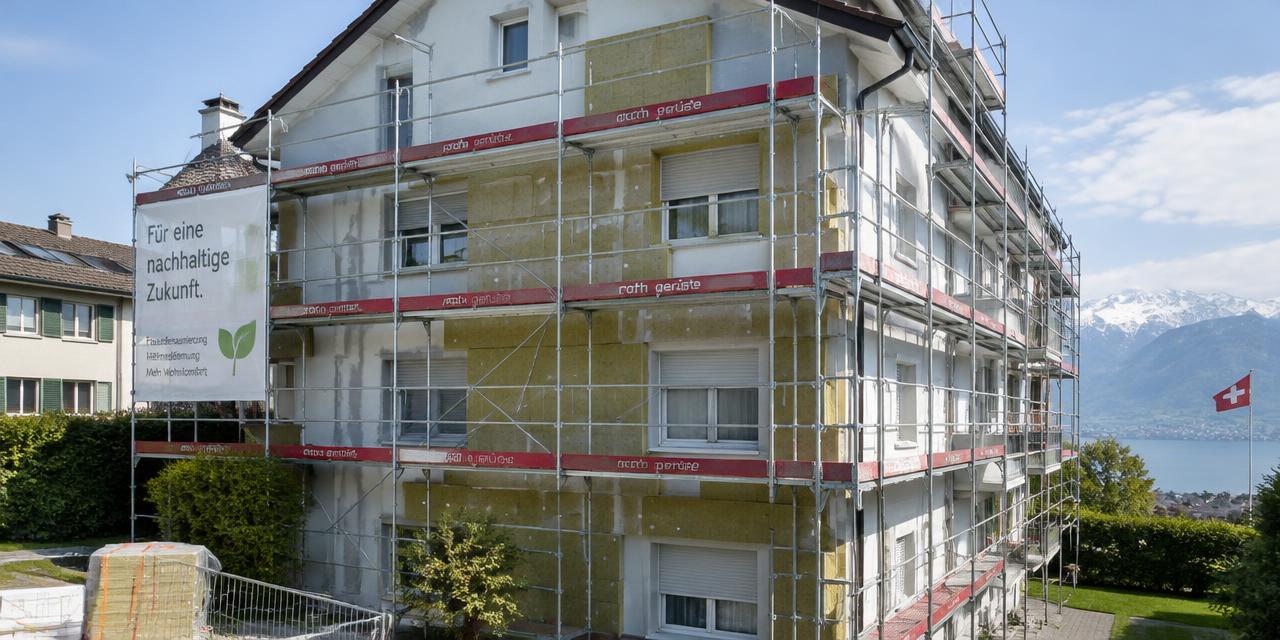
The technique of facade insulation generally relies on the External Thermal Insulation Composite System (ETICS). The choice of insulation material (stone wool, expanded polystyrene, or bio-sourced materials) depends on the desired performance, water vapor permeability, and your budget.
Each material has its own thermal resistance properties, and choosing an appropriate thickness is essential to maximize energy savings while respecting the existing architectural envelope of your building in Vevey.
The project can vary depending on the quality level desired, particularly regarding the finish: mineral plaster, wood siding, or composite panels. In addition to the insulation itself, the quality of junctions (doors, windows, roof) is crucial for ensuring airtightness.
Also, consider reflecting on solar protection and aesthetics, especially if your building is old.
It is advisable to consult a specialist to evaluate the interaction between the chosen insulation and your wall's load-bearing structure to avoid any problems with internal condensation or degradation of facade materials over time.
The real estate stock in Vevey is marked by great diversity, ranging from historic homes in the city center to more recent constructions on the outskirts. Before 1990, many building materials, including insulation, adhesives, or certain plasters, may contain asbestos.
Before any drilling or demolition, technical expertise is essential to identify the presence of hazardous substances. Furthermore, older buildings often feature outdated electrical or plumbing networks that should be checked before being encapsulated behind new insulation.
Old facades, often made of stone masonry or brick, require special moisture management. An ill-adapted insulation could trap moisture inside the wall and cause major structural degradation. It is crucial to analyze the permeability of existing materials before adding an insulation layer.
In addition, managing thermal bridges at balconies and cornices is a classic difficulty on buildings in Vevey. A tailored approach, respecting building physics, is the only guarantee to avoid costly damage after works, especially since many structures are in direct contact with the damp conditions of the lakeside.
As Vevey is a built site of national importance (ISOS), the exterior appearance of your building is protected. The PA N-O regulation incorporates the preservation objectives for these sites.
If you live in a protected building or in an ISOS A village zone, any facade modification strictly requires a building permit application. For these sites, full preservation of the exterior appearance is often recommended.
Before incurring costs, it is imperative to consult the municipality of Vevey to validate the aesthetic feasibility of your insulation project, especially if it modifies the scale or the appearance of the facade.
In the general case in the canton of Vaud, certain minor works may be subject to the simplified procedure or an exemption. However, as soon as the exterior appearance is modified by an insulation thickness, the intervention is scrutinized.
A building permit application is the mandatory administrative step for any change in appearance. Never underestimate the constraints of preserving local heritage. A careful trade-off is often necessary to reconcile your energy efficiency goals with site protection requirements.
Prior consultation with the municipality's urban planning services will save you unnecessary complications and permit refusals during the project.
For your insulation work, financial aid is available through the Buildings Program of the canton of Vaud. This program provides contributions per insulated m², calculated according to the energy requirements achieved.
A golden rule must be followed : the subsidy application must be submitted and validated before the start of renovation work. Once work has begun, it is generally too late to apply for this aid. The official website of the Buildings Program allows you to check eligibility conditions and submit your file.
On the tax side, the canton of Vaud allows for the deduction of costs aimed at saving energy. These investments, which concern the replacement of obsolete elements or the addition of insulation, are 100% deductible. Note that in the case of a public subsidy, only the portion remaining at your expense can be deducted.
If the costs are high, the balance can be carried over to the two following tax periods. You have the choice between deducting actual costs or the flat-rate deduction for the maintenance of your property.
It is strongly advised to consult a tax specialist to optimize your declaration according to your personal situation and the nature of your work, in order to fully benefit from these legal tax relief mechanisms.
The planning of a facade insulation site in Vevey requires anticipating the seasons, particularly due to winter temperatures. The installation of scaffolding is an essential prerequisite step and represents a significant part of the overall cost.
It is strategic to group your work : if you are planning facade insulation, take the opportunity to replace your windows or renovate your roof, as the access is already secured. This allows for significant economies of scale on the installation of lifting equipment.
The typical process begins with the diagnosis and the submission of permits, followed by the installation of scaffolding. Then, the steps of installing the insulation, applying the reinforcement, and finishing (plaster or cladding) follow.
Weather conditions, especially marked frost periods, can dictate the drying rate of the plasters. It is preferable to schedule this work during temperate periods to ensure the durability of the applied materials.
Once the facade is finalized, the dismantling of the scaffolding marks the end of this transformation phase. Anticipate these steps several months in advance to obtain the necessary authorizations and book the craftsmen, as availability may be limited during seasons favorable to building.
To avoid disappointment, do not start any work before receiving a written response regarding your subsidy application. A classic mistake is to neglect the condition of the substrates, which can lead to moisture infiltration after insulation.
Ensure that the contractor checks the integrity of the structure before fixing the panels. Never skip the opinion of municipal services for protected zones, as the risk of having to redo the facade at your own expense is real.
Finally, do not focus only on the price; the quality of materials and the reliability of the company are decisive for the lifespan of your investment.
Checklist before requesting quotes : 1. Check if your building is listed in a protected zone (ISOS) with the municipality. 2. Have an energy audit performed by a certified professional. 3. Identify if asbestos testing is necessary given the age of the building. 4.
Plan to group your work (roof, windows) to make the scaffolding profitable. 5. Submit your subsidy application to the Buildings Program before signing any contract. 6. Ask for detailed quotes specifying the brand of materials and the type of finish. 7.
Require a schedule that takes into account seasonal climatic constraints.
Contribution per insulated m², depending on energy requirements met.
Grants for thermal insulation of the building envelope (walls, roof) via the Buildings Programme.
www.leprogrammebatiments.chCheck amounts and conditions with the provider before signing: apply before work starts in most cases.
1800 Vevey · about 0 km
Alessio Gianfreda Sàrl specializes in painting, plastering, and interior and exterior renovation works in Vevey.
alessiogianfreda.ch1800 Vevey · about 0 km
Felli Construction SA is a Vevey-based company specializing in masonry, reinforced concrete, civil engineering, and building renovations.
felli-sa.ch1800 Vevey · about 0 km
Vevey-based company specializing in interior and exterior painting, plastering, and renovation projects for residential and commercial clients.
une-histoire-de-couleur.ch1800 Vevey · about 0 km
Grisoni-Zaugg S.A. is a company specialized in general building construction, civil engineering, and demolition works.
groupe-grisoni.chSuggestions from the commercial register by distance and activity. Not an endorsement or partnership.
The first step is to contact the urban planning department to check heritage constraints (ISOS). Then, submit your subsidy application to the Buildings Program before requesting any quotes.
Yes, but under strict conditions. You must obtain a building permit and find a technical solution that respects the exterior appearance, often after arbitration by the authorities.
Yes, the canton of Vaud allows a 100% tax deduction for investments aimed at saving energy. The deduction is calculated on the net portion remaining at your expense.
This makes the cost of scaffolding profitable, which is a major expense for the site. Craftsmen also gain efficiency by working in one go.
Yes, it is essential to opt for a system allowing good moisture management due to lakeside conditions. A permeability analysis is recommended.
You must check for the presence of asbestos in old materials before any drilling. Technical expertise is advised to avoid any health risks.
Imperatively before the start of renovation work. Once the site has started, it is no longer possible to claim this financial aid.
Source : swisstopo – service d'altitude (MNT)
Source : Open-Meteo Historical Weather API (réanalyse ERA5, moyenne 2015-2024)
Source : Open-Meteo Historical Weather API (réanalyse ERA5, moyenne 2015-2024)
Source : Open-Meteo Historical Weather API (réanalyse ERA5, moyenne 2015-2024)
Source : Open-Meteo Historical Weather API (réanalyse ERA5, moyenne 2015-2024)
Source : Open-Meteo Historical Weather API (réanalyse ERA5, moyenne 2015-2024)
Source : Canton de Fribourg: Permis de construire (example, this is Fribourg) · estimate
Source : Règlement sur la déduction des frais relatifs aux immeubles privés (RDFIP)
Source : vevey.ch