
Canton
Facade insulation — Buildings Programme (VD)
Contribution per insulated m², depending on energy requirements met.
Grants for thermal insulation of the building envelope (walls, roof) via the Buildings Programme.
www.leprogrammebatiments.chRoof renovation · Vevey
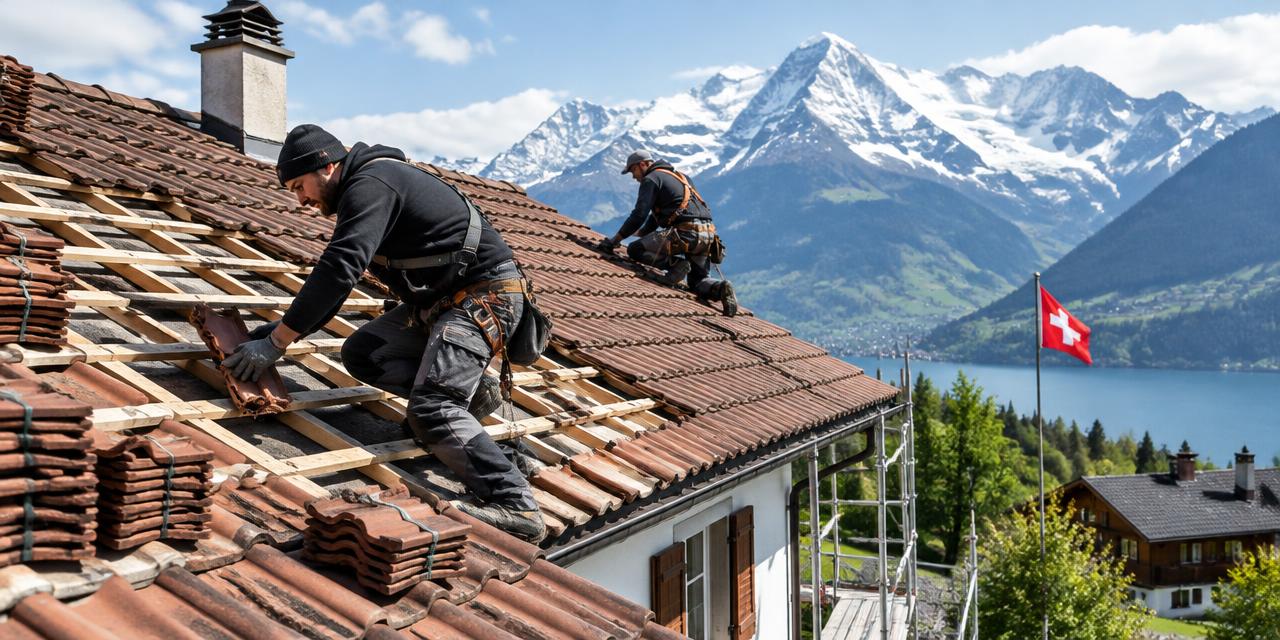
Small project
CHF 16'400 – CHF 37'600
Typical project
CHF 29'700 – CHF 65'400
Large project
CHF 49'600 – CHF 107'200
Computed with our estimator for Vevey (regional factor included), standard finish. Only the project size changes.
Located at an altitude of 383 meters, Vevey experiences a climate with a significant heating demand of approximately 2,544 Kj/year. With 22 frost days per year on average, your roof is subject to constant temperature variations that degrade materials over time.
Renovating a roof in Vevey becomes a necessity to prevent leaks and meet the energy ambitions of the municipality, which has held the ENERGY CITY GOLD label since 2012.
Beyond protection from the elements, renovation is essential as soon as waterproofing fails or insulation becomes obsolete. Vevey's often historical building stock benefits from modernization to reduce energy bills.
Planning these works helps limit structural damage caused by winter moisture and increases interior comfort, while aligning with the goals of the Municipal Climate Plan launched to encourage sustainable energy renovations.
Roof renovation is not just about replacing tiles. Several technical parameters come into play to ensure durability and performance. Material choices must consider local constraints, especially wind exposure and weather-related loads.
It is recommended to evaluate thermal insulation simultaneously, as insulating the roof while replacing the cover is often eligible for the Buildings Program, maximizing your return on investment.
Another crucial aspect involves the integration of renewable energy. With favorable solar conditions, installing solar panels is an attractive option. However, it is mandatory to budget for the removal and reinstallation of these units if you plan future roof repairs.
Finally, the material grade—whether clay tiles, slate, or metal systems—will influence not only the aesthetic look of your building but also its resistance to the changing weather conditions of the Lake Geneva region.
Vevey has a diverse built heritage, ranging from old winegrowers' houses to post-war collective buildings. If your building dates from before 1990, it is imperative to conduct an asbestos diagnosis before starting any roof work.
Old, often inefficient insulation materials must be replaced by modern insulation that complies with current standards to avoid thermal bridges and condensation risks.
Roof networks, including ventilation and rainwater drainage, must be inspected. In older buildings, the roof structure may show weaknesses due to wood aging or accumulated moisture. A thorough analysis helps avoid unpleasant surprises.
Preserving historical elements is also a central point, especially if you live in a listed building.
If in doubt about the nature of the materials or the stability of the frame, always consult professionals accustomed to working in Vevey's urban fabric to respect original construction techniques while providing the energy improvements necessary for modern comfort.
Vevey is a built site of national importance (ISOS), which implies strict conditions for any renovation. The PA N-O regulation incorporates site preservation objectives, and buildings located in ISOS A village zones require special attention.
As a rule, a simplified building permit procedure (building permit exemption) may apply to certain works, unless the building is listed or located in a protected zone, or if the works lead to a significant change in exterior appearance.
For solar panel installation, although Vevey encourages energy transition, a building permit is required for ISOS A sites, as the full preservation of the site is advocated. A careful trade-off between energy potential and monument protection is necessary.
Before starting your work, you must contact the municipality to confirm whether your project falls under an exemption or requires a complete file. Never assume authorization and ensure local requirements are met to avoid costly restoration proceedings.
Energy renovation in Vevey benefits from an advantageous framework. The Buildings Program (VD) offers grants for thermal insulation, particularly for roofs, as a contribution per insulated square meter.
It is essential to submit your grant application BEFORE starting the work, otherwise you risk losing your right to financial aid. Investments intended to save energy are 100% deductible from your taxable income as investment costs aimed at energy savings.
Tax-wise, the owner has the choice between deducting actual costs or the flat-rate maintenance deduction. If your energy renovation work exceeds the deductible amount during the current year, the carry-forward rule applies to the following two tax periods, provided you do not opt for the flat-rate deduction.
These incentives aim to support the "Vevey Rénove" program launched in 2022. Ensure you document all invoices and exchanges with the authorities, as these records are essential to optimize your tax situation and validate the payment of subsidies.
The success of a roof renovation depends on rigorous planning. The best period to start is generally outside days of intense frost, although the Vevey region benefits from a relatively temperate climate. The site always begins with secure installation (scaffolding), followed by the removal of the old cover.
This stage allows for inspection of the roof structure's condition. If repairs are necessary, they are performed before installing the new insulation and cover system.
Finishing steps, such as installing sheet metal elements (gutters) and, if planned, solar panels, conclude the project. It is recommended to synchronize these steps to avoid re-intervening on the roof, especially if panel reinstallation is required.
Keep in mind that unpredictable weather conditions may slightly impact the schedule, but close coordination with your craftsmen helps limit interruptions. Protection against rain remains an absolute priority throughout the project, ensured by temporary protective tarps if necessary.
Rushing is the enemy number one of roof renovation. A common mistake is to neglect the condition of the frame, which can compromise the longevity of the new cover.
Before requesting quotes, ensure you have a complete file on your building's specificities, particularly constraints related to the ISOS site if you live in old Vevey. Never neglect to apply for grants before the work starts. Another mistake is forgetting to include sheet metal elements in the global budget.
Here is an essential checklist for your quotes : Check if a building permit or exemption is necessary by consulting the municipality. Have an asbestos diagnosis carried out for old buildings. Ask for comparative quotes including assembly and disassembly costs for any solar project.
Ensure the selected company has the certifications to insulate roofs according to the standards required by the Buildings Program. Finally, plan a buffer in your schedule to deal with the region's seasonal weather hazards.
Contribution per insulated m², depending on energy requirements met.
Grants for thermal insulation of the building envelope (walls, roof) via the Buildings Programme.
www.leprogrammebatiments.chCheck amounts and conditions with the provider before signing: apply before work starts in most cases.
1800 Vevey · about 0 km
Vevey-based company specializing in general construction, complete renovation, joinery, and carpentry for all types of buildings.
probatech-vd.ch1800 Vevey · about 0 km
A. Favre Toiture Sàrl is a company based in Vevey specializing in tinsmithing, roofing, and waterproofing services.
afavretoiture.com1800 Vevey · about 0 km
Vevey-based company specializing in sanitary installations, heating, tinware, roofing, and solar energy solutions.
grisonisa.ch1800 Vevey · about 0 km
Atelier.com Réalisations Sàrl is a general construction company based in Vevey, specializing in the construction and renovation of buildings.
aaee.chSuggestions from the commercial register by distance and activity. Not an endorsement or partnership.
It depends on your building's location. As Vevey is an ISOS site, contact the municipality to find out if a simplified procedure or exemption is possible.
The Buildings Program offers grants for thermal insulation. The application must absolutely be submitted before the start of works.
Diagnosis is mandatory for old buildings. Specialized companies must perform asbestos removal according to strict safety protocols.
Yes, but as an ISOS zone, aesthetics are monitored. A building permit is often required, especially in protected areas.
Yes, energy investments are 100% deductible. You can carry forward costs to the next two tax periods if necessary.
The city has about 22 frost days per year. It is advisable to plan work outside periods of intense cold.
It is a municipal initiative launched in 2022 to encourage the renovation rate of the building stock. It complements existing cantonal aid.
Source : swisstopo – service d'altitude (MNT)
Source : Open-Meteo Historical Weather API (réanalyse ERA5, moyenne 2015-2024)
Source : Open-Meteo Historical Weather API (réanalyse ERA5, moyenne 2015-2024)
Source : Open-Meteo Historical Weather API (réanalyse ERA5, moyenne 2015-2024)
Source : Open-Meteo Historical Weather API (réanalyse ERA5, moyenne 2015-2024)
Source : Open-Meteo Historical Weather API (réanalyse ERA5, moyenne 2015-2024)
Source : Canton de Fribourg: Permis de construire (example, this is Fribourg) · estimate
Source : Règlement sur la déduction des frais relatifs aux immeubles privés (RDFIP)
Source : vevey.ch
Source : Open-Meteo Historical Weather API (réanalyse ERA5, moyenne 2015-2024) · estimate