
Canton
Facade insulation — Geneva
Amounts based on area and target performance.
Geneva support for energy renovation of the building envelope.
www.ge.chFacade insulation · Genève
Small project
CHF 20'000 – CHF 41'400
Typical project
CHF 36'800 – CHF 73'000
Large project
CHF 62'100 – CHF 120'400
Computed with our estimator for Genève (regional factor included), standard finish. Only the project size changes.
7 °C and experiences about 50 days of frost per year.7 °C, insulation becomes a necessity to reduce heat loss and maintain stable indoor comfort. The local climate, characterized by a global irradiation of 1378 kWh/m²/year, places heavy demands on facade materials throughout the seasons.
It is recommended to undertake this work when your heating system shows signs of wear or during a global renovation of the envelope.
Working on the facade not only saves on energy bills but also protects the building's structure against thermal variations, ensuring better durability of the building against Geneva's climatic conditions.
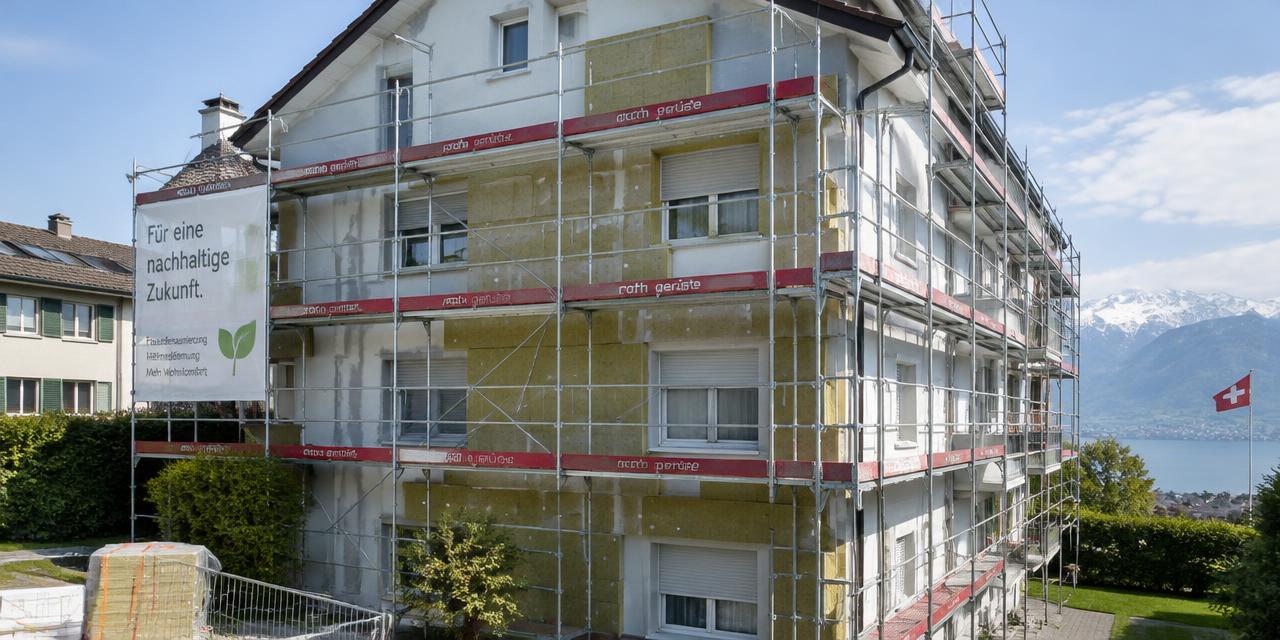
The choice of insulation materials directly impacts energy performance and water vapor permeability. There are various options ranging from mineral wool to synthetic or bio-based materials. Each material has specific thermal conductivity properties that should be adapted to the nature of the existing wall.
Quality levels vary according to the targeted thermal resistance. It is crucial to adopt a systemic approach: facade insulation is often the ideal opportunity to replace windows or improve the roof.
Since scaffolding represents a significant part of the cost, it is highly recommended to group the facade, windows, and roof in the same renovation project.
The Geneva building stock presents an architectural diversity that requires rigorous preliminary analysis. Before any intervention, it is essential to identify the composition of materials, especially for older buildings where the presence of harmful substances like asbestos is possible.
The structure of the walls, whether reinforced concrete, stone, or brick, dictates compatibility with certain insulators.
It is imperative to check the condition of embedded networks and structural thermal bridges. The context of single-family housing production in Geneva shows some resilience to economic variations, but each project remains unique.
A detailed technical inspection helps avoid issues such as internal condensation or degradation related to improper moisture management after the insulation is installed.
In Geneva, external insulation modifies the building's appearance and often requires a building permit from the Office of Urban Planning. The Geneva heritage is protected by various provisions, notably the ISOS zones.
If your building is listed or located in a protected perimeter, aesthetic constraints are strengthened to preserve landscape and heritage integration.
It is advisable to consult municipal services before finalizing your plans. Even for minor interventions, the Construction Law (LCI) may impose specific procedures. For protected areas, visual integration is a priority, which could limit the choice of materials or facade finishes.
Ensure you obtain all necessary authorizations before launching any orders or work to guarantee your project's compliance.
The energy transition benefits from financial support in Geneva. Aid for the energy-efficient renovation of the building envelope is available and depends on the treated surface area as well as the targeted overall energy performance.
A grant application must mandatorily be submitted before the start of work to be considered.
ch/energie) to obtain updated details on amounts and granting conditions. Eligibility criteria can evolve, as well as minimum technical requirements. Anticipate this administrative step from the design phase, as failure to follow the sequence of steps could make your project ineligible for cantonal financial aid.
The realization of facade insulation is planned over several months, including the administrative phase, obtaining permits, and actual implementation. It is best to avoid periods of intense cold, as frost can affect the application quality of certain plasters.
The ideal season is generally between spring and autumn when temperatures allow optimal implementation of facade materials.
The typical progress begins with the installation of scaffolding, followed by substrate preparation, insulation installation, mesh application, and finishing. Each step must be checked to avoid implementation defects that could reduce thermal efficiency in the long term.
Rigorous coordination of the different trades is essential to respect the project's overall schedule.
One of the most frequent errors is not checking the compatibility between the insulation and the wall structure, which can lead to moisture problems. Before requesting quotes, ensure you have a precise technical analysis of the current state of your facade.
Do not forget that external insulation modifies the building's appearance and often requires an authorization. Do not neglect the importance of grouping work on the envelope.
Here is a checklist for your preparation : check if the building is in a protected zone, request detailed comparative quotes, ensure companies have the required certifications, submit your grant application before starting work, and provide a margin for technical contingencies related to old facades.
Amounts based on area and target performance.
Geneva support for energy renovation of the building envelope.
www.ge.chCheck amounts and conditions with the provider before signing: apply before work starts in most cases.
1204 Genève · about 0.1 km
Halma is a Geneva-based company specializing in roof maintenance, repair, cleaning, skylight installation, and facade renovation.
couvreur-sauzer.ch1204 Genève · about 0.1 km
Geneva-based company specializing in light construction, facade renovation, interior finishing, parquet flooring, and outdoor structures.
vladico.ch1205 Genève · about 0.8 km
General contractor in Geneva specializing in full renovations, bespoke fittings, and maintenance for residential and commercial buildings.
ivaso-sa.ch1205 Genève · about 0.8 km
Geneva-based company specializing in masonry, heritage renovation, concrete treatment, and building waterproofing since 1972.
stancheris.chSuggestions from the commercial register by distance and activity. Not an endorsement or partnership.
Yes, external insulation modifies the building's appearance and often requires a building permit. It is imperative to check with the Office of Urban Planning before any project.
Yes, scaffolding represents a significant part of the cost. It is strongly advised to group the facade work with window replacement or roof renovation.
A grant application must mandatorily be submitted before the start of work. Any request made after the start will be refused.
Yes, if the building is listed or in a protected sector, aesthetic constraints are strengthened. Special attention to visual integration is required.
Poor insulation can cause internal condensation or mold. A preliminary analysis of the state of the walls is therefore essential.
Yes, extreme temperatures or frost can damage plasters. It is best to plan the work between spring and autumn.
It is recommended to call upon a professional diagnosis. Before any renovation, this verification is crucial for the safety of the construction site.
Source : swisstopo – service d'altitude (MNT)
Source : Open-Meteo Historical Weather API (réanalyse ERA5, moyenne 2015-2024)
Source : Open-Meteo Historical Weather API (réanalyse ERA5, moyenne 2015-2024)
Source : Open-Meteo Historical Weather API (réanalyse ERA5, moyenne 2015-2024)
Source : Open-Meteo Historical Weather API (réanalyse ERA5, moyenne 2015-2024)
Source : Open-Meteo Historical Weather API (réanalyse ERA5, moyenne 2015-2024)
Source : ge.ch
Source : Guide Installations Solaires et Thermopompes - Canton de Genève