
Canton
Facade insulation — Neuchâtel
Per cantonal schedule.
Neuchâtel grants for energy renovation of the building envelope.
www.leprogrammebatiments.chFacade insulation · Le Locle
Small project
CHF 18'200 – CHF 37'600
Typical project
CHF 33'500 – CHF 66'400
Large project
CHF 56'500 – CHF 109'500
Computed with our estimator for Le Locle (regional factor included), standard finish. Only the project size changes.
Located at an altitude of 921 meters, Le Locle presents specific climate challenges for real estate.2 °C and about 107 frost days per year, heating needs are high, reaching 4007 Kj/year. Efficient insulation is therefore essential to limit heat loss and maintain a stable indoor temperature despite the severe cold.
It is recommended to undertake these works when facades show signs of aging, cracks, or if heating bills become disproportionate. External insulation allows for the effective treatment of thermal bridges, thus sustainably improving the energy performance of the building in this demanding climate.
The choice of external thermal insulation composite system (ETICS) varies according to architectural constraints and performance goals. Conventional insulating materials like rock wool or expanded polystyrene offer distinct thermal properties.
It is advisable to select an appropriate thickness to meet energy requirements while respecting the aesthetic appearance of the facade.
Besides the insulation, the external finish plays a protective role against the frequent bad weather at this altitude. Mineral plaster options or wood siding can be considered to ensure durability against climatic stress.
It is crucial to coordinate these choices with the possible replacement of windows to ensure consistent overall sealing, while taking into account moisture management within the envelope.
The building stock in Le Locle has historical characteristics that greatly influence renovation work. Older buildings may contain materials whose handling requires special vigilance, especially regarding building pollutants.
Before any intervention on the facade, a diagnostic is essential to identify the potential presence of harmful substances, especially for buildings dating from before 1990.
Furthermore, the insulation of old walls must be carried out with special attention to water vapor management to avoid any risk of internal condensation. The integrity of existing networks within the walls must also be checked.
A cautious approach is to consult local professionals accustomed to the structural peculiarities of this mountainous region to avoid building pathologies, such as damage due to inappropriate choices of insulating materials on old stone or brick walls.
Facade insulation changes the external appearance of your building. Therefore, it is almost always necessary to obtain a building permit before starting the work. In Le Locle, we strongly advise you to contact the municipal urban planning department to get precise information regarding your specific zone.
Rules may vary if your building is protected or located in a sensitive perimeter.
It is important not to assume that the work is exempt from a permit. The procedure involves submitting a complete file illustrating the planned changes, especially the added thicknesses and new facade materials.
Never start work without receiving official authorization, as this could lead to sanctions or the obligation to restore the building to its original state.
Several mechanisms exist to financially support your energy renovation work.ch). A fundamental rule is that the subsidy application must be submitted and validated before the work begins. Any application made after the start of the site is inadmissible.
Tax-wise, investments intended to save energy are tax-deductible. If the total costs cannot be deducted in the year of the invoice, the excess portion can be carried forward to the two following tax years.
Note that once costs are carried forward, you cannot opt for the flat-rate deduction for that property during those years. It is recommended to seek advice from your tax advisor to properly distribute these costs between maintenance and energy investment.
The planning of a facade site depends closely on climatic conditions, especially in Le Locle with its 107 annual frost days. The best season to carry out this work is during the warmer months, to ensure good adhesion of the mortars and glues used for insulation.
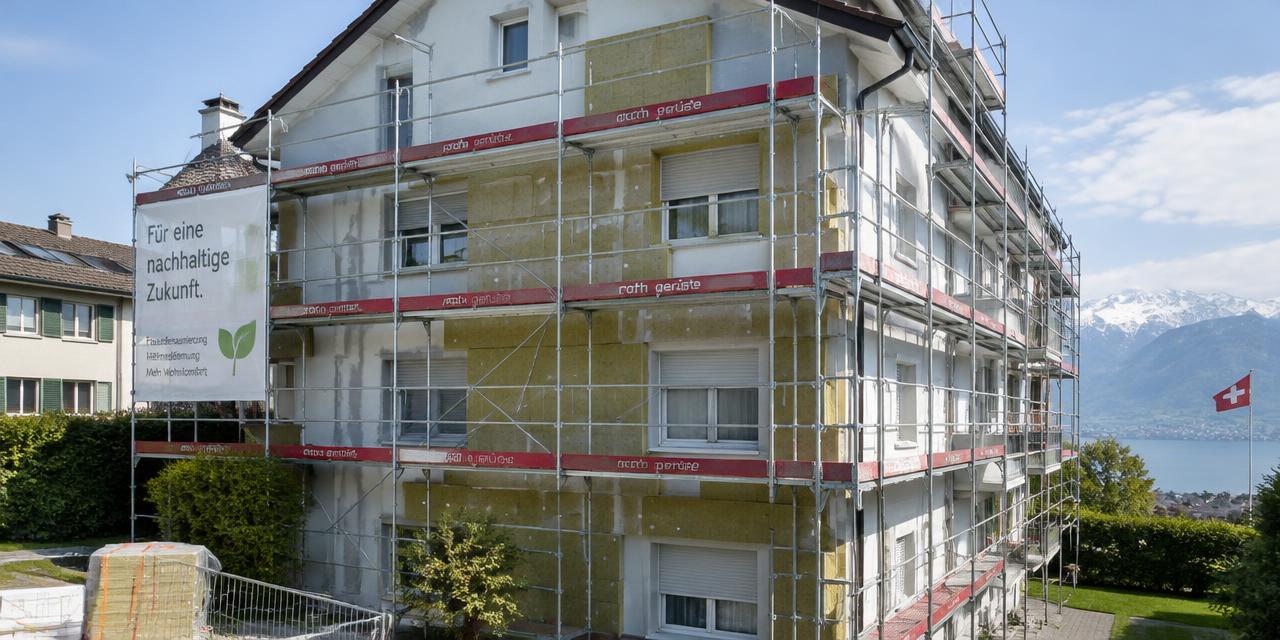
The work site generally begins with the assembly of scaffolding, a costly step that is wise to make profitable by grouping other work, such as replacing windows or refurbishing the roof.
Once the scaffolding is in place, the typical process includes surface preparation, installation of insulation boards, mechanical fixing, base coat, and then finishing.
These steps must be carefully planned to prevent unexpected frost periods from altering the quality of the materials applied to the exterior walls of your house.
To succeed in your project, do not neglect the condition of the substrate before insulation; an unstable base compromises the entire installation. Never sign a quote before receiving confirmation of your eligibility for a grant.
It is highly recommended to compare several detailed quotes for comparable solutions to understand price differences. Systematically check if the professional is well-trained in current thermal insulation techniques.
Before launching any requests, make sure to group your roof and window works to optimize scaffolding costs. Do not forget to ask for an analysis of thermal bridges, especially at the corners of the building, to guarantee real energy efficiency.
Finally, read the warranty clauses carefully and ensure that the materials used meet current standards, ensuring optimal durability for facades exposed to the harsh local climate.
Per cantonal schedule.
Neuchâtel grants for energy renovation of the building envelope.
www.leprogrammebatiments.chCheck amounts and conditions with the provider before signing: apply before work starts in most cases.
2400 Le Locle · about 0 km
Menuiserie de La Claire SA, located in Le Locle, provides comprehensive joinery, custom fitting, window installation, flooring, and exterior woodworks.
laclairesa.ch2400 Le Locle · about 0 km
Mascia Peinture is a company based in Cossonay specializing in painting, plastering, and interior and exterior renovation services.
mascia-peinture.ch2400 Le Locle · about 0 km
Cossonay-based company specializing in plastering, interior and exterior painting, wall decoration, and facade renovation since 2009.
mascia-peinture.ch2314 La Sagne NE · about 4.8 km
Into sàrl is a Swiss company specializing in interior architecture and comprehensive building renovations.
intosarl.chSuggestions from the commercial register by distance and activity. Not an endorsement or partnership.
Yes, external insulation changes the appearance of the building and generally requires authorization. Contact your municipal urban planning department to confirm the necessary steps.
No, a grant application must be submitted and validated before the start of the work. Any intervention started before prevents obtaining aid.
It is best to prefer warm seasons to ensure proper product implementation. In Le Locle, avoid frost periods to ensure durability.
Yes, scaffolding accounts for a significant portion of the total cost. It is therefore recommended to group facade, window, and roof works.
Yes, energy-saving investments are deductible. If the deduction is not total, the balance can be carried forward to the two following tax years.
Yes, for buildings built before 1990, a diagnostic is recommended. Safety should be a priority when renovating old facades.
Critical areas such as corners and window reveals must be treated. A prior thermal study helps identify these areas for continuous insulation.
Source : swisstopo – service d'altitude (MNT)
Source : Open-Meteo Historical Weather API (réanalyse ERA5, moyenne 2015-2024)
Source : Open-Meteo Historical Weather API (réanalyse ERA5, moyenne 2015-2024)
Source : Open-Meteo Historical Weather API (réanalyse ERA5, moyenne 2015-2024)
Source : Open-Meteo Historical Weather API (réanalyse ERA5, moyenne 2015-2024)
Source : Open-Meteo Historical Weather API (réanalyse ERA5, moyenne 2015-2024)
Source : Ville du Locle
Source : azprojet.ch
Source : SCCO_I772_Notice4_PP.pdf