
Canton
Facade insulation — Neuchâtel
Per cantonal schedule.
Neuchâtel grants for energy renovation of the building envelope.
www.leprogrammebatiments.chRoof renovation · Le Locle
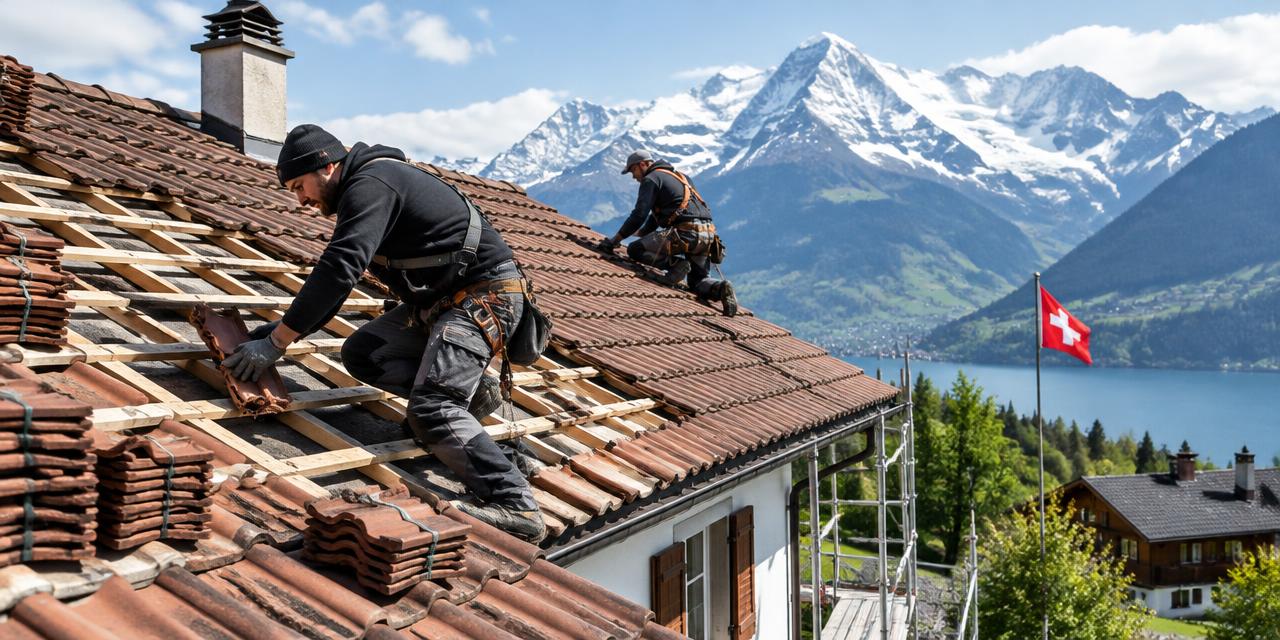
Small project
CHF 14'900 – CHF 34'200
Typical project
CHF 27'000 – CHF 59'500
Large project
CHF 45'100 – CHF 97'400
Computed with our estimator for Le Locle (regional factor included), standard finish. Only the project size changes.
Located at an altitude of 921 meters, Le Locle poses unique climatic challenges for buildings.2°C and no fewer than 107 frost days per year, roofing materials are subject to significant thermal and mechanical stress.
An aging roof no longer protects your insulation effectively, which is problematic given the high heating demand (4007 Kj/year). Undertaking a renovation helps prevent leaks caused by melting snow and reduces your energy consumption.
It is recommended to act before visible signs of degradation appear, such as porous tiles, roof structures strained by snow weight, or signs of humidity in the attic. Anticipating these works allows for better project organization without facing the extreme climatic conditions of the Locle winter.
Integrating insulation simultaneously with roofing is a winning strategy, often eligible for Programme Bâtiments grants to optimize overall thermal performance.
The technical nature of a roof in Le Locle depends closely on its exposure and slope. The choice of materials must meet altitude constraints: high-quality, frost-resistant tiles are essential to guarantee long-term waterproofing.
Depending on your roof's slope, the type of fixing and the format of covering elements will vary. Remember that if you are considering installing solar panels to take advantage of optimal sunlight, the removal and reinstallation of existing elements must be budgeted before the renovation project.
Furthermore, the grade of thermal insulation is a deciding factor. Opting for high-performance materials helps better manage the significant temperature differences specific to the region. At high altitudes, snow loads also influence the structural sizing of the framework.
It is advisable to discuss with local professionals the compatibility between your current structure and modern insulation solutions, so as not to unnecessarily overload the roof while maximizing energy efficiency.
Buildings in Le Locle have varied architectures, often inheriting an industrial and watchmaking past. For constructions dating from before 1990, it is imperative to carry out a preliminary diagnosis to detect the possible presence of asbestos in old insulation or roofing materials.
Handling these substances requires specific expertise and rigorous site waste management, which impacts the progress of the work.
At the same time, attic thermal insulation in older buildings is often insufficient. Electrical networks and ventilation ducts integrated into the framework may also require upgrading to current standards. During roof renovation, these hidden elements must be inspected.
In the case of more recent buildings, the challenge lies more in preserving airtightness and modernizing flat roof systems or insulation complexes. A complete assessment of the structure before any commitment remains the best guarantee against unpleasant surprises during the construction phase.
The city of Le Locle attaches particular importance to the preservation of its built landscape. Before any intervention, it is essential to contact the municipal urban planning service.
This service provides the necessary procedures and will guide you on the specific rules applicable to your building, especially if it is located in a protected area or has particular heritage interest. Never assume a single rule for the whole city; each district may have its own specificities.
Regarding solar installations, a simplified procedure exists. For 'sufficiently adapted' installations placed on a roof, within the building zone, and outside protected areas or objects, the notification replaces the classic building permit.
You must simply file a notification with the competent municipal or cantonal authority, ideally about twenty days before the start of work. This efficient administrative process facilitates the energy transition of your home while ensuring compliance with local requirements in force in the canton of Neuchâtel.
Energy renovation is supported by the canton of Neuchâtel. The Programme Bâtiments offers subsidies for the energy renovation of the building envelope, particularly for facade and roof insulation. It is imperative to submit your application before the start of work to be eligible.
Regularly check the official website to stay informed about current cantonal scales and the terms for granting these aids.
In terms of taxation, investments intended to save energy and protect the environment are deductible. If these costs cannot be fully deducted in the year of invoicing (because they would generate a negative net income), you have the possibility of carrying this amount forward to the following two tax years.
Note that the choice between deducting actual maintenance costs or the flat-rate deduction (10% or 20% of the gross yield depending on the age of the building) is made each year. A distribution catalogue is required if your invoice mixes routine maintenance, improvements, and energy savings.
The tax authority will determine the deductible costs upon your tax declaration.
Planning a roof site in Le Locle must take into account the climatic constraints related to altitude. The ideal period to begin is during the summer season, to avoid frost episodes and heavy rainfall that could expose your framework to humidity.
A typical workflow starts with site preparation, including the installation of fall protection and lifting equipment. Then comes the removal of the old covering, followed by a thorough inspection of the roof structure by the carpenter.
Once the framework is checked or reinforced, the insulation is installed, followed by the new waterproofing and the final covering. If solar works are planned, they fit into this roof closing phase.
The finalization includes the installation of sheet metal elements (gutters, outlets) which ensure the management of runoff water and melted snow.
The total duration of the site will depend on the technical complexity and weather conditions, but a good craftsman will know how to secure your house very quickly, even if the finish takes several days.
It is common to neglect the state of the framework when changing the roof covering: always have its capacity to support new heavier materials or solar panels checked. A classic error is to forget the removal and reinstallation of photovoltaic systems in the overall budget, which can create financial overruns.
Before requesting quotes, ensure you have up-to-date plans of your roof.
Checklist before requesting quotes : check if your building is listed in the municipal heritage; determine if you want thermal insulation from the inside or outside; identify if water infiltration is already present in your attic; check the age of your electrical installations if they pass through the framework; find out about the cantonal subsidy criteria of the Programme Bâtiments; prepare a clear file with photos of the areas to be renovated; systematically ask the provider how they handle frost or snow risks during the site.
By following these points, you will facilitate the comparison between the offers received.
Per cantonal schedule.
Neuchâtel grants for energy renovation of the building envelope.
www.leprogrammebatiments.chCheck amounts and conditions with the provider before signing: apply before work starts in most cases.
2400 Le Locle · about 0 km
Prétôt S.A., based in Le Locle, carries out roofing and sheet metal work, roof maintenance and renovation, sanitary installations and solar panel installation.
pretotsa.ch2400 Le Locle · about 0 km
CASATI Charpente-Menuiserie Sàrl is a company based in Le Locle specializing in carpentry and joinery work.
casati-wood.ch2400 Le Locle · about 0 km
Infrasolar Sàrl specializes in the design, installation, and maintenance of solar photovoltaic systems in the Jura region.
infrasolar.org2314 La Sagne NE · about 4.8 km
Founded in 1960 in La Sagne, family-owned Jaquet SA carries out plumbing, heating, roofing and sheet metal work and installs heat pumps, solar thermal and photovoltaic systems throughout the canton of Neuchâtel and surrounding areas.
jaquet-sa.chSuggestions from the commercial register by distance and activity. Not an endorsement or partnership.
The canton of Neuchâtel offers subsidies via the Programme Bâtiments for insulation. You must imperatively submit your application before starting the work.
A simple notification procedure with the competent authority is sufficient for adapted solar installations. The delay is generally around twenty days.
Yes, investments aimed at saving energy are deductible. If the deduction is not total in year N, a carry-forward to N+1 and N+2 is possible.
Yes, for buildings constructed before 1990, an asbestos diagnosis is highly recommended. This ensures site safety and proper waste treatment.
The ideal time is the warm season, to avoid frequent frost (107 days/year) and bad weather. This ensures better implementation of the insulation.
You can choose every year. Effective deduction requires distributing costs according to a catalogue, while the flat-rate depends on the age of the building.
Yes, it is highly recommended. It optimizes overall energy efficiency and facilitates access to Programme Bâtiments grants.
Source : swisstopo – service d'altitude (MNT)
Source : Open-Meteo Historical Weather API (réanalyse ERA5, moyenne 2015-2024)
Source : Open-Meteo Historical Weather API (réanalyse ERA5, moyenne 2015-2024)
Source : Open-Meteo Historical Weather API (réanalyse ERA5, moyenne 2015-2024)
Source : Open-Meteo Historical Weather API (réanalyse ERA5, moyenne 2015-2024)
Source : Open-Meteo Historical Weather API (réanalyse ERA5, moyenne 2015-2024)
Source : Ville du Locle
Source : azprojet.ch
Source : SCCO_I772_Notice4_PP.pdf
Source : Open-Meteo Historical Weather API (réanalyse ERA5, moyenne 2015-2024) · estimate