
Enosis Sàrl
3213 Liebistorf · about 20.8 km
Enosis develops biomethanation technologies to convert CO2 and surplus electricity into storable and sustainable green gas.
enosis-energies.comHeat pump installation · Bern
At a glance
Small project
CHF 30'600 – CHF 55'900
Typical project
CHF 38'600 – CHF 71'900
Large project
CHF 50'600 – CHF 95'800
| Project | Quantity | Low | High | Per unit |
|---|---|---|---|---|
| Small project | 80 m² | CHF 30'600 | CHF 55'900 | CHF 500 |
| Typical project | 160 m² | CHF 38'600 | CHF 71'900 | CHF 300 |
| Large project | 280 m² | CHF 50'600 | CHF 95'800 | CHF 300 |
Computed with our estimator for Bern (regional factor included), standard finish. Only the project size changes.
Included
Not included
In Bern, the federal building register lists 13'686 residential buildings and 79'038 dwellings. These municipal benchmarks help put your home in context, but do not replace an individual assessment.
89 % built before 1980
Construction year does not reveal past renovations: check the current insulation condition.
44 % · Gas
This distribution describes recorded buildings, not your system's consumption or efficiency.
| Energy | Heating | Hot water |
|---|---|---|
| Gas | 44 % | 34.8 % |
| Heating oil | 31 % | 22.6 % |
| District heating | 8 % | 6.1 % |
| Heat pump | 13 % | 9.7 % |
| Electricity | 1 % | 23.5 % |
| Wood | 3 % | 2.1 % |
| Solar thermal | 0 % | 1 % |
Each line gives the share of buildings using that energy, separately for heating and for hot water. The two columns do not always reach 100%: some buildings combine two systems, or reported none.
A standard non-condensing boiler is usually older and less efficient.
For your renovation plans in Bern, the RegBL data provides essential context. Heritage protection applies to 5 identified buildings, requiring early contact with the municipality to secure necessary permits. Regarding building volume, the median is 770 m3 based on the SIA 416 standard, though these measurements cover only 20 out of 4279 houses. This partial data significantly impacts how you assess the scale of heating or insulation works. Please be aware that the limited data coverage means these figures serve as a general guide, and professional verification of your specific property details is recommended for accurate budget planning.
Source : OFS — RegBL (export communal complet). Existing residential buildings; percentages of recorded values.
Before starting your project, first check whether your area can connect to a priority district heating network. This step is crucial as municipal energy planning may mandate urban heating networks. Next, evaluate the heat demand of your building.
The local design outdoor temperature sets the heat pump's capacity needed to ensure your comfort during Bernese winters. A careful analysis of your current insulation is recommended to maximize the efficiency of your new installation.
RenoIndex provides a basis for estimating the costs associated with this essential energy transition.
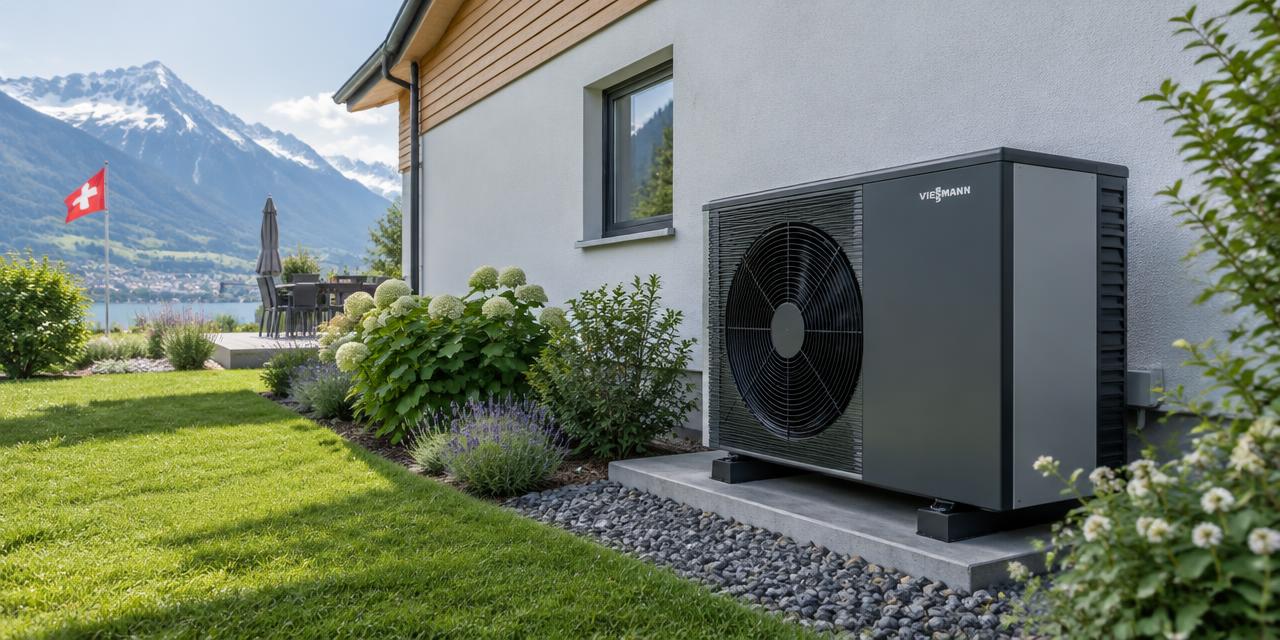
It is advisable to carefully study the placement of the outdoor unit so it is as unobtrusive as possible. Besides acoustic aspects, ensure that the aesthetics and visual integration comply with local requirements.
Good planning helps prevent neighbourhood conflicts and ensures your project meets current standards in the canton of Bern. Do not hesitate to use RenoIndex to budget for these necessary technical adjustments.
To ensure optimal performance, the sizing of the heat pump is the most important element. An oversized unit leads to short operating cycles, while an undersized unit will not heat your home sufficiently on the coldest days.
The quality of building insulation directly influences your pump's efficiency. Energy improvement works, such as window replacement or attic insulation, perfectly complement the installation of a heat pump.
Use the RenoIndex calculator to explore the financial impact of these optimizations and obtain realistic price ranges for your home in Bern.
Managing a heating replacement project requires good organization. Start by requesting quotes from installers specialized in the canton of Bern to compare technical solutions and costs.
Ensure that professionals include hydraulic and electrical connections in their quotes. Replacing an old system is also the perfect time to modernize the heat distribution circuit, such as switching to low-temperature underfloor heating.
By using RenoIndex tools, you will have a better overall view of the costs, facilitating budget management and decision-making throughout your renovation works.
1. Estimate
Set a budget range with the estimator.
2. Grants
Apply before work starts.
3. Quotes
Compare at least 3 quotes.
4. Permit
Check with the municipality whether a permit is needed.
5. Works
Follow the site and do a written handover.
No specific grant listed for this work. Maintenance tax deductions may still apply.
3213 Liebistorf · about 20.8 km
Enosis develops biomethanation technologies to convert CO2 and surplus electricity into storable and sustainable green gas.
enosis-energies.com2504 Biel/Bienne · about 24 km
Operating in Biel/Bienne since 1948, E. Vauclair SA provides plumbing, heating and solar installations, architectural sheet metalwork, roofing and flat roof renovation.
vauclair.ch2504 Biel/Bienne · about 24 km
FJUConsulting specializes in the design and installation of HVAC, plumbing, and refrigeration systems for buildings.
fjuconsulting.ch2502 Biel/Bienne · about 24.7 km
Biel-based company specializing in bathroom installation and renovation, water heater replacement, and heat pump installation.
yb-sanitaire.chSuggestions from the commercial register by distance and activity. Not an endorsement or partnership.
In general, a well-maintained heat pump operates efficiently for 15 to 20 years. Regular maintenance by a professional is essential to guarantee the appliance's longevity and maintain its energy performance over time.
Yes, it is highly recommended to improve your home's thermal insulation before installation. A well-insulated house requires less heating power, allowing you to choose a smaller and more cost-effective pump for operation.
Feasibility depends on local conditions and building type. It is imperative to check your area's regulations regarding noise and available space. A professional will be able to confirm if your home's configuration allows for an optimal installation.
You can use the free RenoIndex online calculator. It will help you get a price range adapted to your project, allowing you to plan your budget better before requesting quotes from local installers.