
Enosis Sàrl
3213 Liebistorf · about 16.9 km
Enosis develops biomethanation technologies to convert CO2 and surplus electricity into storable and sustainable green gas.
enosis-energies.comHome solar battery · Köniz
At a glance
Small project
CHF 4'000 – CHF 9'300
Typical project
CHF 7'400 – CHF 15'700
Large project
CHF 12'700 – CHF 25'900
| Project | Quantity | Low | High | Per unit |
|---|---|---|---|---|
| Small project | 5 kWh | CHF 4'000 | CHF 9'300 | CHF 1'200 |
| Typical project | 10 kWh | CHF 7'400 | CHF 15'700 | CHF 1'100 |
| Large project | 18 kWh | CHF 12'700 | CHF 25'900 | CHF 1'000 |
Computed with our estimator for Köniz (regional factor included), standard finish. Only the project size changes.
Included
Not included
In Köniz, the federal building register lists 6'582 residential buildings and 22'394 dwellings. These municipal benchmarks help put your home in context, but do not replace an individual assessment.
67 % built before 1980
Construction year does not reveal past renovations: check the current insulation condition.
40 % · Heating oil
This distribution describes recorded buildings, not your system's consumption or efficiency.
| Energy | Heating | Hot water |
|---|---|---|
| Gas | 11 % | 8.4 % |
| Heating oil | 40 % | 26.4 % |
| District heating | 3 % | 2.9 % |
| Heat pump | 32 % | 22.2 % |
| Electricity | 4 % | 33.3 % |
| Wood | 9 % | 4.9 % |
| Solar thermal | 0 % | 1.9 % |
Each line gives the share of buildings using that energy, separately for heating and for hot water. The two columns do not always reach 100%: some buildings combine two systems, or reported none.
A standard non-condensing boiler is usually older and less efficient.
9.4 % of buildings mix housing with shops or offices.
For your renovation planning in Köniz, the federal building register provides key indicators. The median building volume is 835 cubic metres according to SIA 416, which is vital for scaling your heating and insulation works, although this measurement covers only 29 buildings. Regarding heritage protection, zero buildings are currently classified as protected. Please note that data coverage for these figures is partial. We strongly recommend contacting the municipal authorities early in your planning process to clarify any specific local requirements for your property, ensuring that your renovation project complies with all necessary standards and regulatory expectations.
Source : OFS — RegBL (export communal complet). Existing residential buildings; percentages of recorded values.
A storage battery becomes a major asset when your solar production significantly exceeds your daytime consumption. In Köniz, as elsewhere in Switzerland, surplus energy fed into the grid is often valued less than the cost of purchased electricity.
By storing the energy produced during off-peak hours, you maximize self-consumption during the evening and night.
This not only allows you to make substantial savings on your annual electricity bill but also gives you greater energy independence from market price fluctuations.
Sizing is a crucial step to ensure the profitability of your investment. Contrary to popular belief, do not base your calculation on the peak power of your solar panels, but exclusively on your electricity consumption during the evening.
An oversized battery will never be fully utilized, while a capacity that is too low will force you to unnecessarily draw power from the grid. Analyze your household habits to determine the capacity in kilowatt-hours (kWh) that truly meets your needs.
RenoIndex helps you estimate costs for various battery sizes.
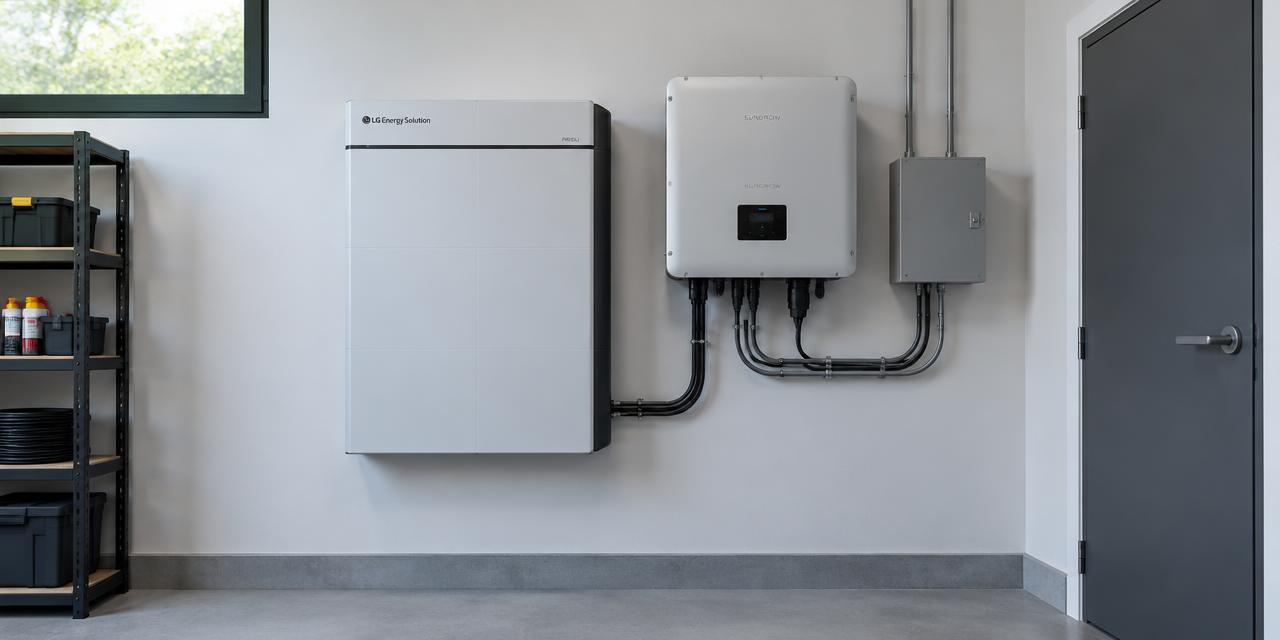
Before purchasing a storage system in Köniz, you must check compatibility with your existing inverter. Some inverters are designed only to feed energy back and do not manage storage, which might require adding a battery inverter or replacing the entire system.
Ensure that communication protocols between the battery and your solar installation are compatible to ensure efficient energy management. Consulting a specialist helps avoid costly mistakes.
Use our RenoIndex estimator to anticipate the budget required for replacing or upgrading your current infrastructure.
Integrating a solar battery is a medium-term investment. In Köniz, the total cost varies depending on the technology (Lithium-Ion or Lithium Iron Phosphate) and the chosen capacity. It is advisable to request multiple quotes to compare offers.
Also consider the costs for labor and electrical installation. Remember that while no specific municipal grants are mentioned, federal or cantonal energy efficiency measures may sometimes apply.
To get a realistic price range for your project in Köniz, access the RenoIndex simulator and start your budget planning today.
1. Estimate
Set a budget range with the estimator.
2. Grants
Apply before work starts.
3. Quotes
Compare at least 3 quotes.
4. Permit
Check with the municipality whether a permit is needed.
5. Works
Follow the site and do a written handover.
No specific grant listed for this work. Maintenance tax deductions may still apply.
3213 Liebistorf · about 16.9 km
Enosis develops biomethanation technologies to convert CO2 and surplus electricity into storable and sustainable green gas.
enosis-energies.com1700 Fribourg · about 22.7 km
Solesa SA specializes in electrical installations and renewable energy systems, including consulting and maintenance in Fribourg.
solesa.com.ar1700 Fribourg · about 22.7 km
Electrical engineering office in Fribourg specializing in inspection, compliance, electrical panels, and energy consulting.
lexel.ch1700 Fribourg · about 22.7 km
Fri Solar Sàrl, based in Fribourg, specializes in the installation of photovoltaic systems and battery storage for both residential and commercial clients.
frisolar.chSuggestions from the commercial register by distance and activity. Not an endorsement or partnership.
Profitability depends on your self-consumption rate. A battery is worthwhile if your solar production exceeds your daytime needs. By using stored energy in the evening, you avoid buying grid electricity. The return on investment generally happens over several years through the savings made on your electricity bills.
The electrical installation must comply with current safety standards in Switzerland. It is strongly recommended to hire a qualified electrician to ensure compliance and warranty coverage. A non-compliant installation can pose safety risks and compromise your home insurance coverage.
Consult the datasheet of your current inverter or contact your original solar installer. Manufacturers often publish lists of compatible batteries. If your inverter does not allow adding a battery, consider installing an AC-coupled storage system.
Most modern lithium batteries have an estimated lifespan between 10 and 20 years. This longevity depends on the number of charge cycles and temperature conditions. Regular maintenance and proper sizing help extend this optimal usage period.