
Helvetiqua SA
1723 Marly · about 35 km
French-Swiss specialist in energy renovation: installation of photovoltaic panels, heat pumps, batteries, and home insulation.
helvetiqua.chHome solar battery · Thun
At a glance
Small project
CHF 4'000 – CHF 9'300
Typical project
CHF 7'400 – CHF 15'700
Large project
CHF 12'700 – CHF 25'900
| Project | Quantity | Low | High | Per unit |
|---|---|---|---|---|
| Small project | 5 kWh | CHF 4'000 | CHF 9'300 | CHF 1'200 |
| Typical project | 10 kWh | CHF 7'400 | CHF 15'700 | CHF 1'100 |
| Large project | 18 kWh | CHF 12'700 | CHF 25'900 | CHF 1'000 |
Computed with our estimator for Thun (regional factor included), standard finish. Only the project size changes.
Included
Not included
In Thun, the federal building register lists 7'167 residential buildings and 22'890 dwellings. These municipal benchmarks help put your home in context, but do not replace an individual assessment.
69 % built before 1980
Construction year does not reveal past renovations: check the current insulation condition.
41 % · Gas
This distribution describes recorded buildings, not your system's consumption or efficiency.
| Energy | Heating | Hot water |
|---|---|---|
| Gas | 41 % | 33.9 % |
| Heating oil | 28 % | 30 % |
| District heating | 3 % | 1.3 % |
| Heat pump | 22 % | 8.8 % |
| Electricity | 2 % | 22.6 % |
| Wood | 3 % | 1.6 % |
| Solar thermal | 0 % | 1.5 % |
Each line gives the share of buildings using that energy, separately for heating and for hot water. The two columns do not always reach 100%: some buildings combine two systems, or reported none.
A standard non-condensing boiler is usually older and less efficient.
9.6 % of buildings mix housing with shops or offices.
For renovation planning in Thun, official registry data identifies 4 heritage-protected buildings. If your property falls under this category, contact the municipality early to navigate permit requirements. Regarding building volume, the median is 914 m3 according to the SIA 416 standard; however, this figure covers only 5 houses out of 3587, representing a highly partial data set. Because recorded data for the year of renovation is unavailable for the local building stock, homeowners cannot rely on these statistics to determine the age of their property's last significant upgrades or specific energy efficiency needs.
Source : OFS — RegBL (export communal complet). Existing residential buildings; percentages of recorded values.
A battery is worthwhile when solar output clearly exceeds your daytime use. In Switzerland, self-consumption is the primary driver of profitability for homeowners.
Without storage, unused energy is often fed back into the grid at a rate lower than the retail price. With a battery, you reduce your reliance on the traditional power grid. It is essential to analyze your consumption habits before proceeding.
Use our RenoIndex estimator to visualize potential savings and receive a price range in CHF for your local project.
The golden rule is to size capacity by evening consumption, not panel power. If too large, the battery is an unnecessary investment; if too small, it won't cover your nightly needs. Consider your high-energy household appliances used in the evening.
Careful planning is key to optimal efficiency. Feel free to use our RenoIndex estimator to obtain a price range in CHF that matches the ideal battery size for your specific home in Thun.
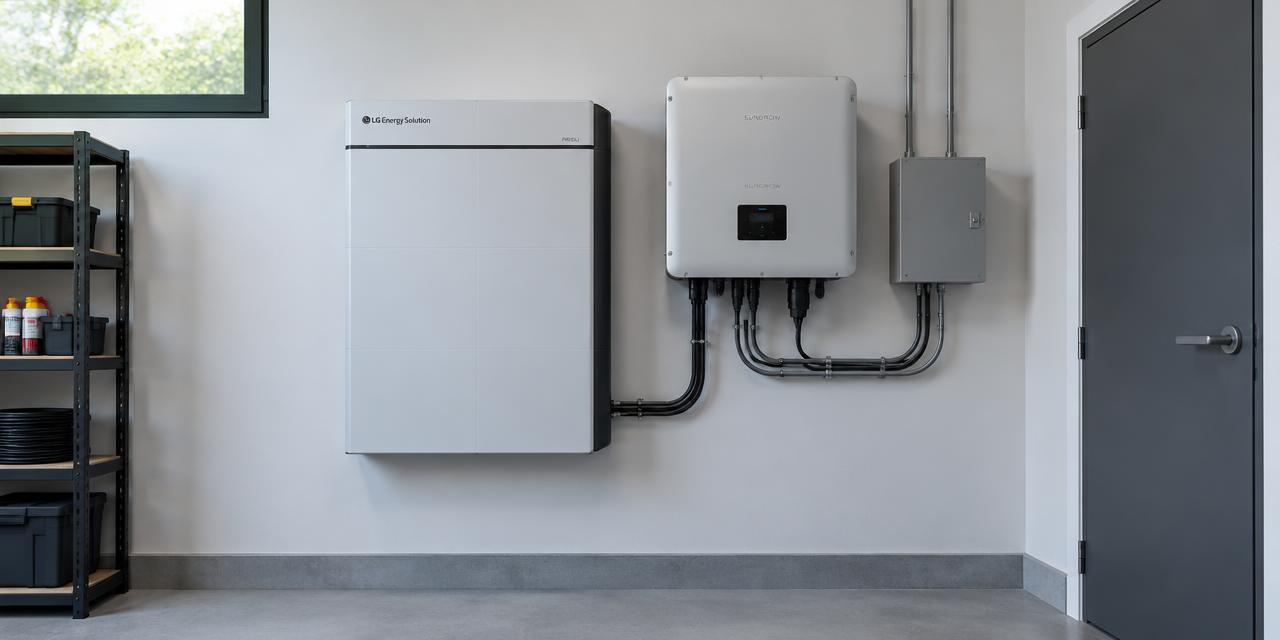
Check compatibility with your existing inverter before buying. Some batteries require a specific hybrid inverter to function, while other systems can be added via AC coupling.
This technical verification prevents extra installation costs or the premature replacement of your current inverter. A local professional can confirm the suitable technical options.
To anticipate your total budget, our RenoIndex estimator provides a price range in CHF including typical installation costs for a successful upgrade.
Starting a solar storage project begins with a thorough analysis of your annual production and consumption. Once sizing is defined, select reliable equipment and hire a specialized company.
Even though the project is local, remember that technical regulations are set at the federal level. For effective budget management, we recommend using the free RenoIndex estimator.
Get an immediate price range in CHF to compare offers and move forward with your project with confidence.
1. Estimate
Set a budget range with the estimator.
2. Grants
Apply before work starts.
3. Quotes
Compare at least 3 quotes.
4. Permit
Check with the municipality whether a permit is needed.
5. Works
Follow the site and do a written handover.
No specific grant listed for this work. Maintenance tax deductions may still apply.
1723 Marly · about 35 km
French-Swiss specialist in energy renovation: installation of photovoltaic panels, heat pumps, batteries, and home insulation.
helvetiqua.ch1700 Fribourg · about 35.5 km
Solesa SA specializes in electrical installations and renewable energy systems, including consulting and maintenance in Fribourg.
solesa.com.ar1700 Fribourg · about 35.5 km
Electrical engineering office in Fribourg specializing in inspection, compliance, electrical panels, and energy consulting.
lexel.ch1700 Fribourg · about 35.5 km
Fri Solar Sàrl, based in Fribourg, specializes in the installation of photovoltaic systems and battery storage for both residential and commercial clients.
frisolar.chSuggestions from the commercial register by distance and activity. Not an endorsement or partnership.
Lifespan depends on battery chemistry. Most current lithium systems last between 10 and 20 years. Daily charging cycles affect wear, so choosing reputable brands is crucial to ensure performance over the long term.
In most cases, indoor home batteries do not require a building permit. However, always check with your municipality if specific rules apply to the location or access for emergency services.
Outdoor installation is possible but requires a weatherproof and climate-controlled cabinet. Lithium batteries are sensitive to extreme temperatures. It is highly recommended to place them in a dry technical room to prolong their efficiency.
There is no direct federal grant for storage alone. However, some regions or local programs may support overall energy efficiency. Check with your canton for available incentives at the time of your investment.