
Canton
Facade insulation — Buildings Programme (VD)
Contribution per insulated m², depending on energy requirements met.
Grants for thermal insulation of the building envelope (walls, roof) via the Buildings Programme.
www.leprogrammebatiments.chFacade insulation · Renens
Small project
CHF 20'000 – CHF 41'400
Typical project
CHF 36'800 – CHF 73'000
Large project
CHF 62'100 – CHF 120'400
Computed with our estimator for Renens (regional factor included), standard finish. Only the project size changes.
Renens, located at an altitude of 420 meters, experiences demanding climatic conditions with approximately 2758 heating degree days per year.5 °C, highlighting the importance of a high-performance thermal envelope to reduce energy consumption and combat heat loss.
With 48 frost days per year, indoor thermal comfort is directly correlated with the quality of your insulation.
The municipality aims for carbon neutrality by 2050, supported by the Energy City Gold label. Undertaking insulation work now not only aligns with the goals for drastic reduction of greenhouse gas emissions but also increases the long-term value of your property.
A well-insulated facade acts as a shield against temperature variations, ensuring stable indoor temperatures despite the 1371 kWh/m²/year of global solar irradiation that can heat up the walls in summer.
The choice of insulation materials depends on your requirements for thermal performance and sustainability. External thermal insulation systems (ETICS) can use synthetic, mineral, or bio-sourced insulation.
Each material has a specific thermal conductivity, determining the thickness needed to reach your energy goals while respecting the structural constraints of your building. The exterior finish can vary between traditional render, wooden cladding, or composite panels.
It is crucial to integrate these choices into a global reflection on the envelope. Since scaffolding represents a significant part of the cost, it is recommended to group facade work with window replacement and roof maintenance.
Combined interventions allow for thermal continuity without thermal bridges, optimizing your building's energy efficiency. Quality workmanship, especially at the window reveals, is decisive for the airtightness of the entire building.
The building stock in Renens presents a diversity of eras requiring differentiated approaches. Buildings constructed before 1990 require special vigilance regarding the potential presence of harmful substances, particularly asbestos, in old insulation, adhesives, or finishes.
A prior diagnostic analysis is strongly recommended before any intervention such as drilling or removing facade elements to ensure the safety of occupants and workers.
Older structures, often designed with rudimentary natural ventilation, must be treated with care when insulating. Adding an insulation layer can alter indoor humidity. It is essential to provide for adapted ventilation management to avoid condensation risks.
Finally, technical networks, such as rainwater downspouts or electrical anchors fixed to the facade, must be relocated or adapted by qualified professionals so as not to degrade the overall performance of the insulation system.
In Renens, as in the rest of the canton of Vaud, facade work is subject to precise rules. External insulation changes the appearance of the building and often requires authorization. In general, works are subject to the simplified building permit procedure (exemption from building permit).
However, this procedure is excluded if the building is protected, located in a protected zone, or if the work leads to a change in the exterior appearance or a significant change in dimensions.
It is imperative to check with the municipality or the prefect regarding the specific situation of your plot. Even in case of an exemption from a permit, compliance with cantonal and communal standards remains mandatory. Never start work without having obtained the necessary validations from the competent authority.
Once the project is validated, compliance with energy requirements also allows you to claim financial aid available through the Buildings Program.
To reduce the cost of your insulation work, subsidies are available through the Buildings Program (VD). The contribution is calculated per m² insulated, according to the energy requirements reached. A golden rule must be followed: a subsidy application must generally be submitted before the start of the works.
Any intervention started without prior validation of the application will make you ineligible for financial support.
Tax-wise, the canton of Vaud offers interesting deduction mechanisms for investments aimed at saving energy. The deduction rate for costs is 100%. If the costs exceed your taxable income in a given year, the balance can be carried forward to the following two tax periods.
You can choose, for each property, between deducting actual costs or a flat-rate deduction. Be careful, if you opt for carrying forward energy costs, the flat-rate deduction is excluded for that tax period. These incentive measures facilitate the realization of ambitious projects.
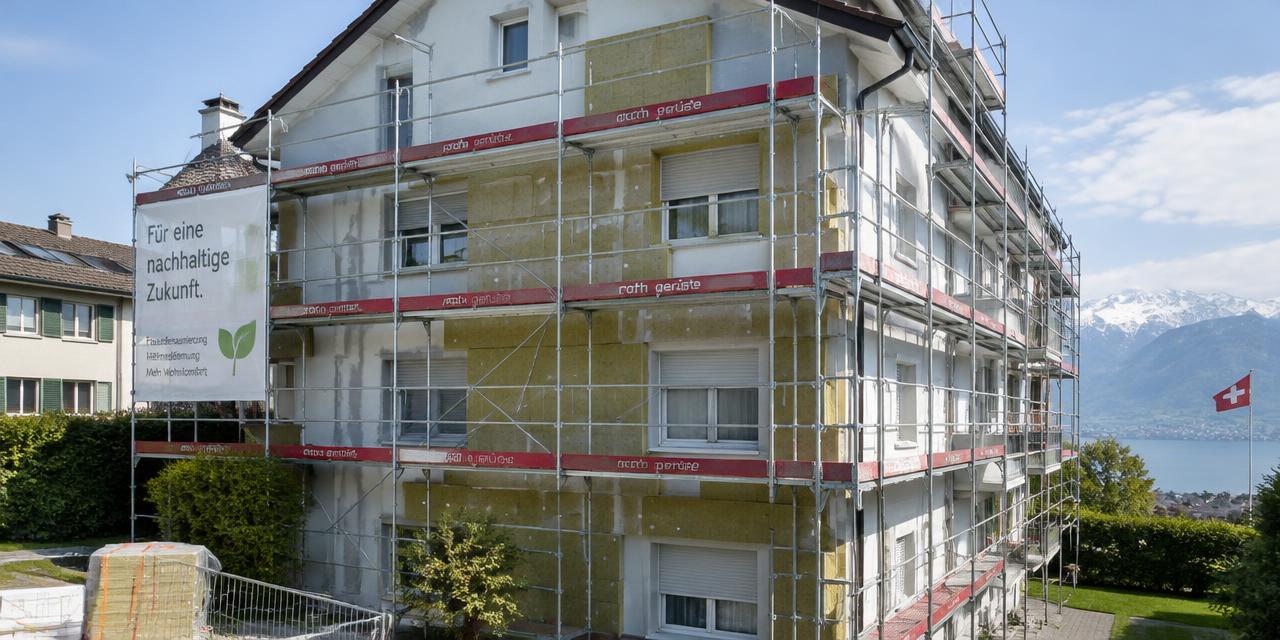
The progress of an insulation site includes several key steps. It all begins with the energy diagnosis, followed by the authorization and subsidy request. Once these documents are obtained, the choice of the company allows for the planning of the scaffolding installation.
Preparing the substrates is a critical phase : surfaces must be clean, dry, and stable to ensure the adhesion of the insulation materials.
The installation of insulation panels is then carried out, followed by the application of the reinforcement layer and the finish. It is advisable to plan these works to avoid periods of deep freeze, in order to guarantee the proper setting of mortars and plasters.
Although frost days are limited to 48 per year, these conditions can affect the quality of the final result. Rigorous planning allows for the coordination of different trades, ensuring a smooth site and delivery in accordance with thermal performance expectations.
Before requesting quotes, ensure you have a complete file including your plans and your energy performance goals. A classic mistake is forgetting to apply for subsidies before starting work. Also check if your windows need replacing, as grouping the work is much more economical.
Ensure that the chosen company has the necessary certifications to install the targeted insulation systems.
Avoid prioritizing low price at the expense of material quality, as the durability of the facade depends on it. Ask for proof of compliance with current energy standards.
Finally, plan your work so that outdoor equipment such as blinds or light fixtures can be dismantled and reinstalled without creating thermal bridges. Following these simple steps ensures that your investment in Renens will result in real energy savings and a tangible improvement in the comfort of your home.
Contribution per insulated m², depending on energy requirements met.
Grants for thermal insulation of the building envelope (walls, roof) via the Buildings Programme.
www.leprogrammebatiments.chCheck amounts and conditions with the provider before signing: apply before work starts in most cases.
1020 Renens (VD) · about 0 km
Specialist in thermal and acoustic insulation and VKF-certified fire protection services for residential and commercial buildings.
protectflamme.ch1020 Renens VD · about 0 km
Briaux Peinture S.A. specializes in plastering, painting, facades, insulation, and wall coverings in French-speaking Switzerland for over 40 years.
briauxsa.com1020 Renens VD · about 0 km
DT Rénovation Sàrl is a Lausanne-based company specializing in interior and exterior renovation projects, including painting and plasterwork.
dtrenovation.ch1020 Renens VD · about 0 km
Specialist since 2001 in external facade insulation, plastering, and interior and exterior painting services in Renens.
af-facades.chSuggestions from the commercial register by distance and activity. Not an endorsement or partnership.
Yes, external insulation changes the appearance of the building and often requires authorization. Consult the municipality to confirm if your project falls under the simplified procedure.
It is best to avoid frost periods to ensure the quality of plasters and mortars. Prefer mild seasons for optimal drying.
Yes, it is highly recommended. Grouping these works reduces scaffolding costs and optimizes the overall thermal performance of the building.
A subsidy application must be submitted before the start of work. If the site starts before, you lose your right to aid.
Energy investments are 100% deductible. The unused balance can be carried forward to the following two tax periods under certain conditions.
Yes, for buildings constructed before 1990, a diagnostic analysis is necessary before any drilling. This ensures safety during insulation.
The municipality aims for carbon neutrality by 2050. The communal Climate Plan sets strict targets for reducing final energy consumption and increasing renewables.
Source : swisstopo – service d'altitude (MNT)
Source : Open-Meteo Historical Weather API (réanalyse ERA5, moyenne 2015-2024)
Source : Open-Meteo Historical Weather API (réanalyse ERA5, moyenne 2015-2024)
Source : Open-Meteo Historical Weather API (réanalyse ERA5, moyenne 2015-2024)
Source : Open-Meteo Historical Weather API (réanalyse ERA5, moyenne 2015-2024)
Source : Open-Meteo Historical Weather API (réanalyse ERA5, moyenne 2015-2024)
Source : Canton de Fribourg: Permis de construire (example, this is Fribourg) · estimate
Source : Règlement sur la déduction des frais relatifs aux immeubles privés (RDFIP)
Source : Alliance pour le climat Suisse - Profil Renens 2023