
Eco6therm Sàrl
2832 Rebeuvelier · about 100.5 km
Eco6therm specializes in the installation of heating systems, particularly heat pumps, and solar photovoltaic energy solutions.
eco6therm.chSolar panels · Winterthur
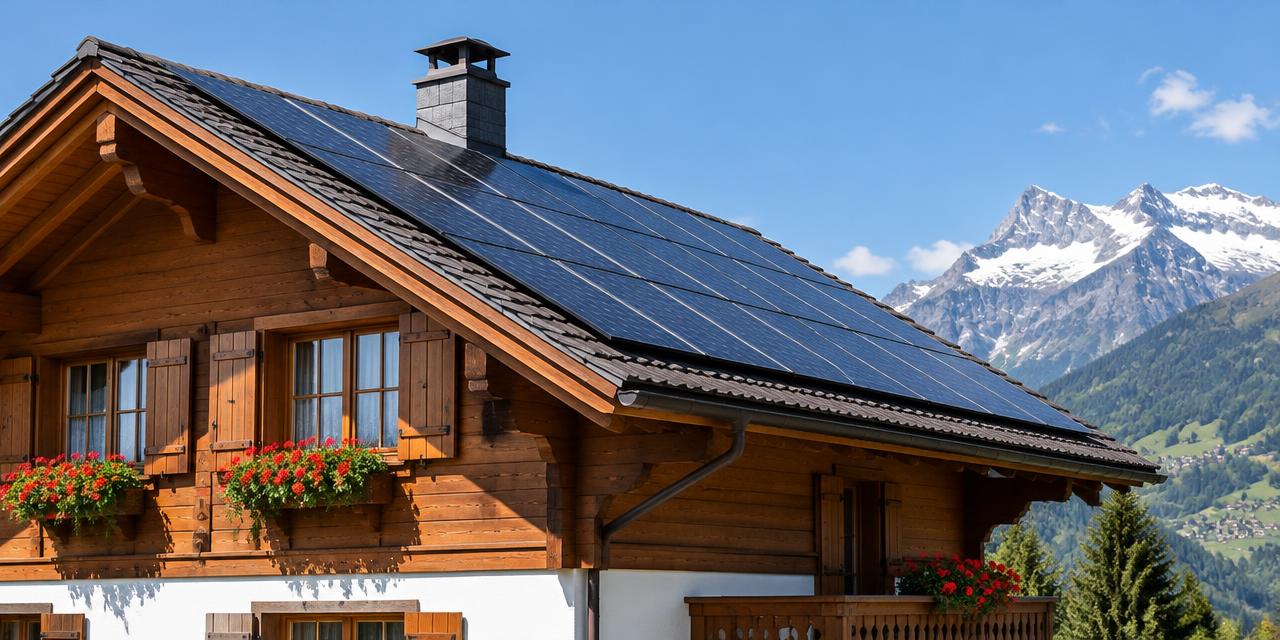
At a glance
Small project
CHF 10'000 – CHF 18'900
Typical project
CHF 18'500 – CHF 33'500
Large project
CHF 32'000 – CHF 56'800
| Project | Quantity | Low | High | Per unit |
|---|---|---|---|---|
| Small project | 5 kWc | CHF 10'000 | CHF 18'900 | CHF 2'800 |
| Typical project | 10 kWc | CHF 18'500 | CHF 33'500 | CHF 2'500 |
| Large project | 18 kWc | CHF 32'000 | CHF 56'800 | CHF 2'400 |
Computed with our estimator for Winterthur (regional factor included), standard finish. Only the project size changes.
Included
Not included
In Winterthur, the federal building register lists 15'669 residential buildings and 57'945 dwellings. These municipal benchmarks help put your home in context, but do not replace an individual assessment.
69 % built before 1980
Construction year does not reveal past renovations: check the current insulation condition.
38 % · Gas
This distribution describes recorded buildings, not your system's consumption or efficiency.
| Energy | Heating | Hot water |
|---|---|---|
| Gas | 38 % | 39.1 % |
| Heating oil | 18 % | 15 % |
| District heating | 11 % | 9.4 % |
| Heat pump | 29 % | 16.5 % |
| Electricity | 1 % | 15.7 % |
| Wood | 4 % | 3 % |
| Solar thermal | 0 % | 1.1 % |
Each line gives the share of buildings using that energy, separately for heating and for hot water. The two columns do not always reach 100%: some buildings combine two systems, or reported none.
A standard non-condensing boiler is usually older and less efficient.
10.1 % of buildings mix housing with shops or offices.
For your renovation planning in Winterthur, data from the federal building register (RegBL) provides useful insights despite partial coverage. The median building volume of 692 m3 helps estimate the scale of heating or insulation works, though this figure represents only a small portion of the 8665 registered houses. Regarding heritage protection, there are 2823 buildings with known status, though none are currently marked as protected. Given the limited nature of these statistics, we strongly recommend contacting the municipal authorities early in your planning process to verify specific local regulations or heritage constraints before proceeding with any construction projects.
Source : OFS — RegBL (export communal complet). Existing residential buildings; percentages of recorded values.
Although no specific municipal grants are listed for Winterthur, it is essential to regularly check the programs of the canton of Zurich, as cantonal incentives may supplement federal aid.
Financing often relies on a combination of equity and advantageous bank loans linked to energy improvements. Use the RenoIndex estimator to visualize the net cost after deducting the support available for your specific project.
The profitability of a solar installation depends mainly on the share of electricity you consume directly on site. The more you use the energy produced at the moment it is generated, the less you spend buying electricity from the grid.
Consider synchronizing your high-energy household appliances or installing a home battery to store the surplus. By optimizing your self-consumption, you reduce the payback time of your system.
Our RenoIndex tool allows you to estimate your potential savings based on your usual annual consumption in your home.
However, it is recommended to check with your municipality if specific aesthetic rules or heritage protection guidelines apply to your building. Proper planning from the start avoids unnecessary delays.
Ensure you have all technical documents ready before submitting your application. RenoIndex helps you understand which technical aspects will influence the complexity of your request.
A high-performing solar installation starts with a precise analysis of sunlight exposure and your roof's tilt. In Winterthur, maximizing the orientation of your panels is crucial to guarantee optimal electricity production all year round.
Take the time to choose quality components that ensure a long service life for your system. Integrating smart systems also allows you to monitor your production in real time. To get a realistic price range for your project, use RenoIndex.
A well-designed installation is a sustainable investment that adds value to your home while contributing to the Swiss energy transition.
1. Estimate
Set a budget range with the estimator.
2. Grants
Apply before work starts.
3. Quotes
Compare at least 3 quotes.
4. Permit
Check with the municipality whether a permit is needed.
5. Works
Follow the site and do a written handover.
No specific grant listed for this work. Maintenance tax deductions may still apply.
2832 Rebeuvelier · about 100.5 km
Eco6therm specializes in the installation of heating systems, particularly heat pumps, and solar photovoltaic energy solutions.
eco6therm.ch2740 Moutier · about 105.8 km
Moutier-based company specializing in tinsmithing, roofing, ventilated facades, and solar panel installation.
zbinden-joye.ch2740 Moutier · about 105.8 km
Company in Moutier specializing in plumbing, heating (oil, wood, heat pumps), and solar thermal and photovoltaic solutions.
bmonnerat.ch2800 Delémont · about 105.9 km
Construction and renovation company in Delémont, specializing in masonry, sanitary facilities, heating, and turnkey projects in the Jura region.
adsconstruction.chSuggestions from the commercial register by distance and activity. Not an endorsement or partnership.
In the canton of Zurich, if your roof installation is well-integrated and compliant with rules, it generally only requires a simple notification procedure. However, always check with your municipality regarding protected zones.
For a reliable and quick estimate, use the free RenoIndex calculator. It will provide you with a price range based on the specificities of your home and the required work.
Yes, federal grants like the Pronovo one-off remuneration are often combinable with other cantonal programs, subject to the specific conditions in force in the canton of Zurich at the time of your application.
Absolutely. Increasing your self-consumption reduces your reliance on the grid and improves the profitability of your system, as electricity produced on site is cheaper than that purchased from the supplier.